FIELD NOTES BLOG
Low-Waste Holidays: A Guide to a More Sustainable Holiday Season
The holiday season can be a stressful time. Between finding the perfect gift for your loved ones, family obligations, and work deadlines, it’s easy to see how people can get overwhelmed. But just because winter holidays can put extra stress on us, doesn’t mean it needs to put extra stress on our planet. The Environmental Protection Agency estimates that people the the U.S. generate at least 25% more waste between Thanksgiving and New Year’s Day, but hope is not lost! Here are some tips for decreasing your footprint this winter.
Decorations
Have you ever noticed that many mass-produced holiday decorations are just plastic versions of natural items? I’ve seen more plastic evergreen bough garland, plastic wreaths, even plastic nature-inspired ornaments than I could count, but if you are interested in moving away from plastics this holiday season, try out some of these ideas!
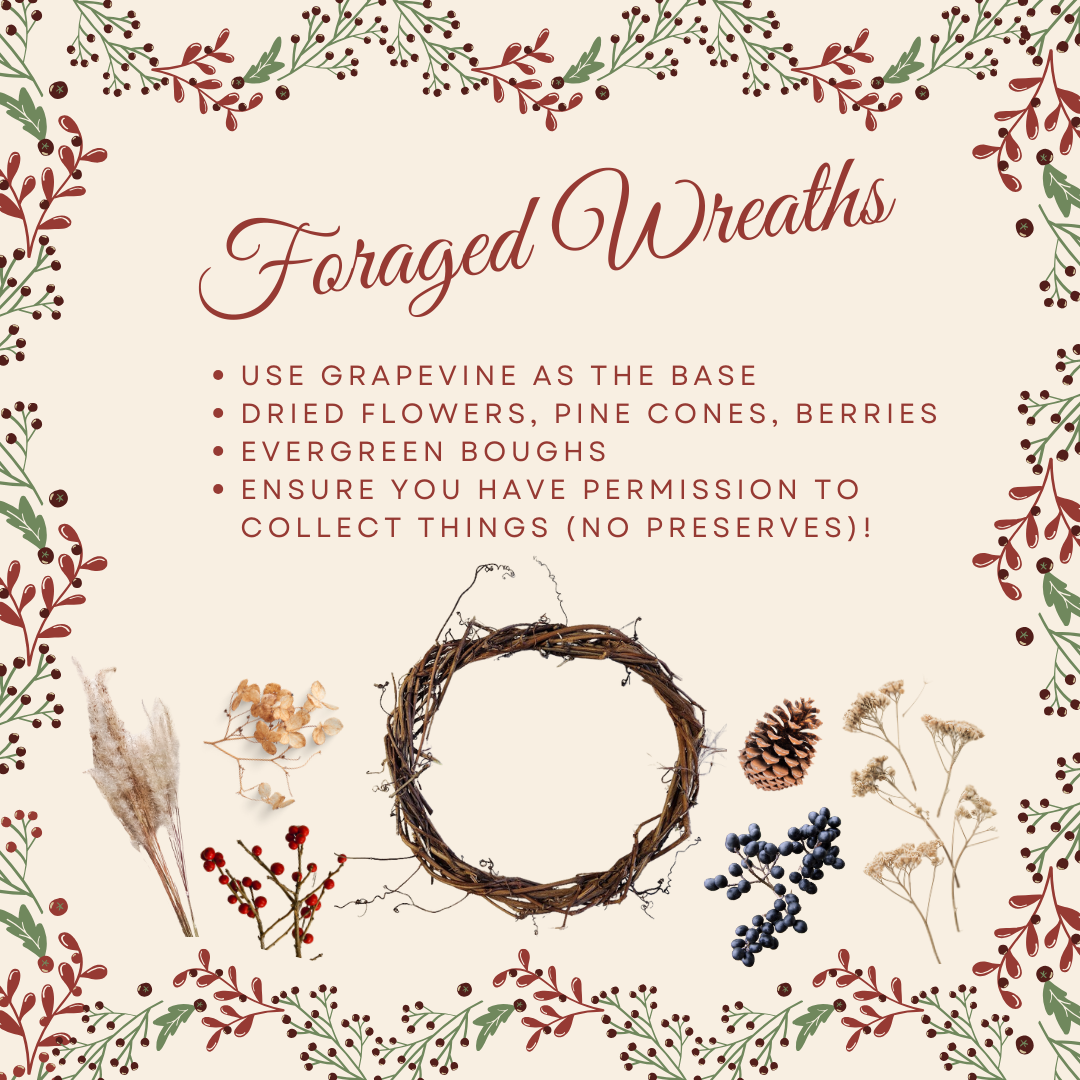
Foraged Wreaths:
Instead of stocking up on fake plastic wreaths to decorate your front door, consider making one with all natural supplies! Take a walk through your neighborhood or local park to collect some grapevines, berry clusters, dried flower heads, or anything else that catches your eye. The grapevine will become the frame of your wreath: make a loop with the grapevine that is about the size you want your wreath, then just twist the remaining vine in and out of your loop to give it some structure. Everything else you collected can be stuck into your wreath to give it some more flare!
Compostable garland:
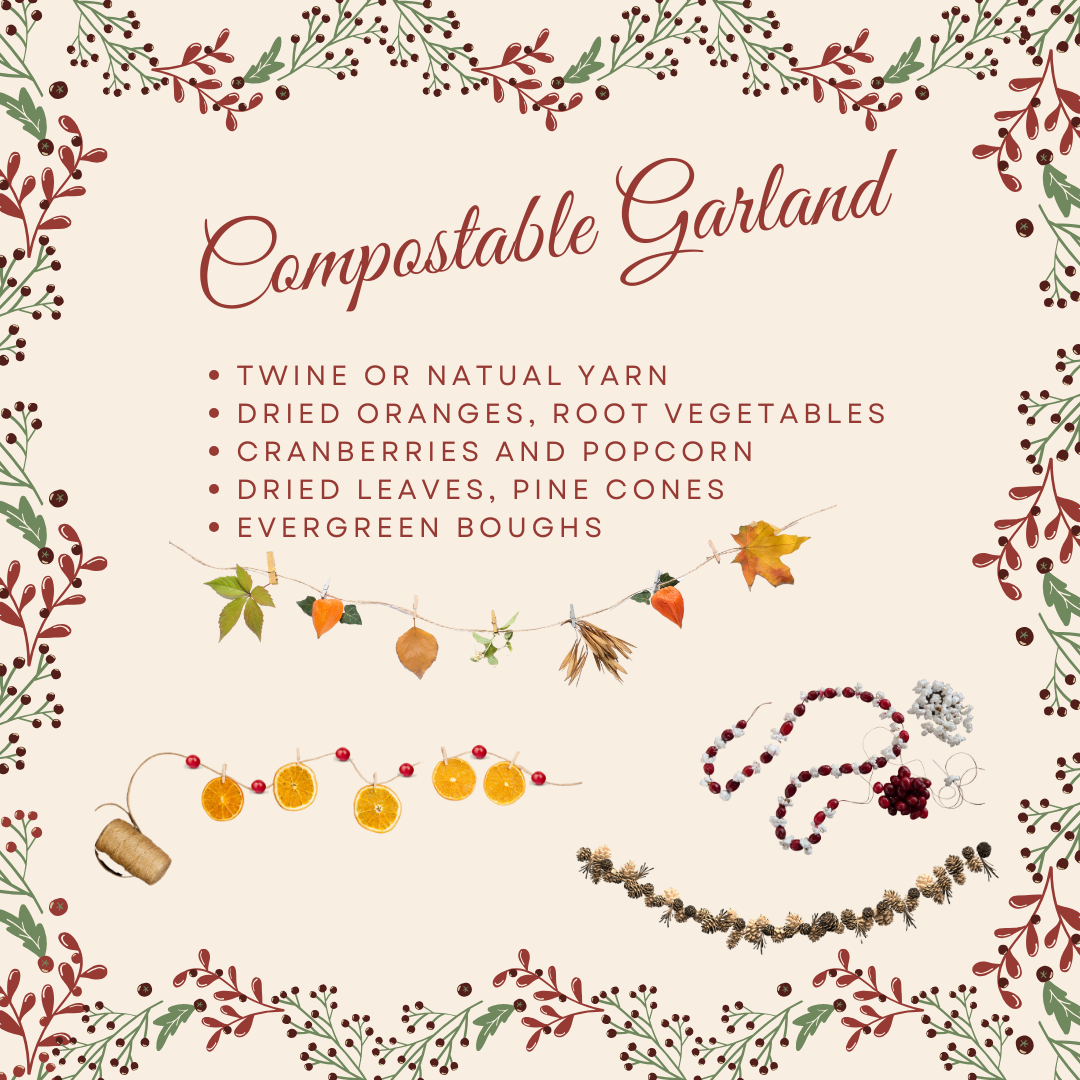
If you’re looking for something to brighten up a doorway or railing, try crafting some garland! Using twine or natural yarn to string together things like pine cones, dried slices of orange or other citrus fruit, cranberries, dried flowers, or even dried slices of root vegetables can make a beautiful garland that can be completely composted once you’re done with it.
Upcycled ornaments:
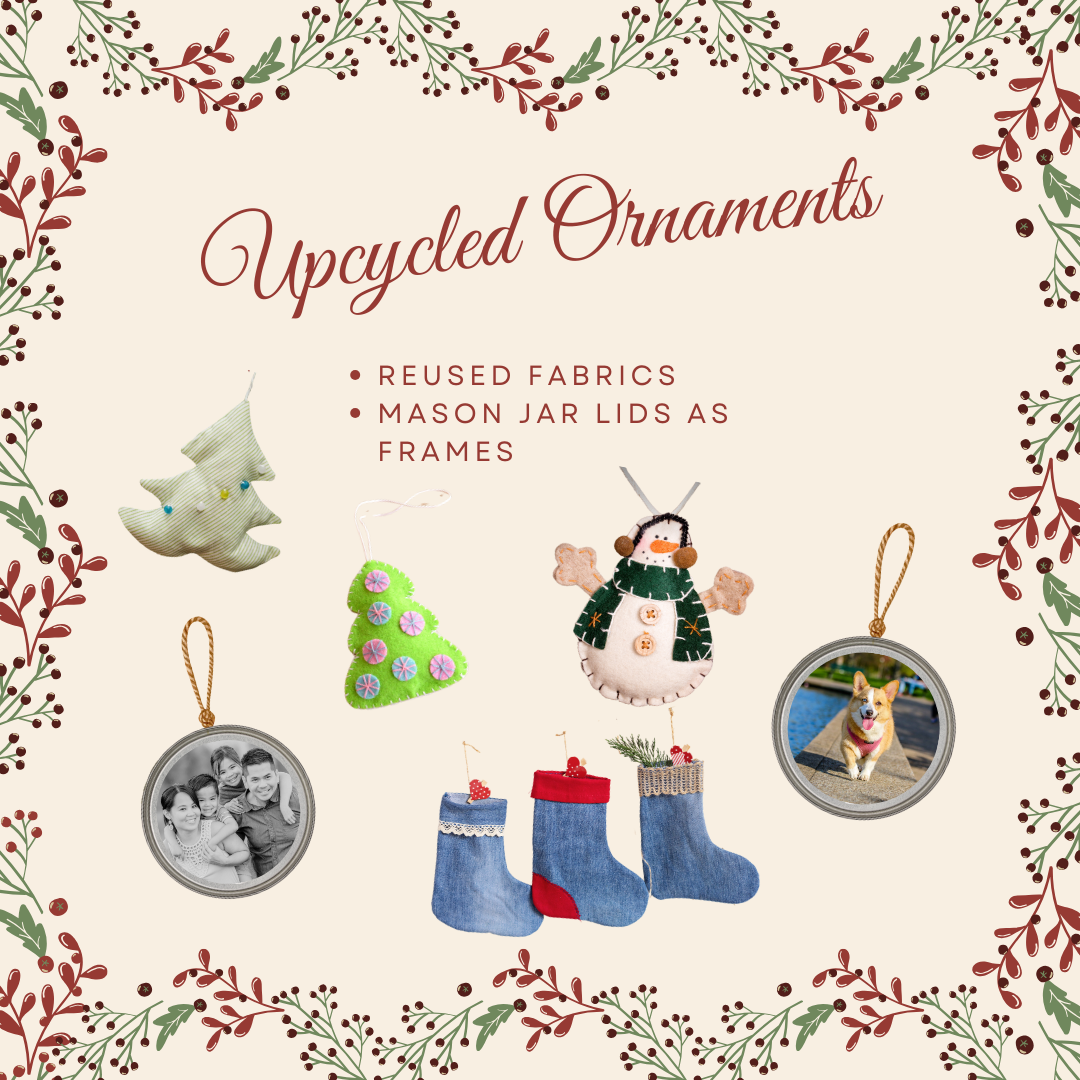
When it comes to upcycled holiday ornaments, the opportunities are almost endless! Do you have extra mason jar lids lying around? Make them into a photo frame ornament! Just finished a roll of paper towels? Use the cardboard to make a holiday star! Have some old clothes or loose fabric you want to transform? Make some sewn fabric ornaments in your favorite holiday shapes!
Host a decor swap:
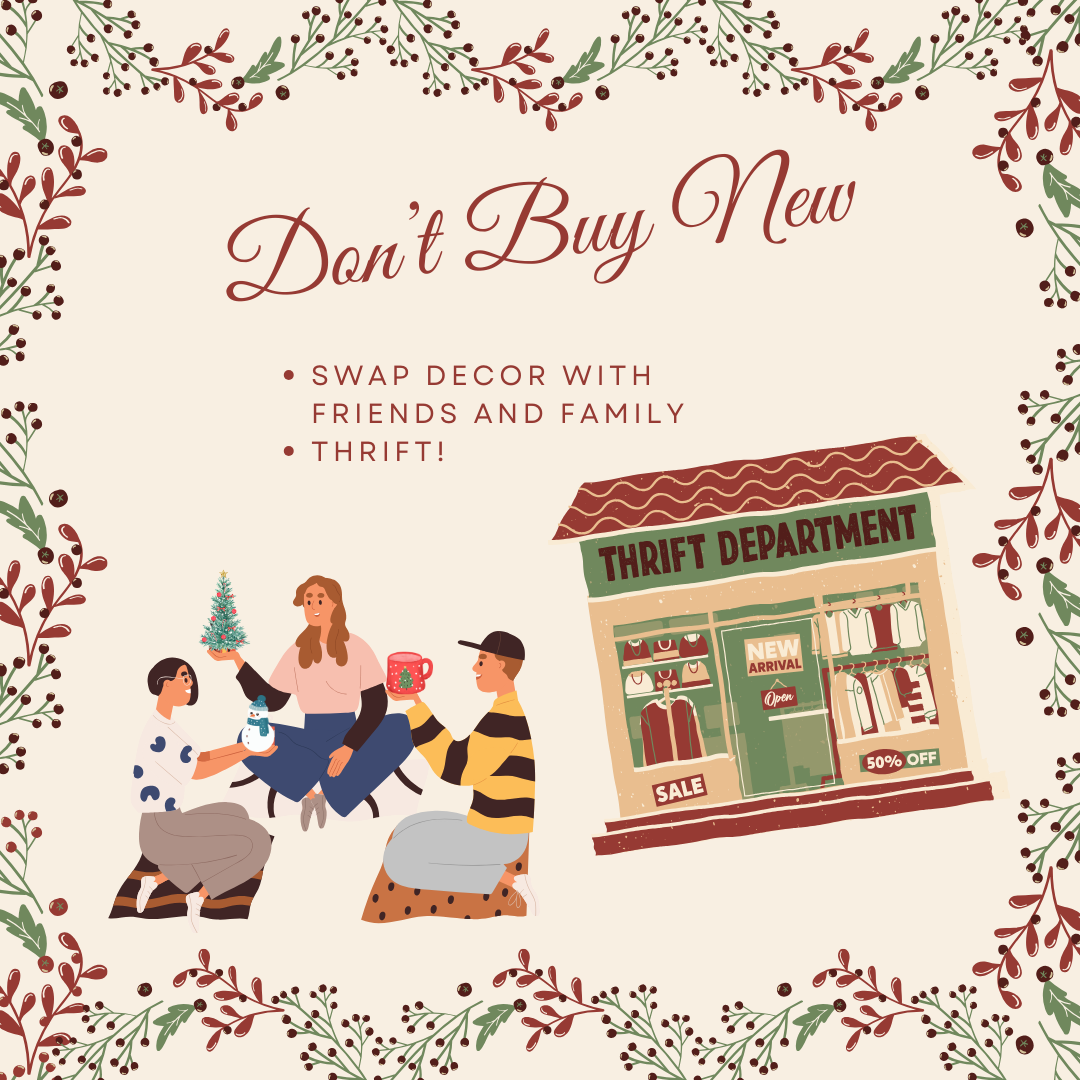
If you have any decorations that no longer suit your style or space, there’s no need to run out to the store to buy something new. Host a decor swap with friends or family members! Otherwise, buying second-hand decor from thrift shops is another good way to update your style without hurting the Earth.
Gifting


The excessive packaging and energy-intensive transportation commonly used when we buy gifts online or at large distribution stores contributes heavily to the high carbon footprint and massive amounts of waste produced during the holidays. Here are some ways you can give the Earth a break this winter.
Buying second-hand:
Even though shopping days like Black Friday and Cyber Monday like to make us think the only good presents are those that are purchased new, this is simply not true. In my experience, finding a meaningful, second hand gift for a loved one can often be more heartfelt than buying something mass produced. It says, “Hey, I saw this and thought of you! It’s unique just like you are!” instead of “My advertisement algorithm told me to buy this, so I did!” Shopping second-hand can be time consuming since you never know what you’ll find, but if you have the time and patience, it’s a great way to find some interesting gifts without putting more pressure on the Earth!
Make something:
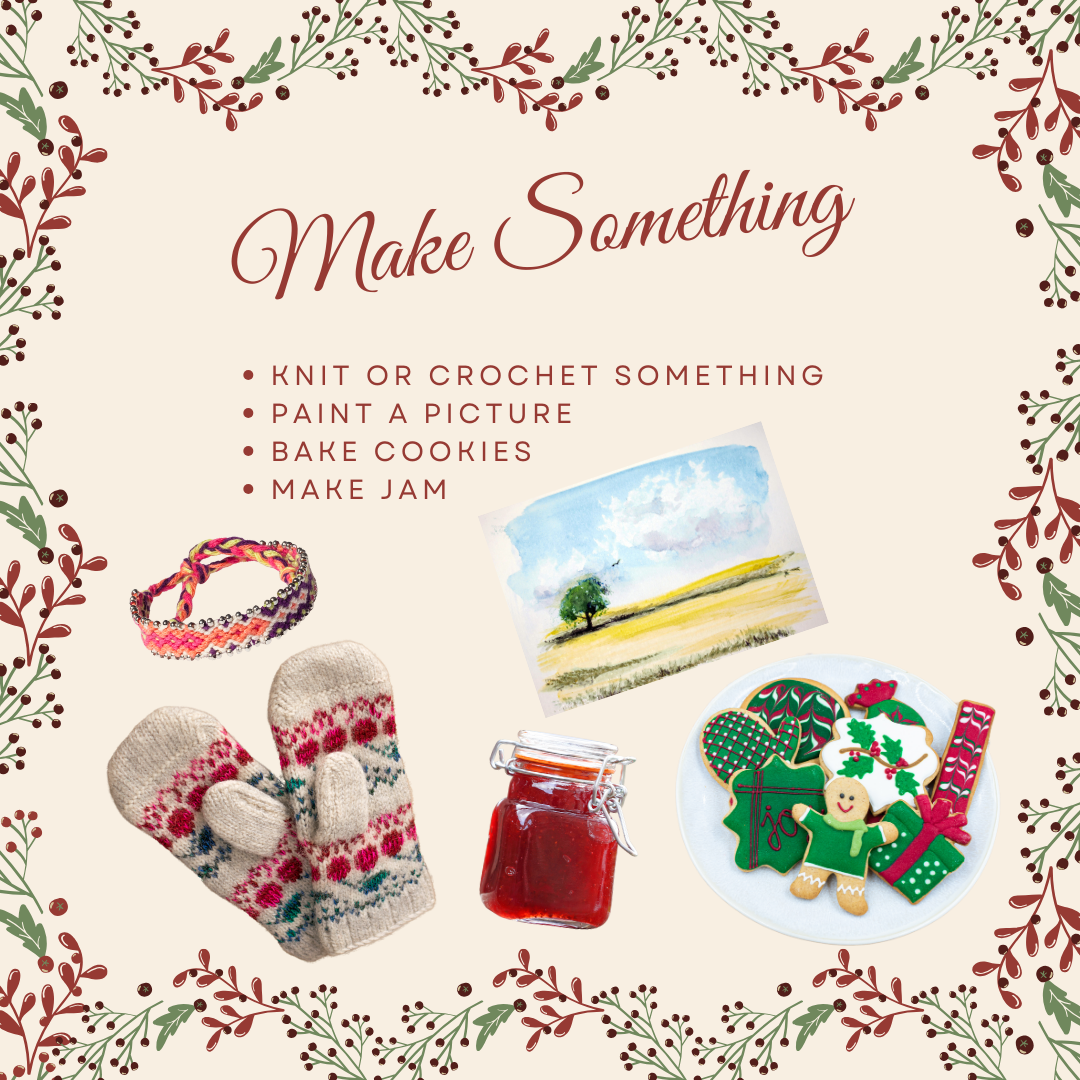
Last year, I decided to give homemade gifts to each of my family members. I found some free knitting and crochet patterns online, rented some “How to knit and crochet” books from the library, and got to work! Whether you’re crocheting some hats, baking cookies, painting a landscape, making a friendship bracelet, or even sharing a recipe that means something to you, homemade gifts are always a big hit. If you aren’t sure what to make, try taking a walk through your local craft store and see what inspires you! Otherwise, check out some local small businesses to see if you can buy something locally and sustainably made.
Gift Experiences:
Not all gifts have to be physical objects either. Giving tickets to local events, concerts, and sporting events can definitely help cut down your waste this holiday season. In past years, I’ve gifted things like art classes at Klehm Arboretum, wreath-making classes at Angelic Organic Learning Center, and guided hikes right here at Severson Dells! If you have room in your budget, I would definitely recommend buying yourself a ticket as well so that now the gift is also bonding time for you and your loved one.
Donations:
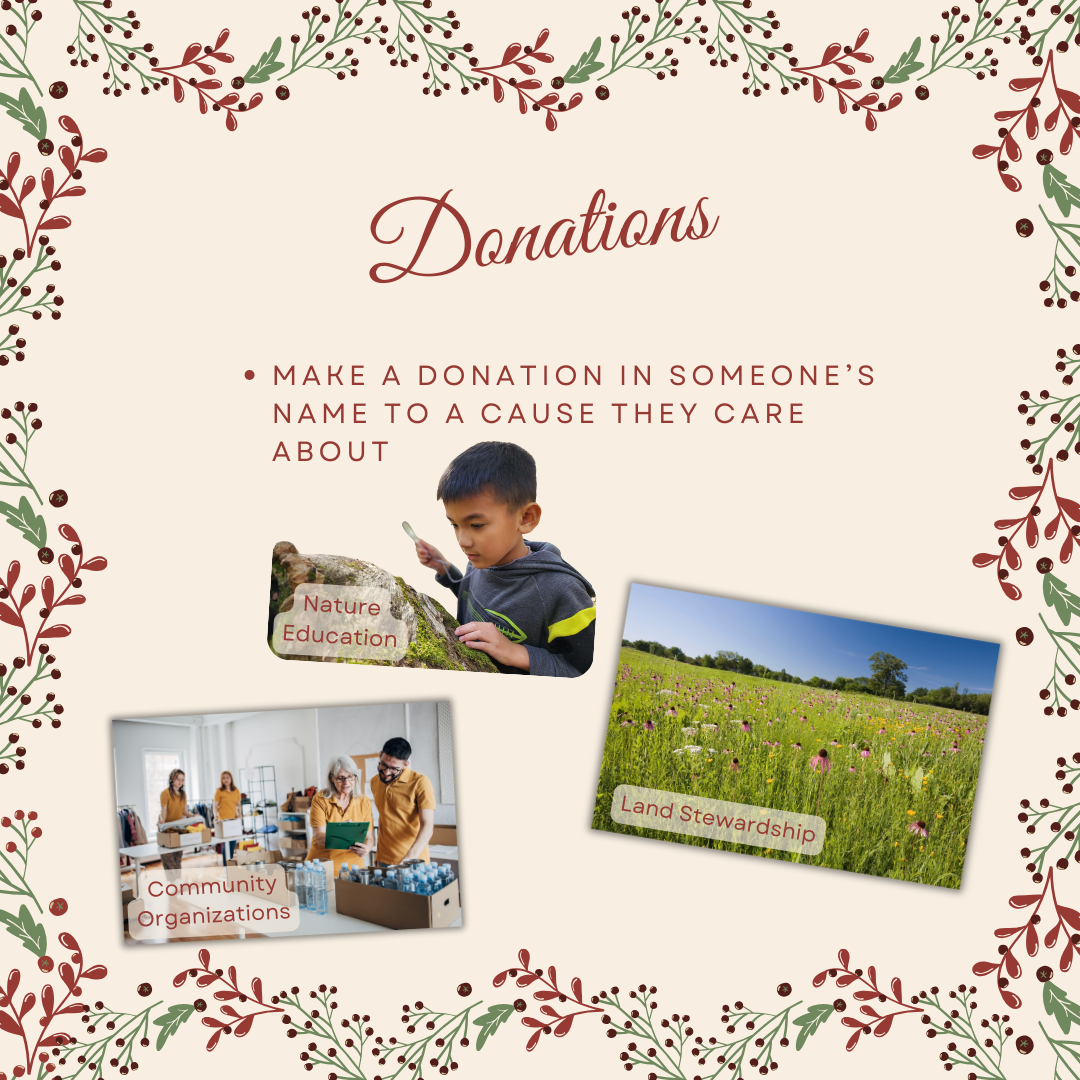
What can you get for the person who already has everything they need? One thing I like to do is make a donation in that person’s name to a cause they care about! Do they love animals? Maybe make a donation to the local wildlife rehabilitation center. Do they love reading? Donate to the local library to support their literacy work and programing. Are they passionate about nature education and access to the outdoors? Well, a donation to Severson Dells would make a lovely surprise for them! As one last shameless plug, did you know you could gift Severson Dells memberships! Your loved one would receive discounts on programs and access to members-only events all year round! It’s truly the gift that keeps on giving!
Gift Wrapping
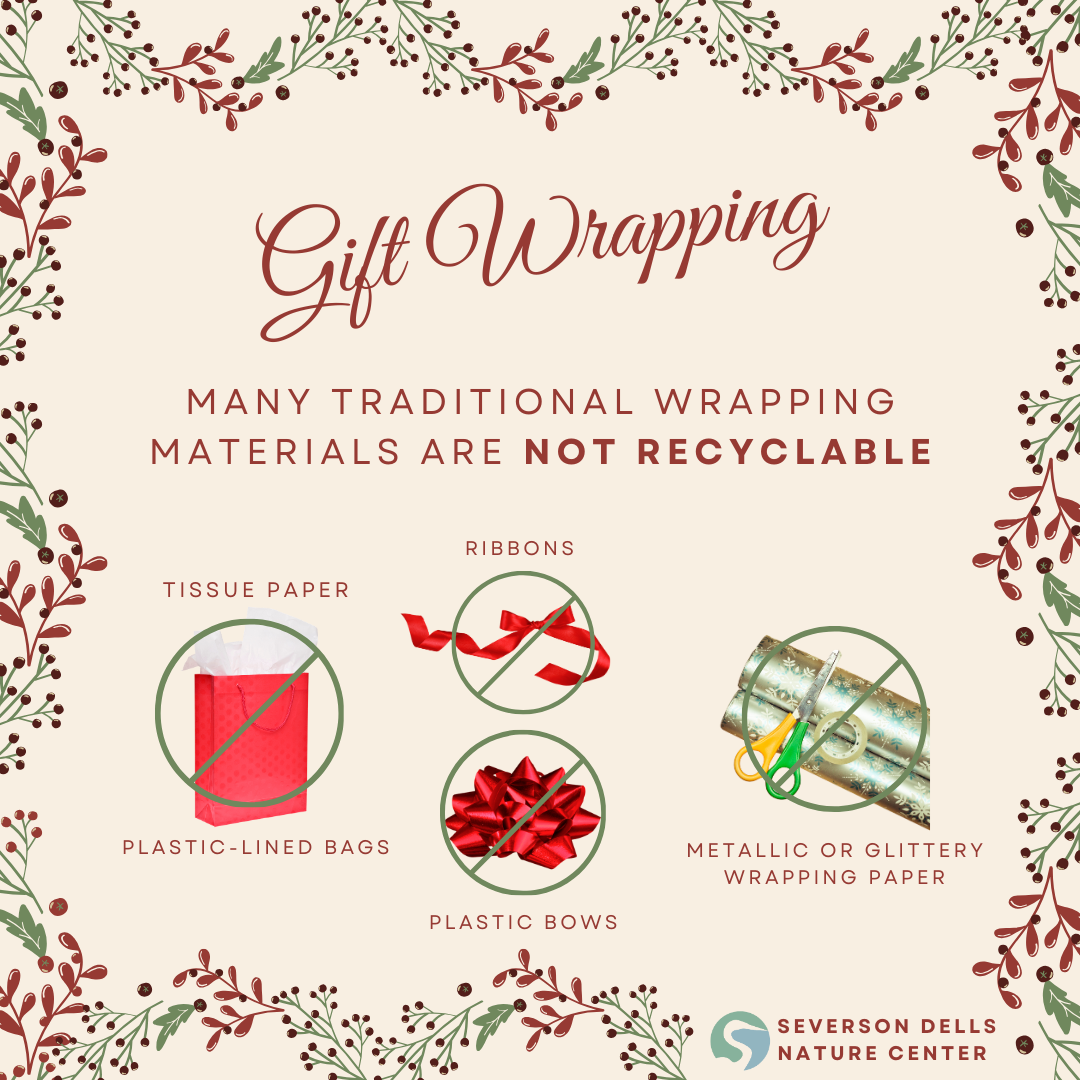
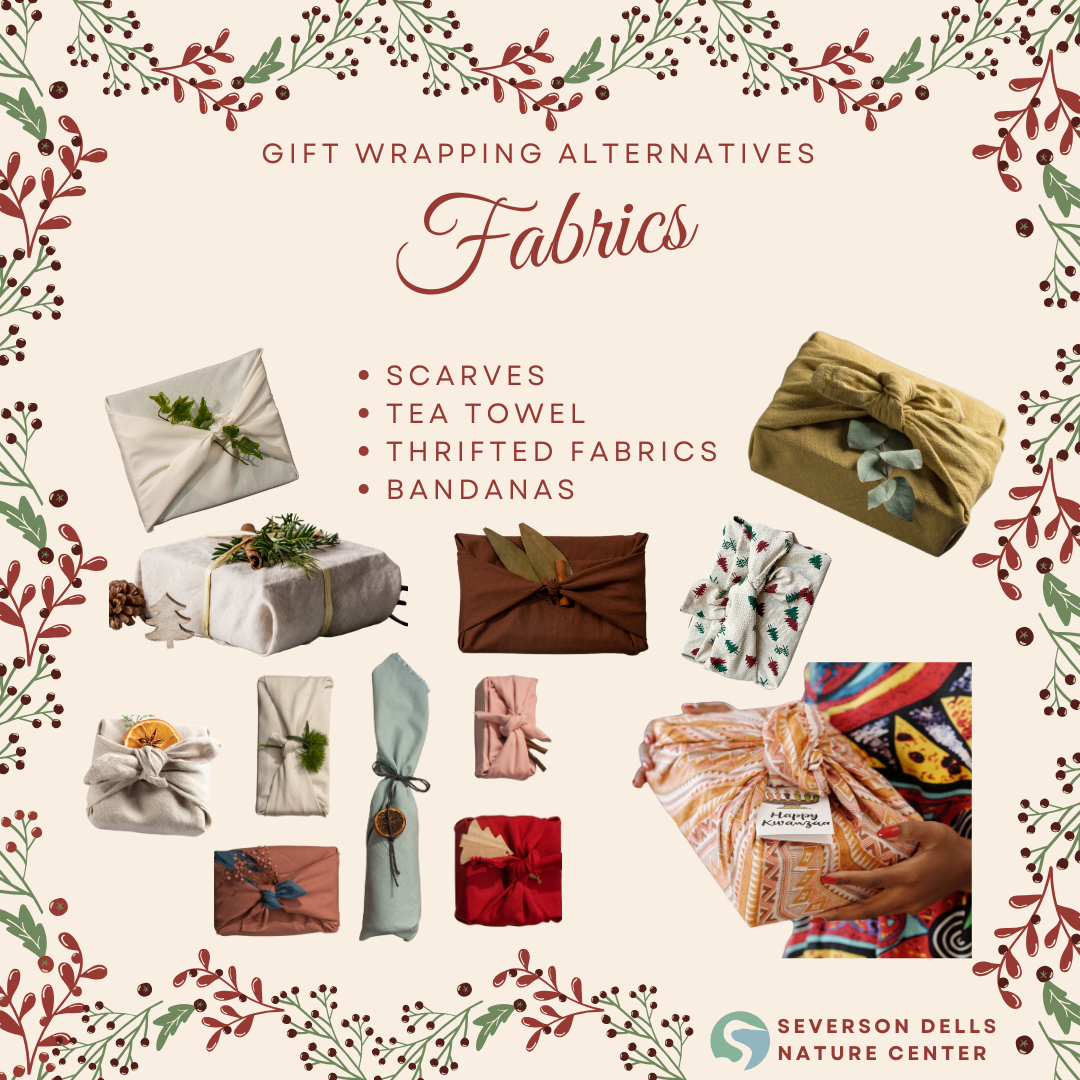
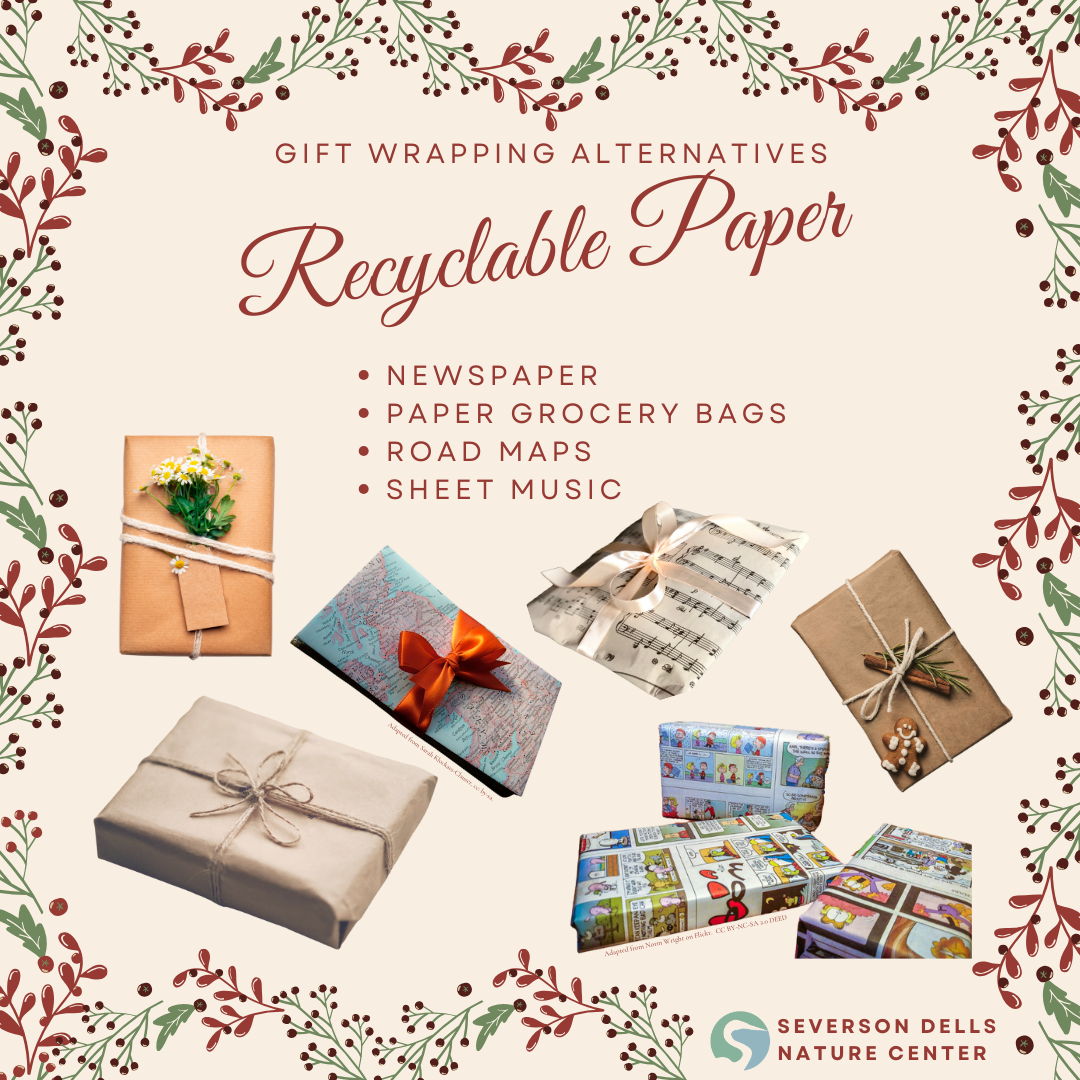
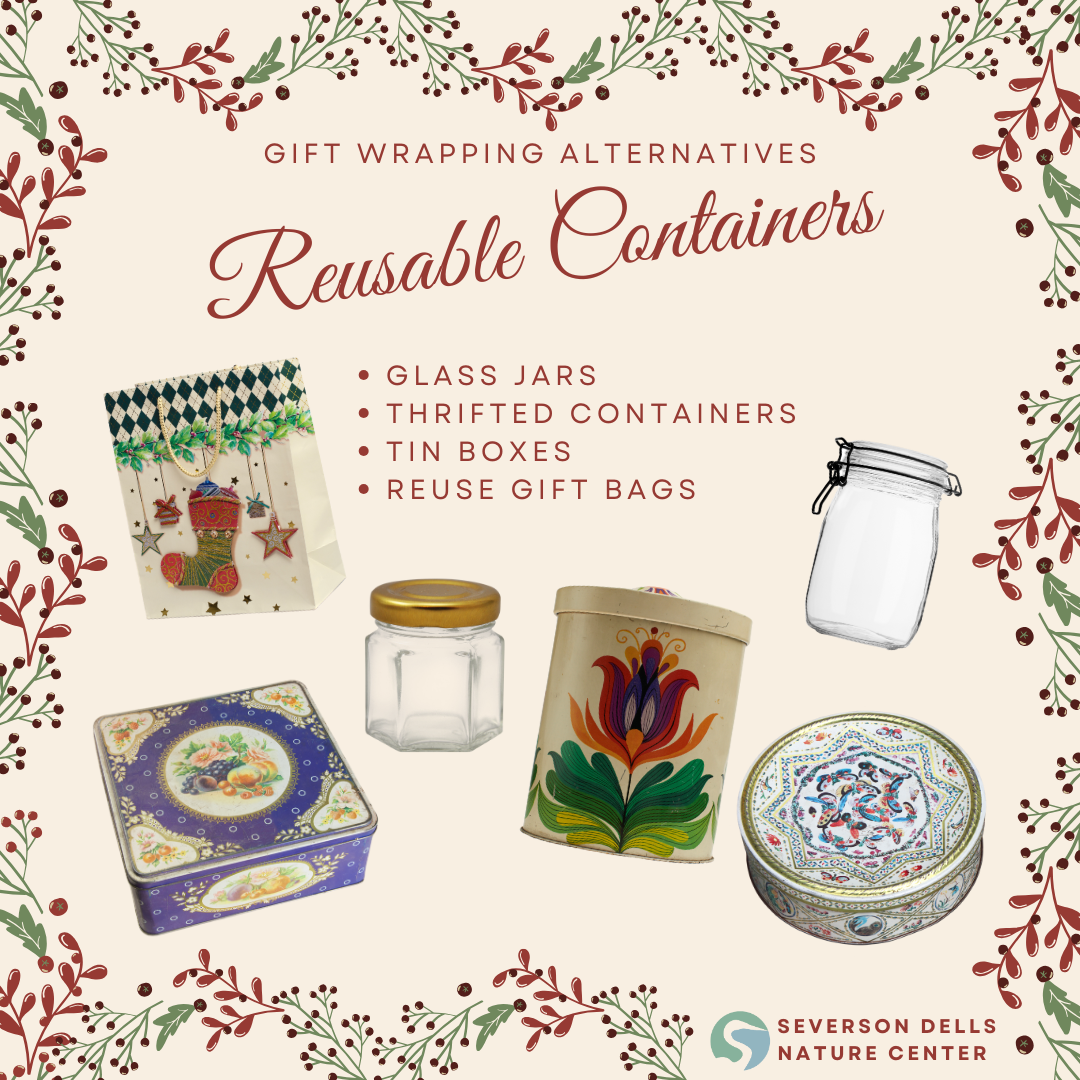
The materials we use to wrap gifts in is another major generator of waste around the holidays. Instead of wrapping presents in plastic-lined, non-recyclable wrapping paper, try some of these options!
Wrap with fabric:
Covering gifts with thrifted scarves, tea towels, or bandanas is a fun alternative to single-use wrapping paper. The fabric can function both as a wrapping paper and as a bonus gift!
Compostable or recyclable paper:
If you still want to wrap your gifts with a disposable material, reusing old papers and then recycling or composting them is a good option. Covering gifts with old newspapers or using up some of that stash of paper grocery bags that we all keep are usually my go-to options for recyclable wrapping paper, but feel free to get creative! Old road maps, pages from books that are falling apart, or sheet music can also make beautiful wrapping.
Reusable containers:
If your family is like mine, all gift bags are reused practically until they disintegrate. And of course, the most sustainable thing you can use to wrap presents is something you already have, so continuing to use gift bags that you have been given is a great way to avoid generating extra waste. If you’re looking for something more durable, wrapping gifts in old metal tins or glass jars can be a good option. Thrift and vintage stores are always full of metal tins (you know, the ones that once held cookies but now usually have sewing supplies in them), so keep your eye out for any that might fit your gifts.
Conclusion
Essentially, having a more sustainable holiday season comes down to three things: taking time to be mindful about your choices, having the energy to devote to being more eco-friendly, and having access to natural areas and decently priced second-hand stores. In a perfect world, everyone would have these things in excess, but sadly that is not how our world currently functions. Time, energy, and access are privileges that are out of reach for many of us, especially around the holidays. So if you’re reading this blog and thinking, “Gosh I could never do all of that!” know that you are not alone. If everyone took even a small step each year towards a more eco-friendly holiday season (like gifting one second-hand item to a friend, buying one less tube of wrapping paper, sharing cookies in reusable tin containers instead of ziplock bags, etc.), we could make a big difference.

RECENT ARTICLES