FIELD NOTES BLOG
December Bird Blog (2023)
End of the Year Birds
Looking out into the frigid snow-covered landscape of Illinois you could be fortunate enough to see many interesting little critters. The birds for this month of December thrive in the cold weather of Illinois. They either live here year round or move down from the even colder Canada to a much warmer climate, with an average temperature of 25 degrees Fahrenheit… just balmy. I guess we can’t judge them too much because many of us live in Illinois too. With the help of my friendly bird expert (thank you Jeff) we chose a bunch of prominent smaller birds with some great style of plumage. I hope you enjoy this month's bird blog; let's look at some birds!
Red-breasted Nuthatch
Sitta canadensis
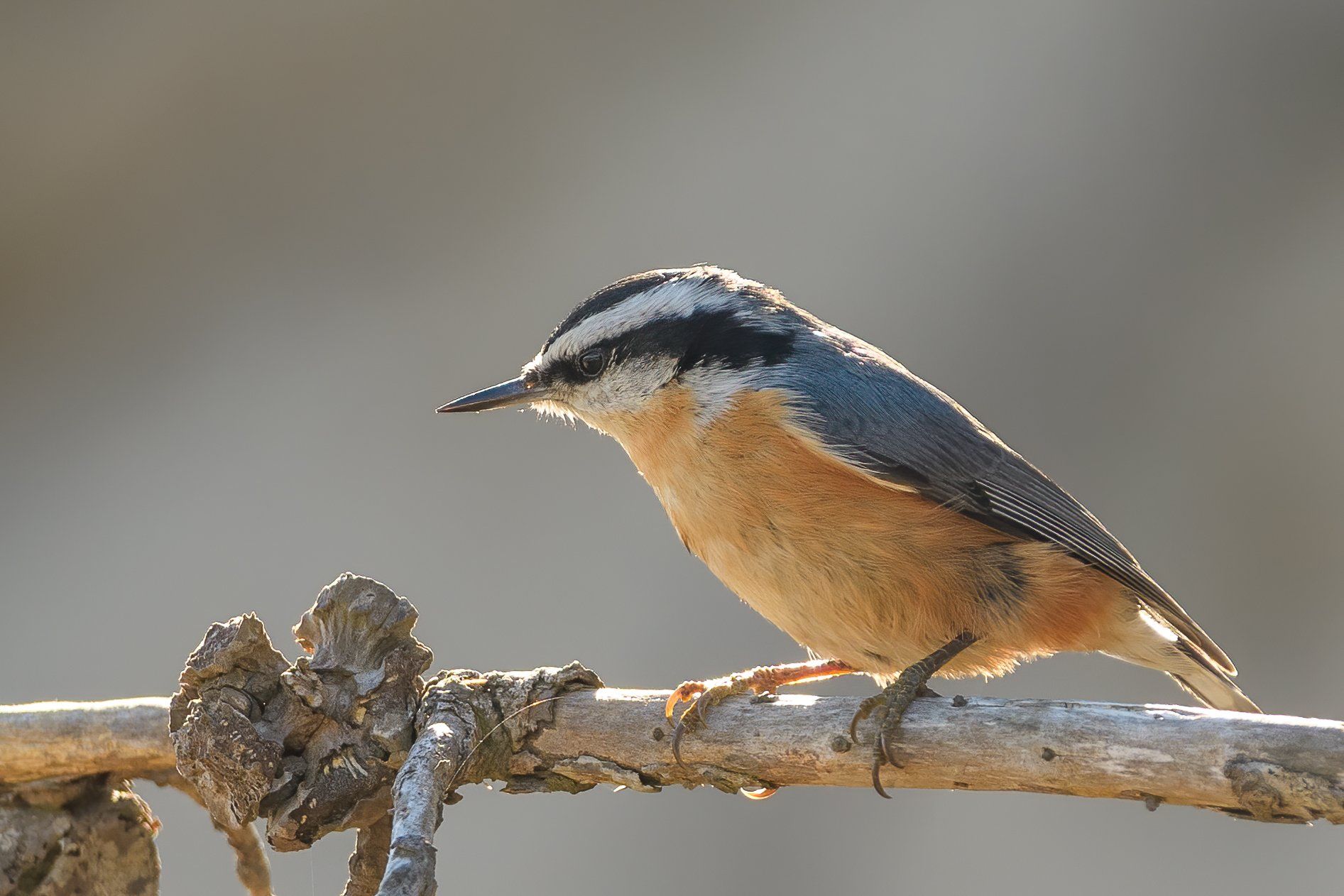
A small and stumpy bird, the Red-breasted Nuthatch has a very short tail, almost no neck, a broad chest, and very short wings. All these traits are antithetical to its long, narrow, pointed beak. The feathers on its back are a blue-gray coloration with a white head, a black cap, and stripes going over its eyes. Its bottom half is a rusty red splash above their stout legs. Nuthatches like this one have a unique way that they travel along trees moving like little wind up toys. They hop along bark up, down, left, right, upside down, rightside up, it doesn't matter. They are extremely quick and almost look like they aren't affected by gravity. They just go around the tree however they please! The red-breasted nuthatch shares a habitat range with the black-capped chickadee and have developed an understanding of each other's calls, regularly communicating with each other for a variety of different reasons. This nuthatch is one of the only nuthatches that actually migrate compared to its cousins, but it does tend to be a shorter range migration than many other birds. Listen for the nasal hornlike notes that sound like yank yank yank. If you want to hear an example click this link.
Golden-crowned Kinglet
Regulus satrapa
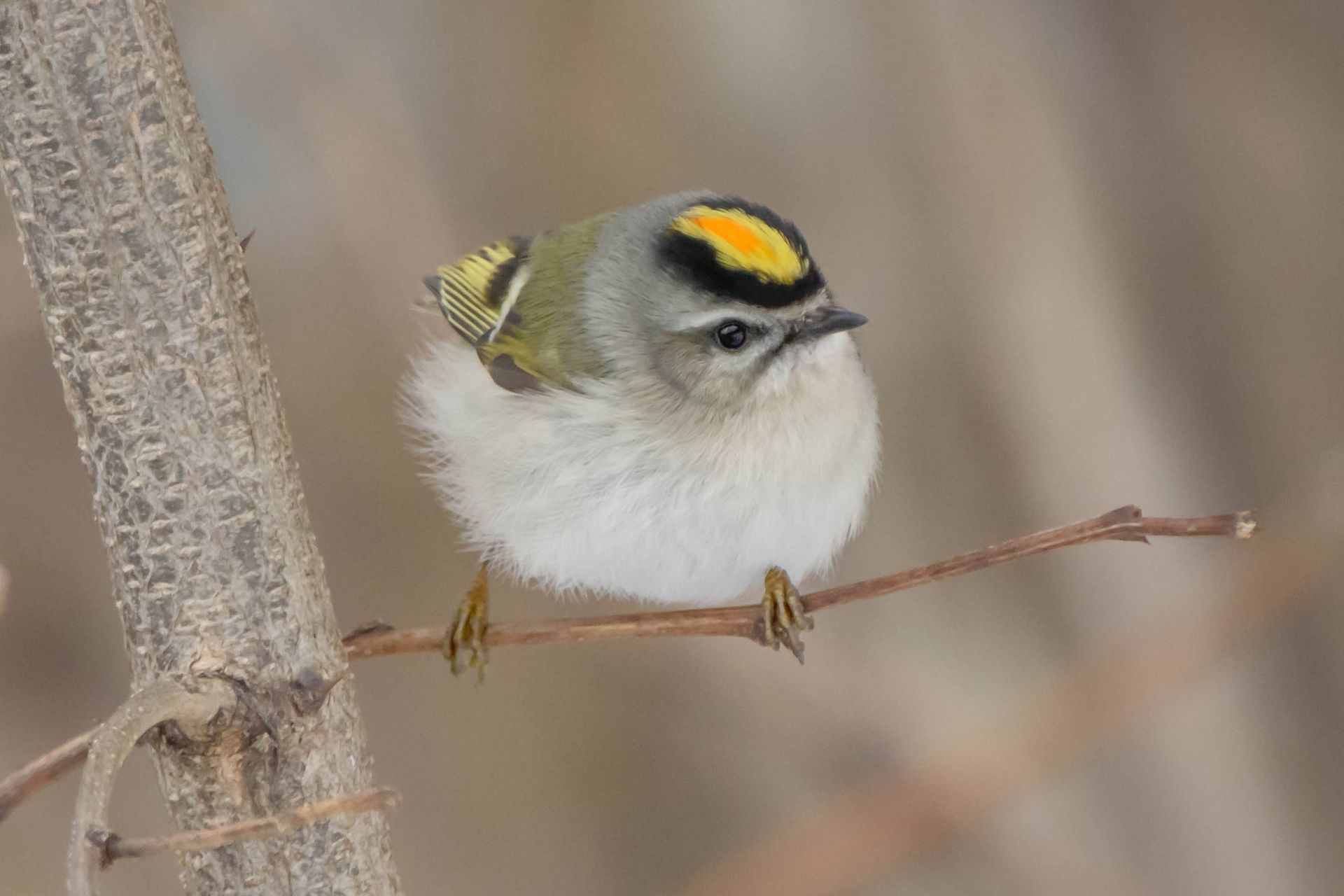
This hardy little bird, thrives in the cold months of a North American winter. The Golden-crowned Kinglet is a bird barely larger than a hummingbird with a golden mohawk on the top of its olive and gray body. They have black stripes along their short wings and a round body with a small tail. Their bills are short and thin specifically for gleaning bugs (this is a process where they catch invertebrates by plucking them from foliage or the ground). This bird tends to live year round in mountainous areas but those that breed across Canada like to travel south to spend winters all across the US. These birds aren’t the easiest to spot given their size and their tendency to spend most of their time high up in trees. When nest building the male and female work together over a little bit less than a week and have large clutches of 3-11 eggs back to back. When the first set of babies hatch and leave, they have another clutch right after. The male’s job is to feed the female and the babies. Listen for a very high-pitched tsee note that gets higher pitched at an accelerate right here.
Brown Creeper
Certhia americana
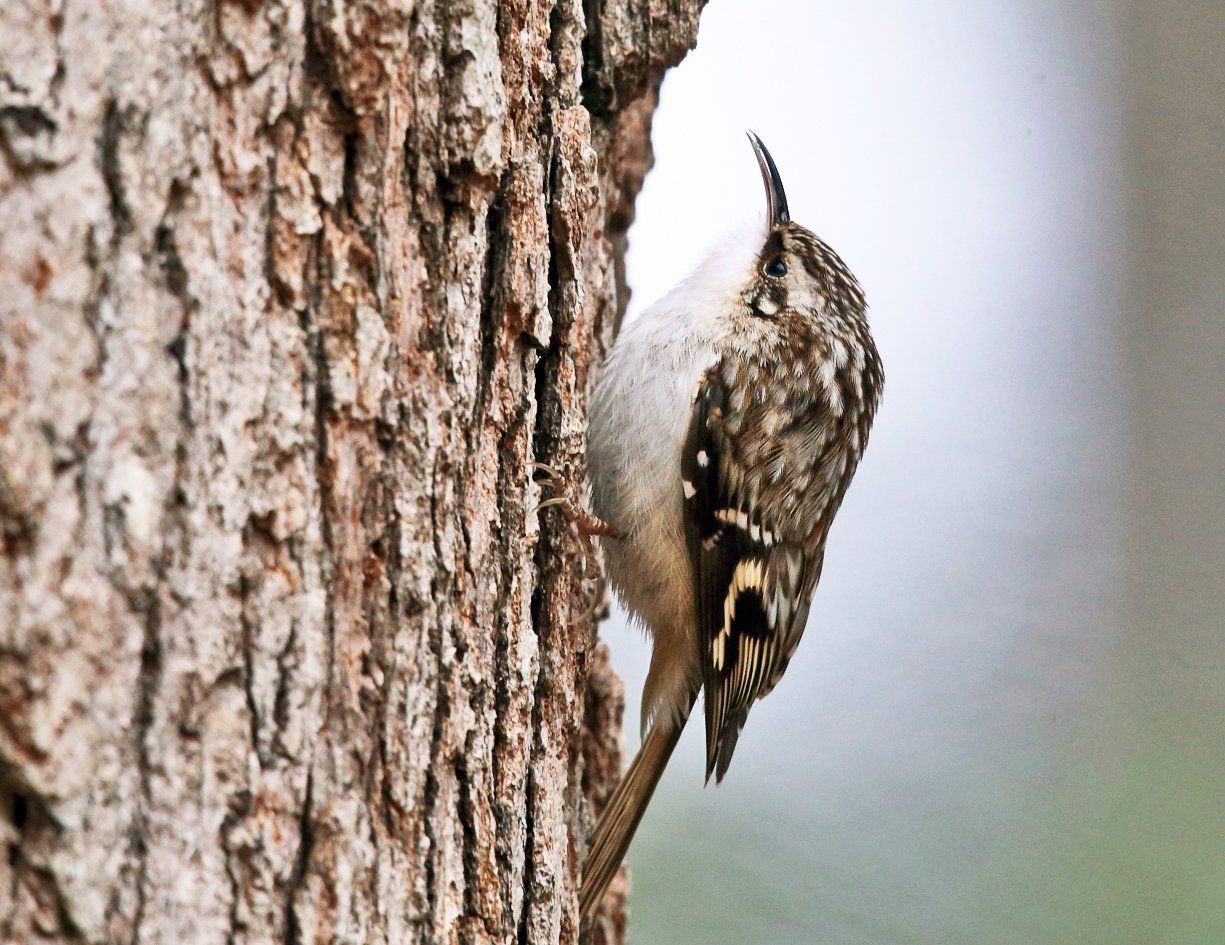
This bird looks like a little piece of bark climbing a tree, probing the bark with their strange downward curving bills searching for all the insects that they can. The Brown Creeper is thin and short with a long body, the top half of them hosts streaks of browns that are extremely helpful for camouflaging into trees. Their under half is mostly white with hints of gray. They rarely fly and when they do, it’s to reach a new tree. From the base of a tree they hunt in short jerky movements in a spiral up the trunk. They patrol many trees but prefer deeply furrowed bark. Here at Severson Dells, we have a tree known as a Shagbark Hickory. Its big ‘shaggy’ bark is a popular choice for the Brown Creeper and given its plentiful nature here at Severson you could be fortunate enough to see the Brown Creeper. Keep your eyes or ears out for it by our pond you might be able to spot clusters of them. If you are trying to listen for their song only the mail sings, you will need to listen for a high pitched song with a tremble in the middle.
Purple Finch
Haemorhous purpureus
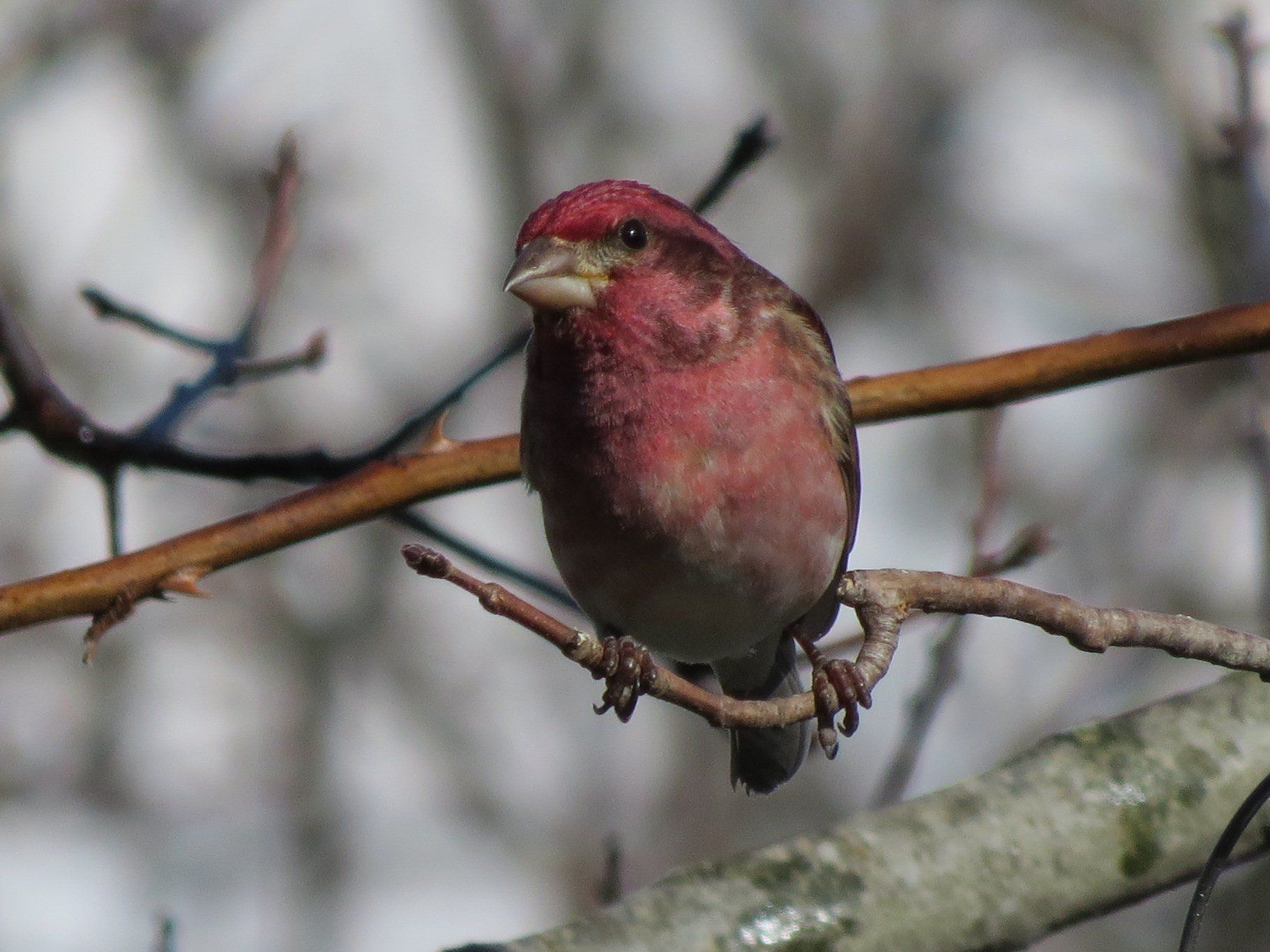
The Purple Finch is a pretty little bird with a splash of pink-red leaking from the top of its head down to its base where it blends into more of an off-white coloration. Its pink wings are framed by a black to brown border. This pink bird is a larger bird with a powerful chunky beak and a short notched tail. It thrives on black oil sunflower seeds. Unfortunately this bird is losing numbers in eastern North America due to an invasive bird called the House Finch who have many similar niches they prefer and tend to win over 95% of encounters between the two species. The purple Finch prefers to feast on seeds and its beak is optimized for cracking them open. The courting ritual by the males involves them carrying twigs or grass in their beak as well as flights with them sticking one fit straight up. If you want to listen to the varying calls of the Purple Finch click here!
American Tree Sparrow
Spizelloides arborea
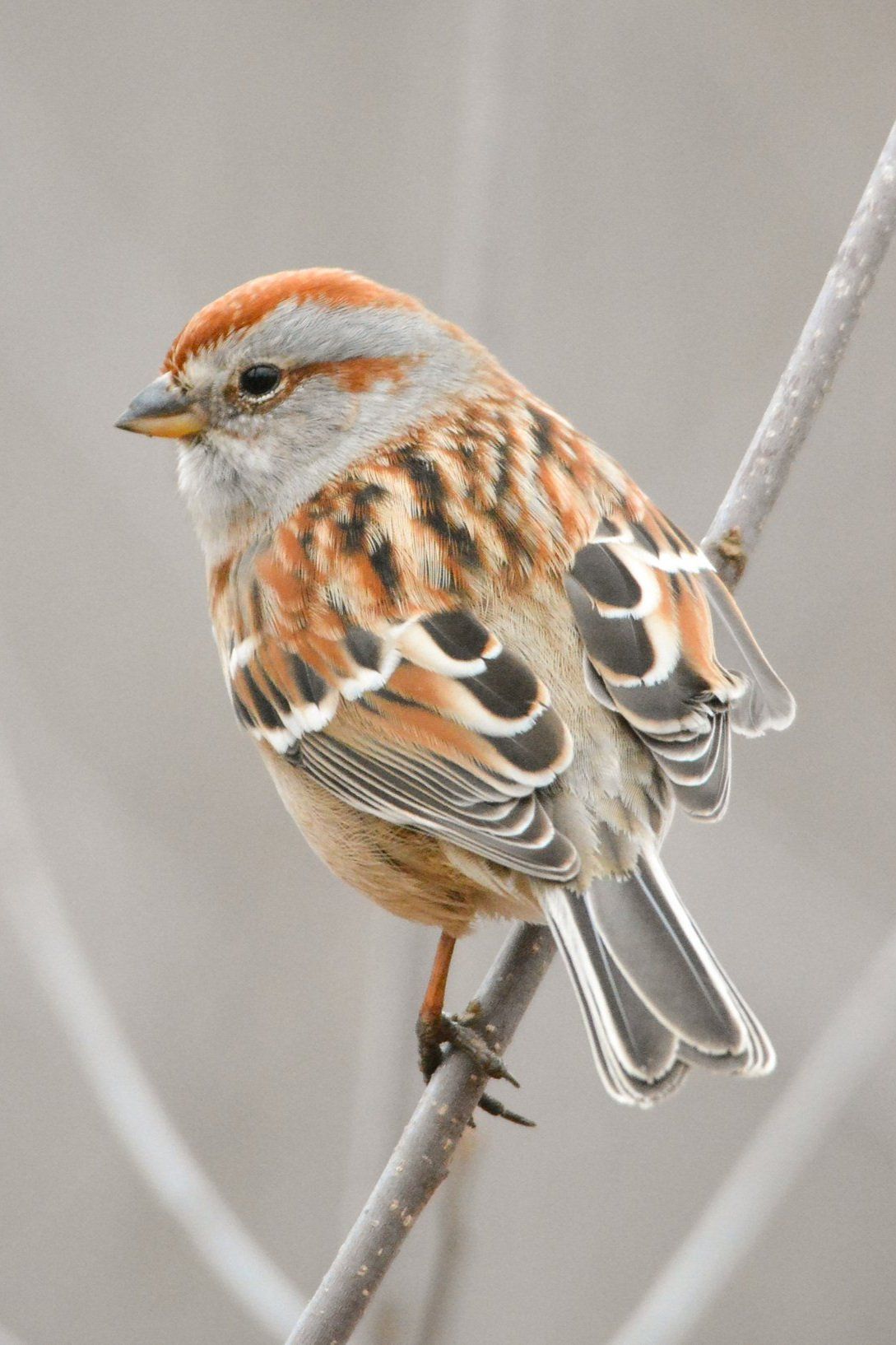
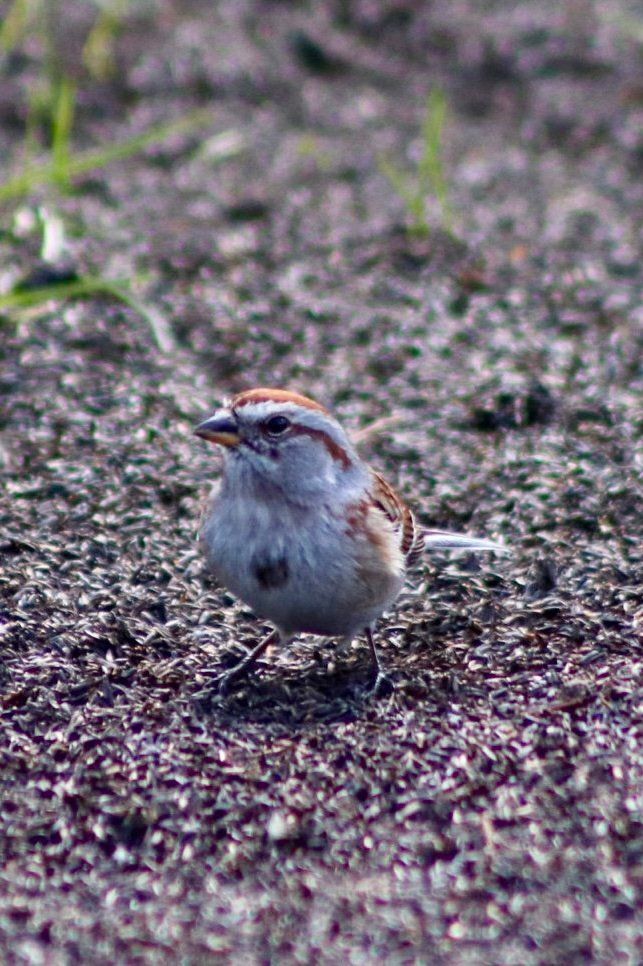
This circular little songbird has a round head and the tendency to fluff out their feathers, which makes itself look even more round (it's very cute). The American Tree Sparrow is a colorful bird with a gray head, rusty cap on top, and rusty eye lines. Its stubby beak is black on the top half and yellow on the lower half. They have a white underside except for a dark smudge in the center of its chest. Its back is streaked with rusty reds, blacks, and whites all the way down to its long black tail feathers. It's named the Tree Sparrow but ironically enough it spends most of its time foraging and nesting on the ground. This sparrow gets its unfortunately inaccurate name by European settlers being reminded of the Eurasian Tree Sparrows back home… and nothing to do with what the bird actually is. The American Tree Sparrow prefers very far north in Canada and all the way to Alaska for their breeding grounds and will migrate back to the central United States. To stay warm they eat and drink about 30% of their body weight per day. The male’s song is a series of high pitched whistling notes that slowly fall in pitch.
The end of the calendar year is upon us, which means absolutely nothing to these birds but regardless, time will continue and so will the bird blogs! Prepare yourself for next year. We have so many different native birds that I want to share with all of you! Best of luck on your birding adventures and I hope you are able to spot all of the feathered friends talked about for this December.

RECENT ARTICLES