FIELD NOTES BLOG
Nature's Blueprint
Nature holds the answers for how to be more efficient with managing our supplies of earth’s natural resources. In fact, nature serves as the inspiration and blueprint for many structures and objects we use every day!
Biomimicry is a practice of engineering that creates designs based on structures and sequences from the Earth’s natural world, including but not limited to plants, animals, and geographies. Biomimicry designs are meant to imitate functions that already exist and occur in nature. These designs are being transferred over and scaled up to provide solutions to human caused problems. There are three main
core principles that make up biomimicry: recreating natural shapes, processes, and entire ecosystems.
Through evolution, nature has already perfected its design solutions, each with its own unique function and capabilities. By recognizing natural patterns and design phenomena that already exist in nature, more efficient and natural solutions can be used for everyday human issues. There are infinite examples of naturally occurring
shapes and sequences found throughout nature: fractals, spirals, tessellations, optimized flow, camouflage, etc.
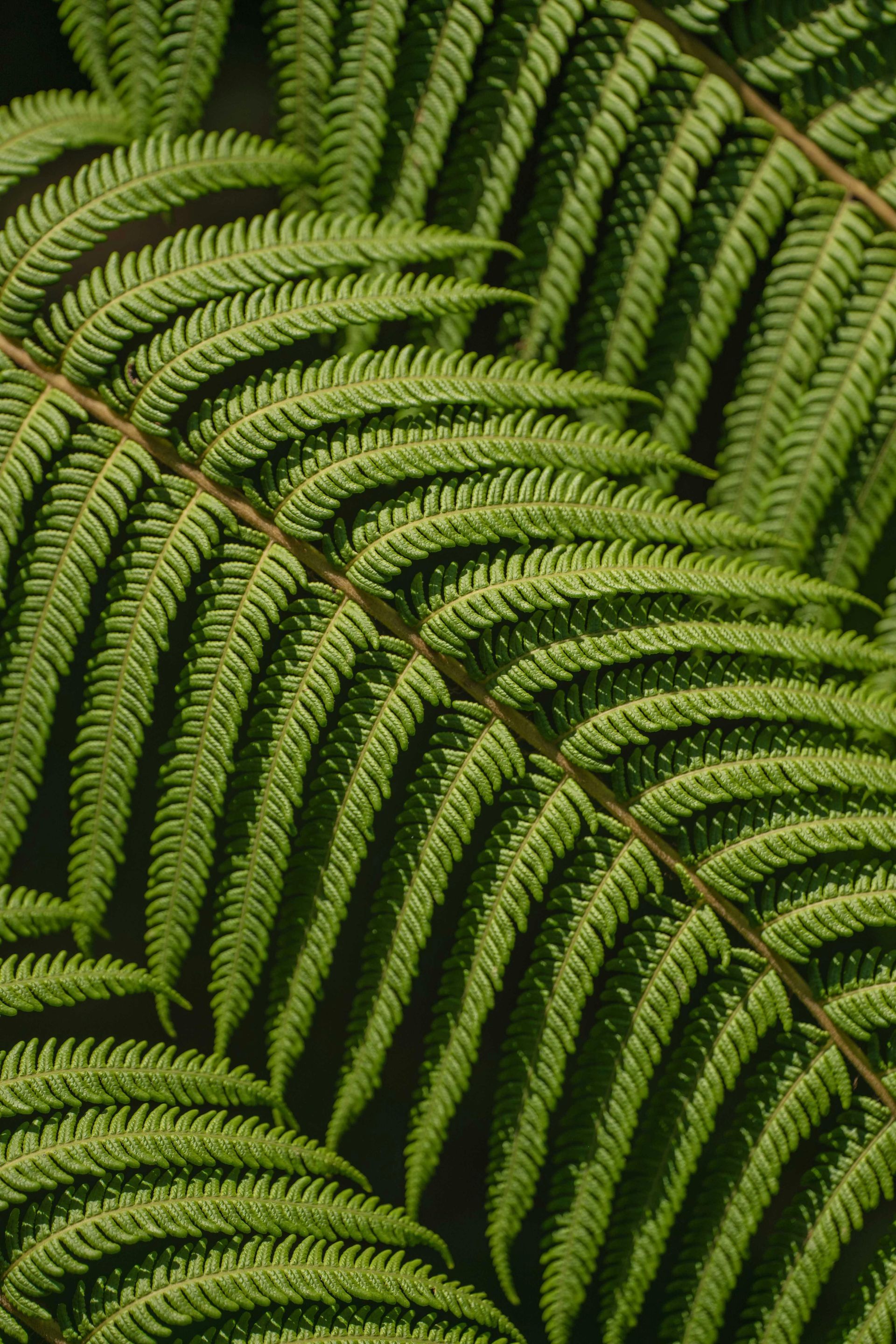
- Fractals are self-repeating patterns that maximize distribution and surface area, and these exist all throughout nature. Common examples of fractals in nature are lightning patterns in the sky, fern leaves, and coral formations. All which grow in fractal patterns to maximize their surface area: for prime energy release, nutrient absorption, and photosynthesis. Fracture patterns have been scaled up and used throughout engineering designs and applications, just look at urban planning in cities like Rome, Italy. The roads in Rome use fractal layouts to minimize congestion and improve traffic flow.
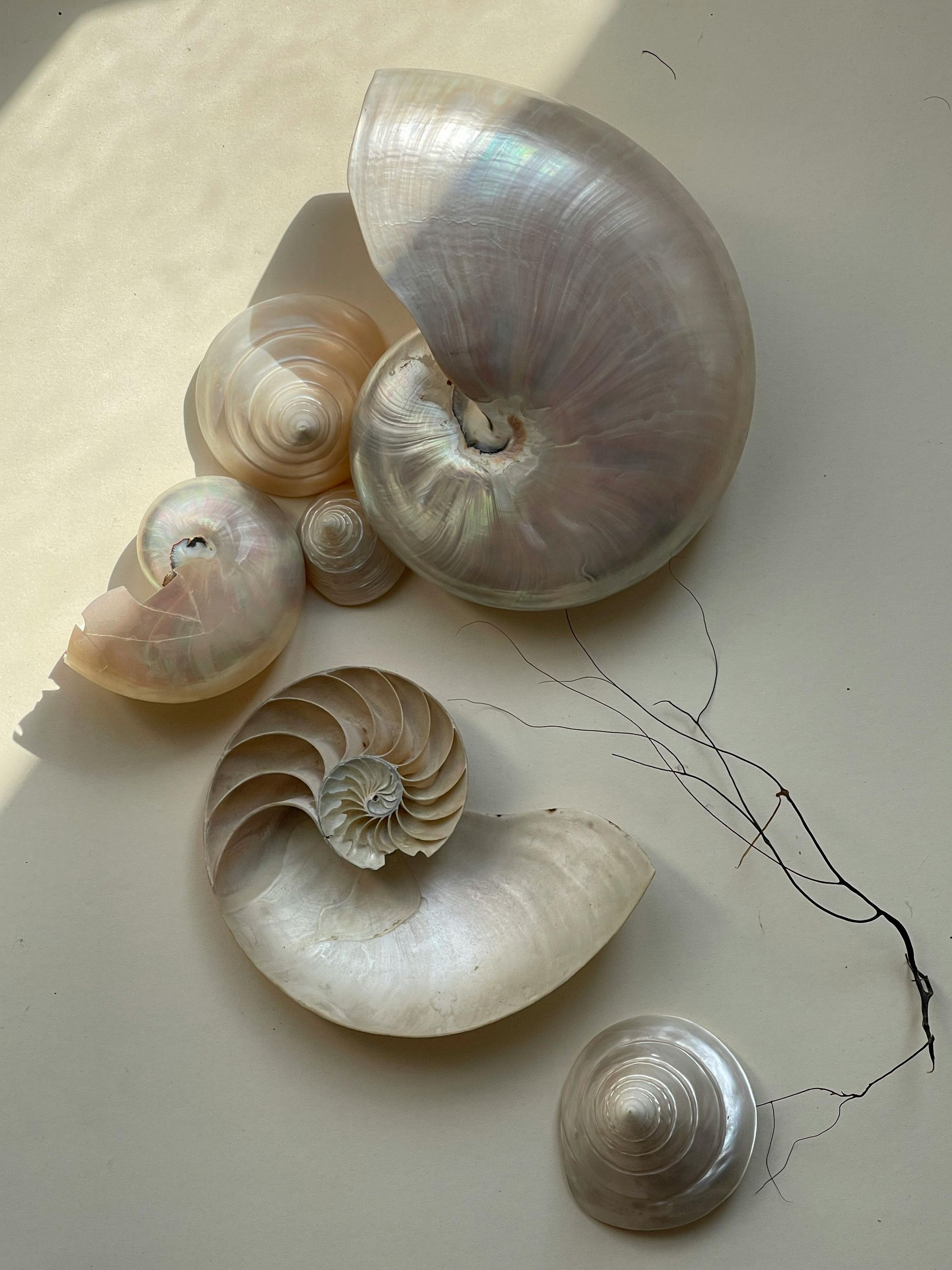
- Spirals are very commonly seen all throughout nature, this shape is unique because it allows for continuous growth without changing shape (it continues to expand and grow on without interfering with the previous growth), while optimizing new growth, strength, and energy efficiency. Common examples of spirals in nature are seashells, pinecones, and weather patterns, which move and grow in ways that maximize space and resource allocation. Spiral designs have regularly been considered and mimicked in engineering designs, commonly seen in architectural designs (Gherkin building in London, UK, Guggenheim Museum, New York, USA) as this shape provides a strong but flexible structure, capable of withstanding large stresses. Spiral shapes are also used in renewable energy designs, primarily with wind turbines (vertical axis wind turbines: VAWTs). VAWTs are better suited for urban environments. They are capable of noise reduction, omni-directional wind capture, automatic wind alignment, and enhanced low-wind speed performance, when compared to the more recognizable wind turbine design horizontal axis wind turbines (HWATs). VWATs provide increased power output, minimized maintenance requirements, and enhances wind capture and conversion efficiency, making them more efficient for everyday weather patterns.
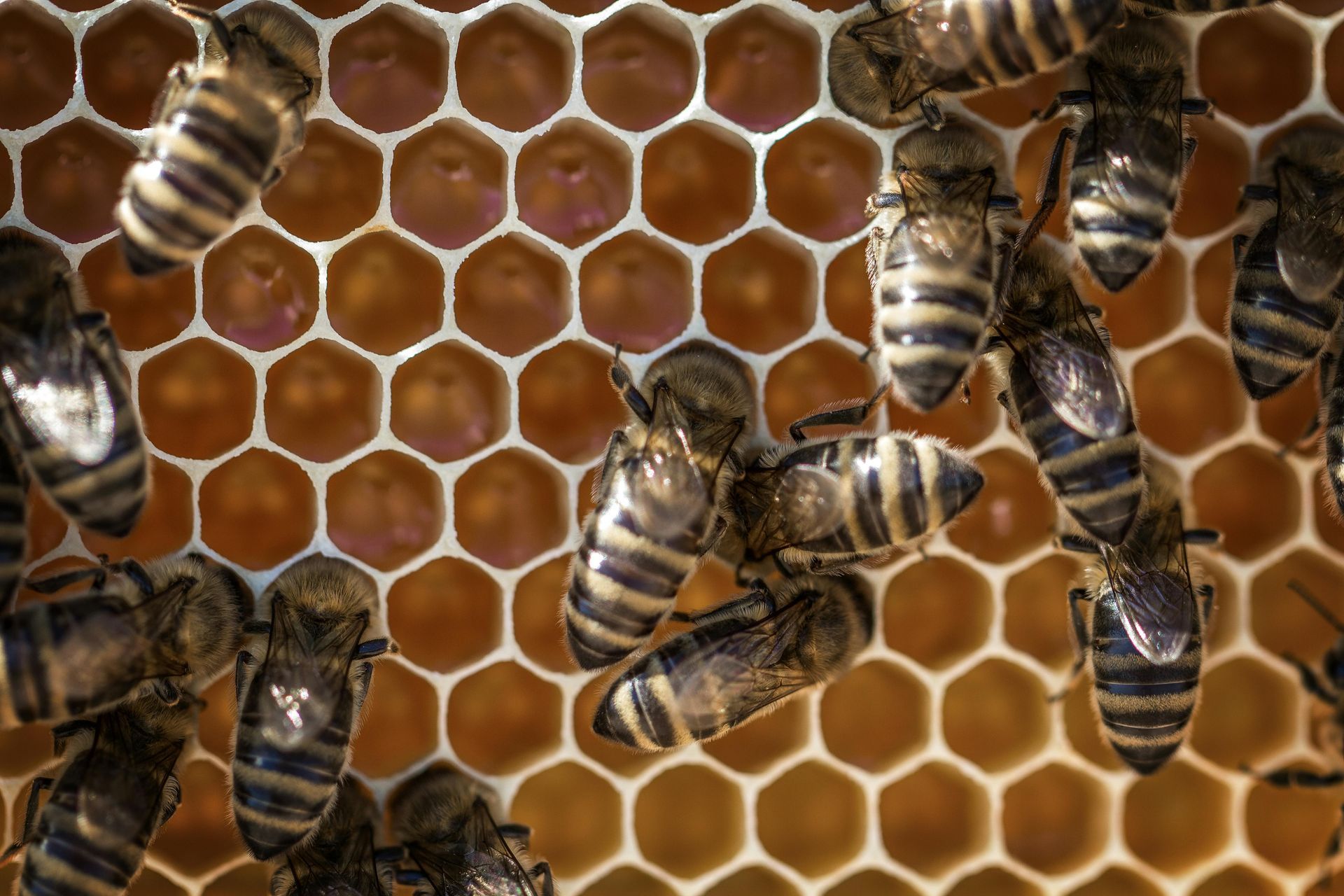
- Tessellations are repeating geometric patterns that fit together without gaps or overlaps, that can repeat in all directions infinitely. Common examples of tessellations in nature are honeycomb structures in beehives, turtle shells, and snake scales, which are uniquely arranged to optimize efficiency, structural support, and space usage. Tessellation patterns are harder to recreate in engineering design, but they are applied in architectural design with geodesic domes, and in artistic design with mosaics and stunning tile works. A common item that is often overlooked with its application of tessellation models is building design, and how materials lay on top of each other. Think of a basic brick wall, the same rectangular shape is repeated over and over again and seamlessly built up on top of each other until it is a complete wall, with no gaps or cracks.
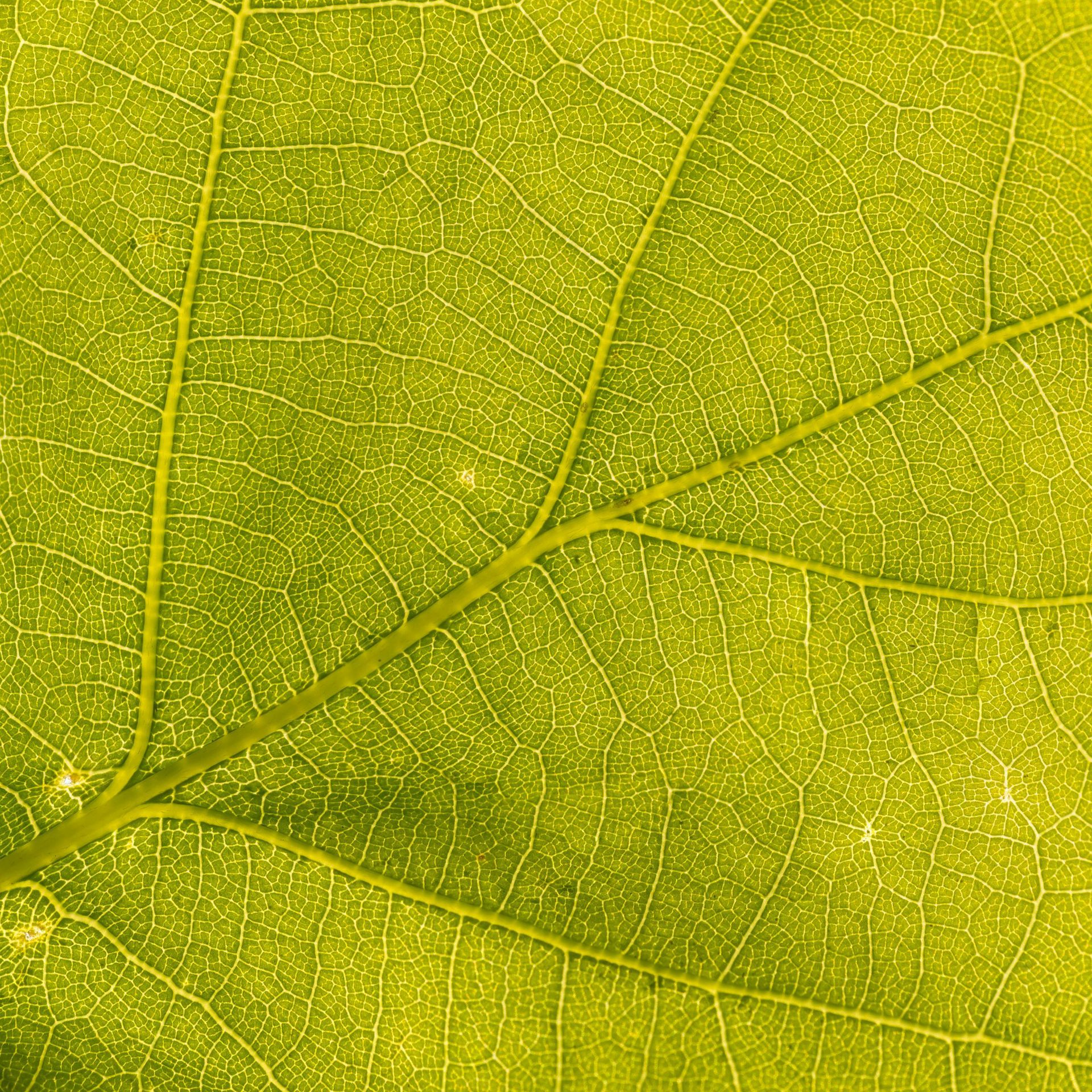
- Optimized flow is a bit harder to conceptualize. Optimized flow patterns minimize resistance, maximize efficiency, and are always adapting to changing conditions. In all natural systems, there is a series of networks and channels that transport materials and signals from a central source to various end destinations. These channels are so advanced that they provide a constant flow across time and space that occurs rapidly, and goes through a series of interconnected loops, constantly re-routing and changing course in less than a nanosecond as conditions change. Common examples of optimized flow in nature are the cardiovascular system in humans, the vascular system in plants, and the body shape of birds and fish. Within the cardiovascular system, blood vessels are quickly responding, and constantly expanding and contracting to deliver blood efficiently throughout the human body, and this is happening instantaneously. A similar process occurs in the vascular system of plants, where there are xylem and phloem, which aid in the transport of water, minerals, and sugars throughout plant structures, and they are regulated by signals coming from the plant based on current surrounding conditions that are ensuring efficient distribution of these resources. Bird and fish optimized flows appear different, but are the same engineering principle. Natural flyers and swimmers are capable of operating under various unpredictable conditions, they can take off, land, glide, and repeat as many times as they want with the same maneuverability possible each time. This is possible because of these animals' natural ability to alter flow control. Meaning, they are capable of postponing boundary layer separation (reducing drag and increasing lift), delaying and advancing laminar turbulent transition (abruptly changing from a smooth, ordered flow to a chaotic, disordered flow), and altering vortical dynamics (changing how a fluid forms, and moves). Essentially, birds and fish are capable of making split second decisions that allow them to alter fluid and aerodynamics. Optimized flow is considered throughout all of engineering design. Biomimicry applications of optimized flow include the design of swimsuits and high speed trains, both of which are meant to mimic the bird and fish relationship described earlier, defying fluid and aerodynamics.
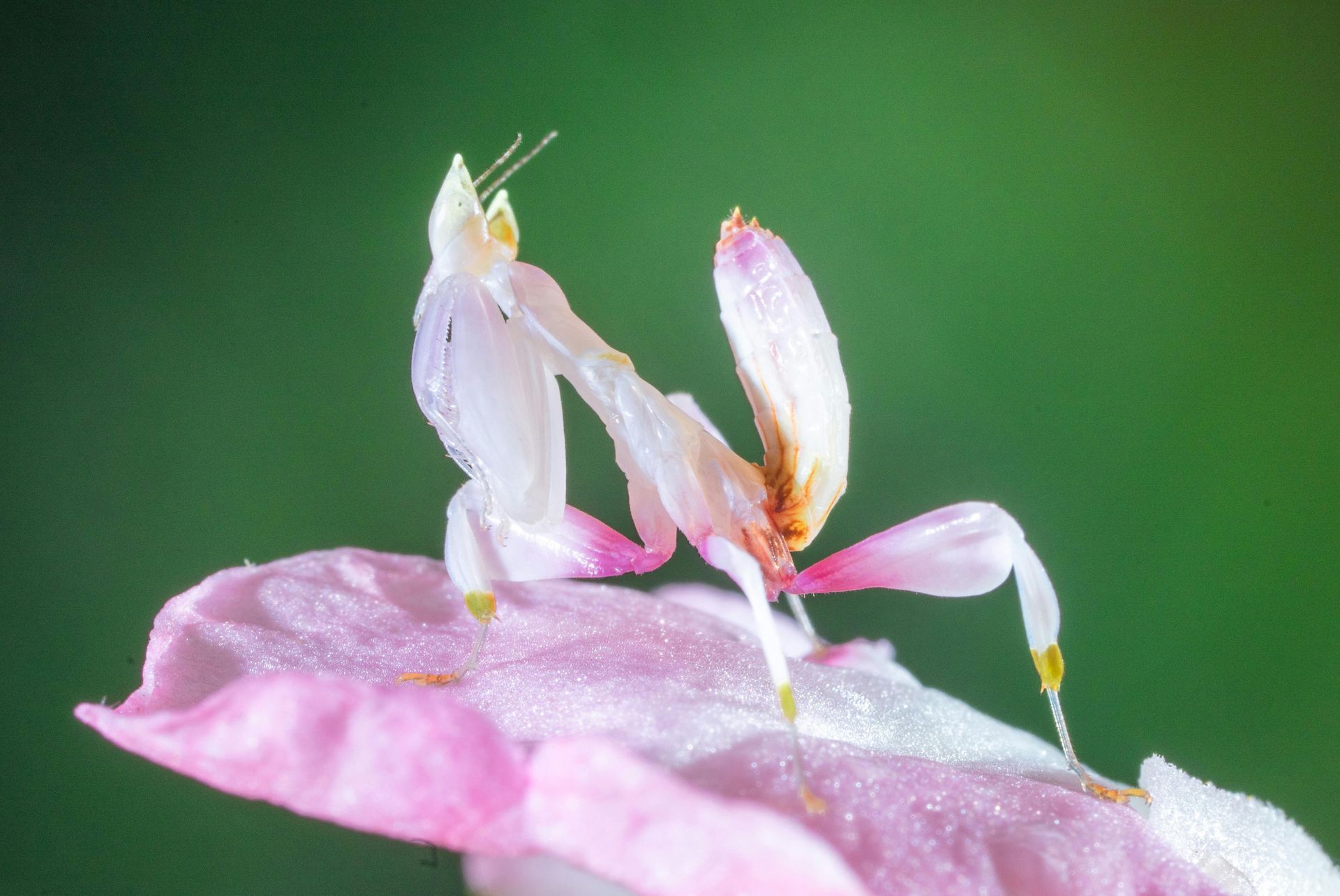
- Camouflage is a method of concealment that allows organisms and objects to blend into their surroundings. This is used as a survival tactic to help an organism match their environment, making them less visible to predators. Common examples of camouflage in nature are chameleons changing color, frogs having multiple colors and spots on them to blend in with swampy environments, and bugs resembling plants such as the walkingstick and the orchid mantis. Camouflage is commonly replicated throughout engineering design, through the incorporation of buildings that blend into natural surroundings, the military, and fashion. Disney World in Orlando, Florida does an excellent job of using camouflage throughout their resort. They meticulously chose the colors “Go Away Green” and “Blending Blue” to be used on backstage buildings, cameras, trash cans, construction fences, and utility boxes throughout their adventure park to make less desirable infrastructure blend into the background. Their use of Go Away Green on objects like fences, buildings, and equipment blend into the natural greenery, and Blending Blue is used on taller structures to blend into the sky. By using these colors, it tricks visitors' brains by blending the infrastructure into the surrounding environment, and not seeing them as directly.
There are so many more shapes and sequences that were found in nature and used in the inspiration of the designs than just these five mentioned, the list could keep going on forever. These are just the sequences that we have found, imagine all of the repeating shapes and patterns that also exist but humans have yet to notice.
Biomimicry is a process that helps humans to learn how to create green solutions that are more self-sustaining, and that replicate designs that already exist all over nature. Biomimicry offers more than just engineering inspiration, it provides the solutions towards a sustainable, efficient, and resilient future in an ever evolving world. It is the master blueprint for how to recreate natural processes that are resilient but also enhance the surrounding environment at the same time. As mentioned before, there are so many examples of these natural processes being used in engineering designs and principles. Some other notable examples include:
- How bur seeds inspired velcro
- How mosquito proboscis inspired a less painful needle
- How animal limbs inspired earthquake resistant bridges
- How a kingfisher, an owl, and a penguin inspired a Japanese Bullet train
- How termite mounds inspired building design for efficient cooling and ventilation
- How coral organisms inspired innovative carbon sequestration
- How birds inspired flight
- How prairie systems inspired sustainable and more efficient agriculture
- How stenocara beetles inspired water harvesting from air
Many of the resources we need for everyday life (energy, water, etc), are abundant on Earth. All ecosystems in nature are dynamic, where every part and small change will affect and impact the entire ecosystem. Ecosystems are complex and interconnected networks, and by studying these systems we can gain knowledge about how to recreate more sustainable, efficient, and resilient technologies, while preserving the resources that it needs to comfortably function and survive. Within recent years, global crises are more relevant than ever. Between changing weather patterns, habitat and biodiversity loss, and resource depletion, the need for
environmentally friendly solutions to everyday problems has never been more dire. Biomimicry provides this, by offering a practical blueprint for natural design that both satisfies the objective, while also keeping a balance between the natural world. Ultimately, we want to keep a harmonious relationship between human ingenuity and the existing ecosystems. Through the use of biometrics, a future where human made technology and nature work together for the well being of planet Earth, is possible.
Mother nature is the original engineer, and has been innovating for billions of years already. Let us celebrate the scientists and designers who turn to her for their inspiration. For all we know, the solutions to so many problems may have been right under our noses this whole time!
Sources:
Baumgardner, Alex. “Biomimicry and Engineering: Doing It Nature’s Way.” Glumac, Glumac A Tetra Tech Company, 12 Apr. 2016, glumac.com/biomimicry-and-engineering-doing-it-natures-way/.
Harris, Ryan. “The Wonders of Biomimicry: Engineering Inspired by Nature.” Kids Discover, Kids Discover Online, 18 July 2024, kidsdiscover.com/teacherresources/the-wonders-of-biomimicry-engineering-inspired-by-nature/?srsltid=AfmBOop_AF9fUnQjdz54ZB6O-EZpZs7ZjYfm4yrb-cpU2-WBw2w_dp3M.
“10 Patterns in Nature That Solve Design Problems.” Learn Biomimicry, Biomimicry Institute, www.learnbiomimicry.com/blog/patterns-in-nature-that-solve-design-problems?srsltid=AfmBOop2VWgDqG9xrfzQGN4m-UGkXMmHokFdDpYl2AcHl4d88Opoo1DY.
Naier. “Spiral Wind Turbine: Harnessing the Power of Wind in a Unique Design.” Nai Er Feng Dian, Yixing Naier Wind Power Technology Co., www.smartwindturbine.com/a-spiral-wind-turbine-harnessing-the-power-of-wind-in-a-unique-design.html.
Ralevski, Alexandra. “Looped Network Optimizes Water and Nutrient Flow .” AskNature , Biomimicry Institute, asknature.org/strategy/looped-network-optimizes-water-and-nutrient-flow/.
Devi, Preevena. “Biomimicry: Learning from Nature, the Original Engineer.” Taylor’s University, Taylor’s College, 21 Apr. 2025, university.taylors.edu.my/en/student-life/news/2025/biomimicry-learning-from-nature-the-original-engineer.html#principles-of-biomimicry.

RECENT ARTICLES