FIELD NOTES BLOG
From Prairies to Skyscrapers: Nature and Architecture in Northeastern Illinois
Nature and Architecture in Northeastern Illinois
In the Northeastern Illinois region, from earthen housing structures, wigwams, modular summer dwellings, and many other vernacular architectures of regional indigenous nations; to log cabins and sod house constructions of early European settlers; and the Prairie School design movement with Frank Lloyd Wright’s version of organic architecture, people have been designing in and with the native prairie, woodland, and wetland ecosystems of northeastern Illinois for millennia.
Where to see these and other regional examples of natural architecture:
1. Many styles of regional indigenous architecture directly incorporate materials found in local ecosystems such as tree
bark and cordage. One example is this adaptation of the vernacular architecture of the wigwam, for the design of an exhibit on Indigenous identity at the MacArthur Foundation
headquarters in Chicago.To see another example, look
here at a recent affordable housing construction, designed in collaboration with a Native American advisory council to include spaces that foster valued gathering practices and that incorporate traditional colors such as yellow and blue, described as
“organic colors”.
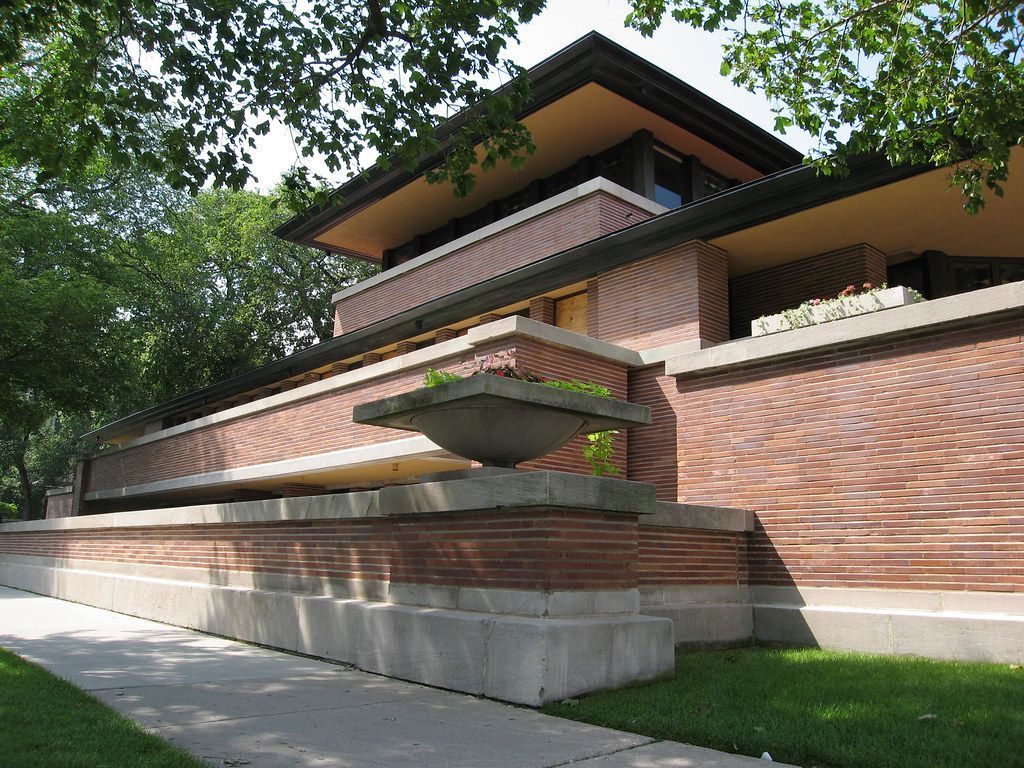
2. The Prairie School movement began at the beginning of the 20th century in Chicagoland. One of its most famed designers is Frank Lloyd Wright, whose buildings are
characterized by strong and dense geometries and brick or stucco, mirroring textures and shapes of the Illinois prairie. Considered the quintessential example of Wright’s design, the
Robie House in the Hyde Park neighborhood of Chicago offers weekly tours.
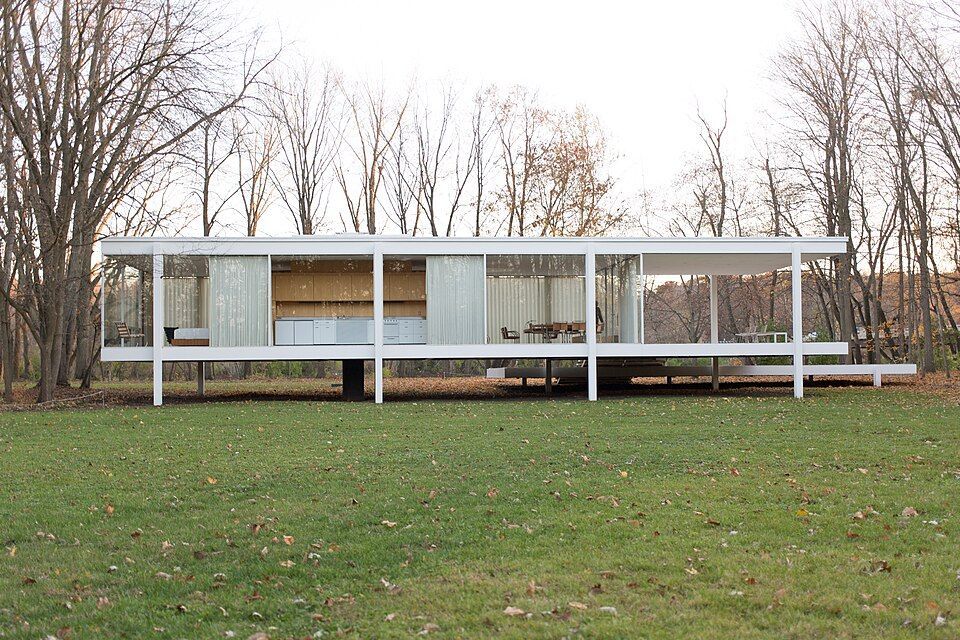
3. The
Edith Farnsworth House was designed by the prolific 20th century architect Mies van der Rohe, known particularly for his work in this region. Although his other designs are not necessarily known for their incorporation of, or modeling of, natural systems, this project is notable in terms of how his simple, clean modernism can integrate so well into natural scenes, minimizing an inhabitant’s separation from the landscape.
Tours are available March-November.
Developments in Natural Architecture
When considering the relationship between nature and architecture from the late 20th century to today, three popular and emerging design practices are
biophilic,
biomimetic, and
regenerative.
Examples of these styles regionally:
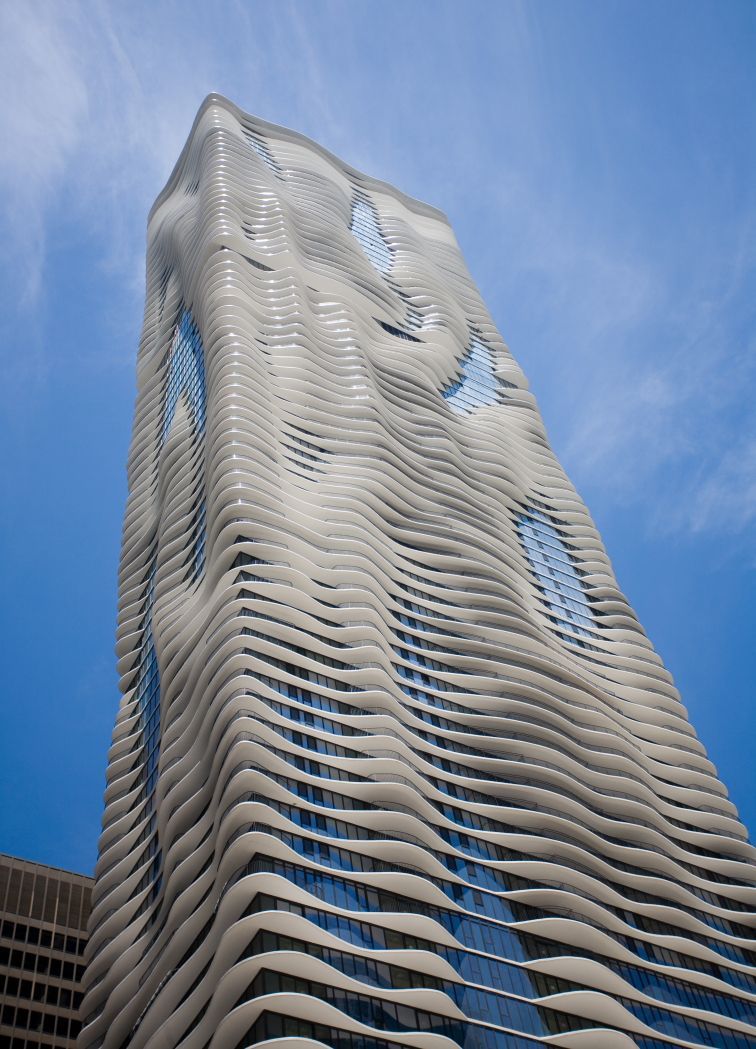
1. Completed in 2010, Studio Gang’s(the firm founded by the famed architect Jean Gang)
Aqua Tower is a recent example of architecture that incorporates several of these practices. The facade of the building is a sort of biomimicry, designed using an imagined
topographical map as seen from above, as the indented portions of white ridging represent water pooling. This building does not advertise being open for tours, but can be seen on this walking
tour.
2. Another restorative design in a rural setting on former cropland is in Lake County. According to Practice Landscape, the goal of
Lake County Adaptation was to transition it to meadow, wetland, and add a series of residential buildings for the property owners with the intent to “design for healthy soil.” They transformed a former
retention pond and barn to recreate a wetland ecosystem and allow space for innovative
agriculture. Details about this project can be found
here.
Sources
- https://www.museum.state.il.us/muslink/nat_amer/post/htmls/te_houses.html
- https://iandmcanal.substack.com/p/archeological-sites-of-northeastern
- https://www.mpm.edu/index.php/educators/wirp/great-lakes-traditional-culture/material-culture/housing-architecture
- https://www.mpm.edu/index.php/content/wirp/ICW-03
- https://www.archpaper.com/2025/03/we-will-tell-our-story-decolonial-critique-chicago-architecture/
- https://www.architecture.org/online-resources/architecture-encyclopedia/prairie-style
- https://www.architecture.org/online-resources/buildings-of-chicago/robie-house
- https://www.artic.edu/files/3986f430-a5cd-4030-8c9e-5faef1b226bb/AIC_MuseumStudies_21-2_UPDF.pdf
- https://www.terrapinbrightgreen.com/wp-content/uploads/2025/05/14-Patterns-10th-anniv-ed-v2025-05.pdf
- https://www.terrapinbrightgreen.com/blog/2017/02/biomimicry-versus-biophilia/
- https://www.archdaily.com/954004/what-is-biomimetic-architecture
- https://www.miessociety.org/mies-works
- https://edithfarnsworthhouse.org/history-farnsworth-house/
- https://practicelandscape.com/wp-content/uploads/2026/01/2025_PracticeLandscapeR_SlowWater_PRINT.pdf
- https://studiogang.com/projects/aqua-tower/
- https://dictionary.cambridge.org/us/dictionary/english/topographical
- https://practicelandscape.com/project/lake-county-adaptation
- https://practicelandscape.com/wp-content/uploads/2026/01/2025_PracticeLandscapeR_SlowWater_PRINT.pdf
RECENT ARTICLES