FIELD NOTES BLOG
Mushrooms, Mycelium, and Fungi Explained
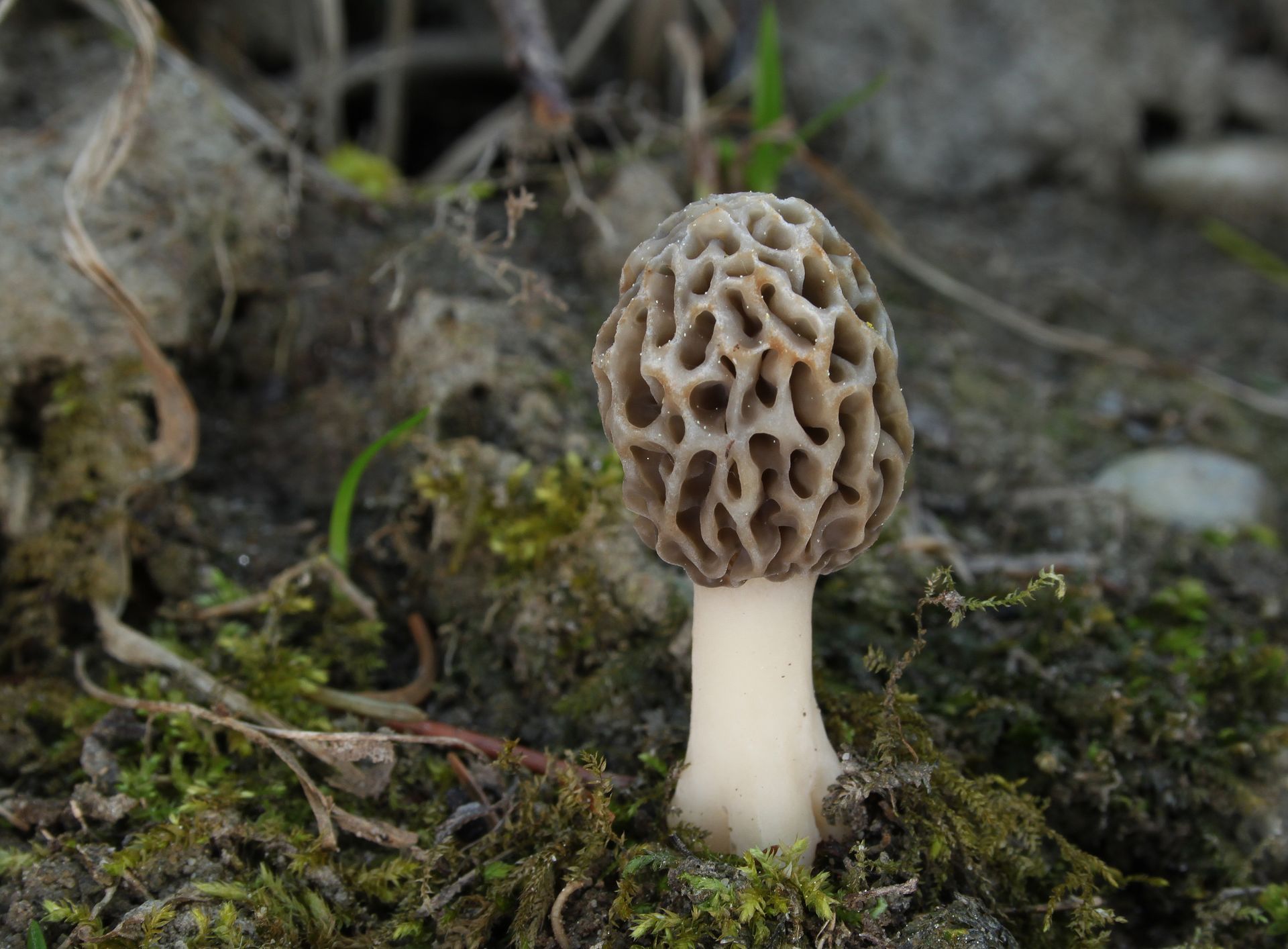
It’s that time of year that budding mycologists and mushroomers alike look forward to! Spring is in full bloom, and mushrooms are appearing in the forests of Northern Illinois. With the emergence of morels and other edible species, mushrooms are on the mind of many, and there is no better time to learn about these elusive organisms!
Fungi have been on the Earth for over a billion years, but they're still not very well understood. Scientific estimates suggest there are between 2.2 and 3.8 million species of fungi in the world, although only about an estimated 10% of them have been identified! Despite their enigmatic nature, ongoing scientific inquiry continually unveils intriguing insights into these organisms. Understanding the pivotal role fungi play in ecosystems requires unraveling the unique characteristics and evolutionary relationships of the truly fascinating fungi.
Fungi Explained
When considering living organisms, the conventional dichotomy often revolves around plants or animals. Fungi, however, are neither. Like plants and animals, fungi are eukaryotes, meaning that their cells have a nucleus where DNA is stored. This is about where the similarities end though. Unlike plants, fungi lack the ability to perform photosynthesis for energy production, and unlike most animals, fungi do not have stomachs. Instead, fungi typically excrete digestive enzymes to break down materials outside of their bodies, which they can then absorb. Another quality that is unique to fungi is that they have chitin (the same material that makes up an insect's exoskeleton) inside of their cell wall which allows them to grow through hard surfaces like rock and concrete!
Mushrooms are the visible reproductive structures of certain members of the Fungi kingdom- think of them like an apple of an apple tree. The actual mushrooms, however, constitute only a fraction of the organism's entirety. The bulk of the fungus is composed of minuscule thread-like structures called hyphae, which grow underground or in wood. Cumulatively, these threads form vast, interconnected networks of hyphae known as
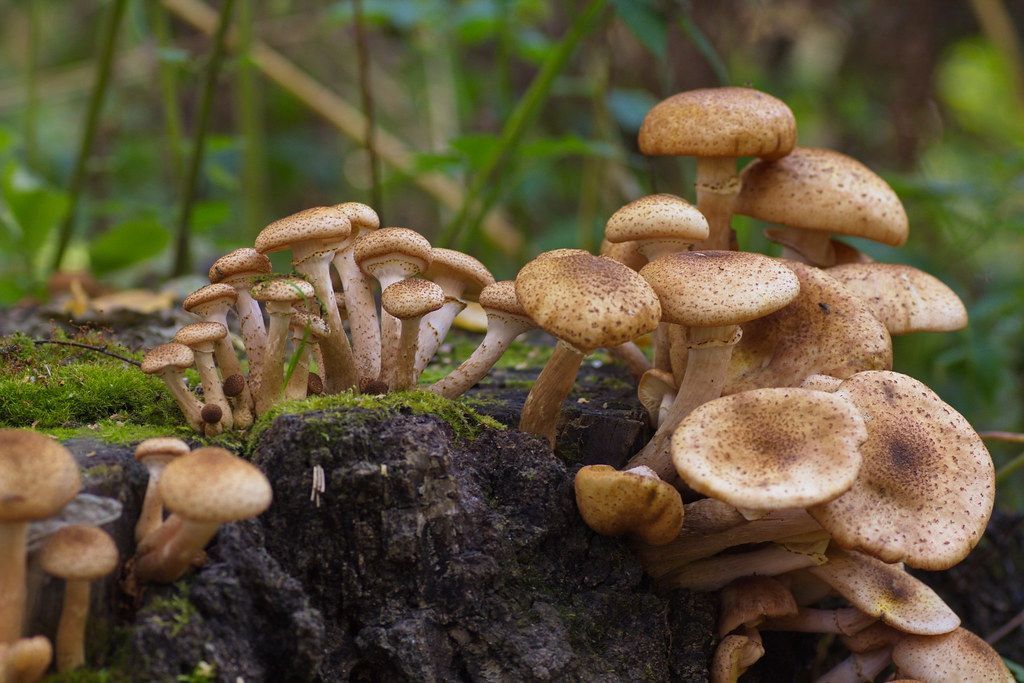
mycelium. Mycelium networks can be incredibly expansive. In fact, the world’s largest organism is a honey mushroom network (Armillaria solidipes) that spans 2.4 miles across the Malhuer National Forests in the Blue Mountains of Oregon!
Ecological Services of Fungi:
Mushrooms serve many important ecological roles; they aid in decomposition, nutrient transportation, and carbon sequestration. Revered as nature's recyclers, mushrooms adeptly break down organic matter, from decaying trees to animal excrement. They slowly decompose this material and return its nutrients to the soil, where the nutrients are then transported through the ecosystem. Without fungi, the forest would take considerably longer to regenerate. Organic matter isn't the only thing that mushrooms can break down either! A species of Pestalotiopsis discovered in the rainforests of Ecuador was discovered to even break down plastics and petrochemicals.
A crucial, yet often overlooked, service that fungi provide is nutrient transportation. Fungi are well known for their mutualistic relationships with other species, where both parties work together for mutual benefit. In forest ecosystems, many fungal species engage in mutualistic partnerships with plants through their mycelium. The mycelium of fungi species form exterior sheaths around the roots of partner plants, effectively extending their root systems and enhancing their ability to absorb water and nutrients. In return, fungi gain access to the carbohydrates produced by the plants. Remarkably, over
95% of plants form such partnerships with fungi through their roots, highlighting the widespread significance of these relationships. This interconnected network of mycelium has been aptly dubbed the "wood wide web" by German forester Peter Wohlleben, as it is through the mycelium that trees communicate. While ongoing research explores the complexities of these interactions and debates their purely mutualistic nature, certain fungi have demonstrated the ability to send warning signals to plants! One type of fungi was even found to
stimulate immune responses in plant communities when individual plants face threats. Next time you’re visiting a forest, as you wander through the trees, take a moment to think about the complex exchanges happening underneath your feet!
Mycelium networks are also crucial
carbon reservoirs of nature, and play a vital role in mitigating accelerated climate change. Through their mutualistic association with trees, mycelium receives carbon from them via the roots, facilitating their growth. Consequently, carbon is sequestered underground within the mycelium, rather than remaining in the atmosphere. This process contributes significantly to the regulation of carbon levels in the environment, underscoring the importance of mycelium networks in the global carbon cycle and climate stabilization efforts.
Anthropological Uses of Fungi
Beyond their ecological functions, fungi have substantial importance for humans as well, spanning culinary traditions, pharmaceutical innovations, and environmental remediation efforts. Despite being initially overlooked due to associations with human skin diseases, fungi have been pivotal in revolutionizing medical practices throughout history. Their contributions to drug discovery and development continue to captivate researchers worldwide. One of the most notable examples is penicillin, derived from fungi in the Penicillium genus. Although the discovery of penicillin may be old news, fungi remain at the forefront of medical innovation.
As mental health awareness continues to gain increasing prominence, fungi are once again being utilized. Psilocybin, a well-known psychedelic compound found in over 100 mushroom species, has recently garnered attention in The United States. Although previously stigmatized and marginalized during the 1960’s, recent scientific studies highlight psilocybin's potential as a
therapeutic agent for conditions such as major depression, anxiety, addiction, and PTSD. Administered in conjunction with psychotherapy, psilocybin has shown significant improvements for those suffering with these illnesses, including long-term effects and instances of remission, underscoring its potential as a transformative treatment (Severson Dells Nature Center recommends that you speak with a primary care provider when considering treatment options; do not take this as medical advice).
Another use of fungi that is being explored is mycoremediation. Mycoremediation is a form of bioremediation which uses enzymes produced by fungi to break down pollutants in the environment. Not only is this type of environmental cleanup cost-effective and eco-friendly, but it is also much more effective when compared to other methods we use today! Recent
scientific research has shown that fungi can degrade toxic and persistent waste materials such as plastics, heavy metals, pesticides, and even polycyclic aromatic hydrocarbons (PAH’s), a class of chemicals that occur naturally in coal, crude oil, and gasoline. Better yet, fungi can actually and convert these pollutants into edible fungal biomass within a few days! Fungi’s ability to persist through five previous major extinction events on this planet just goes to show their powers of remediation, and how much we have yet to learn from them.
Fungi Conservation Challenges and Perspectives
Despite their ecological and societal significance, fungi remain largely overlooked in conservation efforts, with negligible representation in regulatory frameworks. Notably, the U.S. Endangered Species Act currently does not specifically mention fungi, and the International Union for Conservation of Nature’s Red List of Threatened Species currently includes a mere 551 species of fungi, compared to the tens of thousands of plants and insects listed While there is a growing interest in fungi, particularly among conservationists, efforts remain disproportionately focused on fungal pathogens, such as chytrid fungus in amphibians and white-nose syndrome in bats, as opposed to ecologically beneficial species, highlighting the need for greater awareness and advocacy.
While it can be challenging to motivate people to care about something that seems to be a common sight, especially considering the limited understanding of these organisms among scientists, there is hope for future fungal conservation efforts. Recent milestones, such as Chile's inclusion of fungi in environmental legislation, signal progress towards recognizing and safeguarding fungal biodiversity. Collaborative endeavors spearheaded by organizations like the IUCN Fungal Conservation Committee offer hope for amplifying fungal conservation efforts and fostering broader recognition of their invaluable contributions to our planet's well-being.

RECENT ARTICLES