If we are being completely honest with ourselves there is no such thing as a truly 100% eco-friendly product. This is because every product made by man has some sort of environmental impact; whether it's from when the products were harvested or extracted from the earth, the processes undergone to mold it into its final shape, the energy it takes to transport the, or where it ends up after use. However there are ways that we can change the way we make products but these are often very expensive and time consuming endeavors; too much so for ‘for-profit’ companies to meaningfully embrace the transition. With this being the case, how and why are we seeing so many “eco-friendly” products being sold with new ones popping up all the time? To put it simply, it's very trendy and in-style to be considered green or eco-friendly nowadays. Companies will take short-cuts and do the bare minimum to change some aspect of their product so that it could be advertised as such.
FIELD NOTES BLOG
Is Living Green Surely Green?
This phenomenon is known as “green-washing”, when you label something as eco-friendly even though it's not completely that way to trick a customer, and there are many ways to go about it.
(1) In many cases it can be as simple as changing the packaging color to green, or doing an advertisement campaign saying that you are going to eventually change, or by claiming that a product is now ‘biodegradable’ or ‘recyclable’. But what can we truly expect from corporations who, at the end of the day, have the primary objective of creating a product that will generate revenue. Greenwashing is far more sinister than it already appears since customers, like you and me, as nature lovers are hungry for sustainable solutions. So when potentially eco-friendly products are being presented to us we are willing to spend extra money to use their products in our everyday lives. Which, as they aren't truly ‘green’, continues to harm our environment. This is multiplied by the fact that normal people will consume green products faster and in higher quantities thinking it'll have less of an impact, which only causes more ecological destruction.
A prime example has made its way into our daily lives; unknowingly influenced by greenwashing campaigns and root in our kitchen and our laundry rooms. Over the past decade there have been a huge surge in the appearance of the laundry pods, laundry sheets, and dishwasher capsules. They came as replacements for the traditional liquid detergents, popularized for their ease of use, cleaning potency, and biodegradable nature. On the surface this seems like a very logical progression, like who wouldn't want to make the switch to an all around better product. However we have been led to, tricked, and utterly bamboozled! As with many greenwashed products.
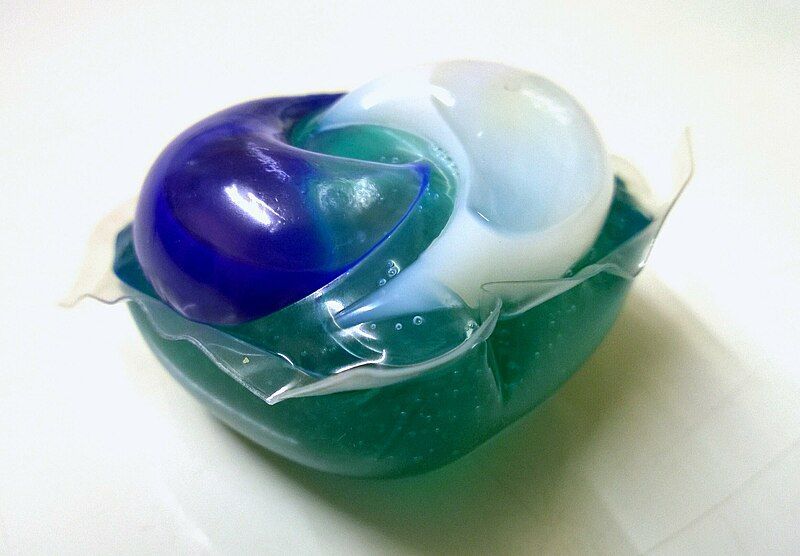
The false nature of laundry pods and capsules comes from their claim to be biodegradable. Most companies claim that their products are biodegradable since they are given shape by alternative plastic coatings. But all of these alternatives have no right to sit upon their ivory tower above plastic materials because they themselves are plastic. Specifically its a water-soluble synthetic polymer, which is the fancy industry term for a plastic product known as PVA (Polyvinyl alcohol). Now this naming scheme smells rancid with greenwashing as companies purposely crafter a new name for the product to avoid calling it a plastic to secure their eco-friendly labels.

PVA is used because it is great at holding in non-water based liquids such as soap and sand-like solids such as laundry powder due to its great barrier properties. It is simultaneously used as a coating to create the little bags of liquid and as glue to transform loose soap powder into the little bricks we place in our dishwashers.
(2) The second superpower of PVA is that it dissolves into water. This results in the little plastic packaging of the products disappearing from our eyesight. Because the plastic disappears it seemingly puts a lot of people at ease about how biodegradable they are because many believe that plastic does not break down quickly if at all. This collective idea has been exploited by manufacturers so they can get away with their false claim of being plastic free.
You might be asking yourself “if the PVA plastic does dissolve and break down isn’t that a good thing?”, technically yes in the traditional sense of litter because there’s no large pieces of trash they gum up our soil or choke our wildlife. But this is a problem in itself because of ‘microplastics’.
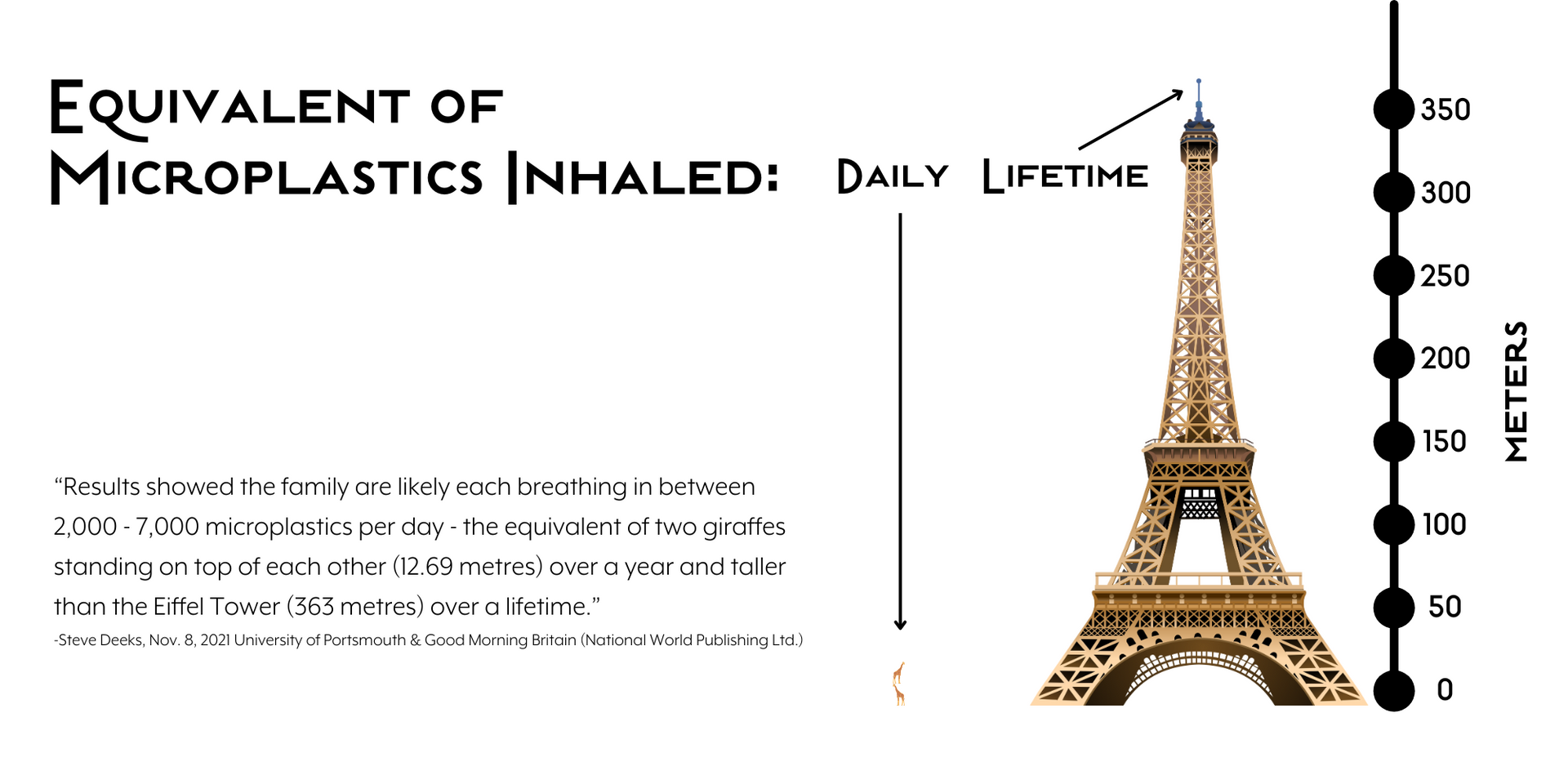
(2) Like their name suggests they are tiny pieces of plastic that can't be seen by the naked eye. These plastics are more dangerous than larger pieces because they have the ability to infiltrate the bodies of living things. Once PVA is dissolved and flushed away from our appliances it eventually ends up in the lakes, rivers, and oceans; where this water is then drunk by us and absorbed by our crops and livestock to eventually be eaten. These plastics can infiltrate our organs and have been found in lungs, blood, breast milk, and even placentas; a stud from the University of Amsterdam showed that around 17 out of 22 adults have some microplastic in them.
(4)
Scientists are still not entirely sure how having this plastic inside of us will affect us. Studies on fish and other aquatic animals has given us some ideas, including reproductive disruption, tissue damage, and stunting growth.
There are tried and true methods of getting rid of microplastics like PVA, they can be broken down by microorganisms like bacteria, this is the true claim to fame for their biodegradable label. Several species of bacteria actually eat PVA and convert it into environmentally safe carbon and energy.
(3) Some water treatment plants utilize these bacteria to remove PVA and other plastics from wastewater. There is a caveat with the bacteria, that's because not every water treatment plant has them as most plants are designed to deal primarily with human waste, not plastic. PVA eating Bacteria require specialized equipment and processes to utilize them which can often be too expensive for many areas to afford. Meaning that people who live in rural areas that are isolated from treatment plants are unable to rid their waster of PVA, releasing it into their local environment So even though PVA is biodegradable it's only the case under very specific circumstances.
(5)
Overall its best to avoid products with PVA in their entirety, thankfully there are much more environmentally friendly options for cleaning. Common household items such as white vinegar, borax, baking soda, and lemon juice can be mixed together to create your own laundry detergent. For a plant based option you can purchase soap nuts which are the dried shells of a tropical fruit which has slight anti-microbial properties and a nice smell. There are commercially available powder detergents and all natural bar soaps that are PVA free, but of course you have to make sure to read the ingredients label to avoid charlatans. If you do still want to continue using your laundry pods be sure to contact you local water treatment so see if they have the facilities to process PVA.
- de Freitas Netto, S. V., Sobral, M. F. F., Ribeiro, A. R. B., & Soares, G. R. D. L. (2020). Concepts and forms of greenwashing: A systematic review. Environmental Sciences Europe, 32, 1-12.
- Gwizdała, K., Szarlej, P., Gnatowski, P., Piłat, E., Sienkiewicz, M., & Kucińska-Lipka, J. (2023). Determination of Liquid Detergent Pods as a Potential Microplastic Source. Редакційна колегія, 248.
- Kawai, F., & Hu, X. (2009). Biochemistry of microbial polyvinyl alcohol degradation. Applied microbiology and biotechnology, 84(2), 227-237.
- Leslie, H. A., Van Velzen, M. J., Brandsma, S. H., Vethaak, A. D., Garcia-Vallejo, J. J., & Lamoree, M. H. (2022). Discovery and quantification of plastic particle pollution in human blood. Environment international, 163, 107199.
- Rolsky, C., & Kelkar, V. (2021). Degradation of polyvinyl alcohol in US wastewater treatment plants and subsequent nationwide emission estimate. International Journal of Environmental Research and Public Health, 18(11), 6027.
Laundry Pod image derived from: Pete from Liverpool, UK, CC BY 2.0 <https://creativecommons.org/licenses/by/2.0>, via Wikimedia Commons

RECENT ARTICLES