FIELD NOTES BLOG

Lions, Tigers, and... Waterbears? Oh, my!

Lauren Bonavia
December 4, 2025

Microscopic Nature at Severson Dells

When people think of nature and animals, our brains typically go to the big things we can see: mammals, birds, trees, plants. But what if we shrunk way down and looked a little (or a lot) closer? 


What you will find is a world teeming with life, just like our own. A ‘soil biological community’ refers to all living things found in our soils. For the sake of this blog, we will break that down into 2 groups: macrofauna (
bigger small things) and microorganisms (smaller small things). The different members of this community collectively improve soil health through processes like decontamination of pollutants and remediation, biological defense from pests and disease, soil aggregation or modification of soil structure, decomposition, elemental cycling, nutrient availability and mineralization, biofertilization, water filtration, gas exchange, carbon sequestration, and food web participation. 

Soil macrofauna are things that we may be able to see with our eyes under the right conditions, such as earthworms, beetles, mites, springtails, spiders, as well as nematodes, and other microinvertebrates. Imagine what you might see when you flip over a rock. 


Even teenier are
microorganisms, or microbes: living beings that are too small for us to see with our naked eye. These include all sorts of funky things - such as protists, viruses, archaea, bacteria, and fungi. It is estimated that in 1 teaspoon of soil - specifically in highly productive soil like topsoil or around plant roots - you can find billions of microorganisms. This estimate is even considered to be low because we have only discovered a small window into this complex microscopic realm. These organisms live on nearly every surface in the world, including humans!

It’s a party! Humans have important ‘roommates’ that live primarily on our skin and in our stomachs. These organisms have very special jobs that keep our skin healthy and safe from bad germs, as well as help us digest our food by breaking it down further. Now, this may sound a little bizarre, but these guys have an important role in keeping us healthy and are necessary to keep around. The bacteria, fungi and other beings on our skin are referred to as our microbiota, and together they make up our microbiome. Sometimes microscopic organisms cohabitating with humans can make us sick. These include pathogenic parasites, viruses and bacteria - so remember to wash your hands well! Some can make plants and animals sick, too.

Each of these unique organisms has a unique role, and this can change drastically based on different conditions like temperature, moisture, pH, oxygen levels, nutrient availability, salinity , and soil texture. The types and relative amounts of different soil microbes can be a helpful indicator of soil condition and overall health.

Tardigrades

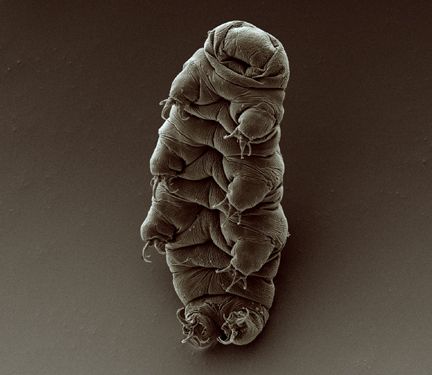
Tardigrades, or more colloquially known as water bears, are a group of microscopic invertebrates found nearly everywhere on Earth! Water bears thrive in places where there is water and vegetative matter for them to eat - like our pond, the moss on our trees and trails, or even the water in our gutters - but they are known to survive in extreme conditions too. They have survived in the vacuum of space, the heat of volcanoes, the freezing climate of Antarctica, in old, preserved moss. You may have observed water bears under a microscope before, as they are common subjects of study in grade school biology classes.


With their clumsy, sluggish gait, clawed limbs, and little snout, they are quite charismatic in their resemblance to Ursine bears. Tardigrades have sharp, piercing mouthparts that help them feed on moss, algae, detritus, and other microorganisms. Their ecological roles relate to their place in the food chain as both predator and prey, and include functions like nutrient cycling and population control. They may also be effective bio-indicators of pollutant presence in the environment.  


Photo courtesy of: “water bear” by Goldstein lab - tardigrades, CC BY-NC-SA 2.0

Nematodes

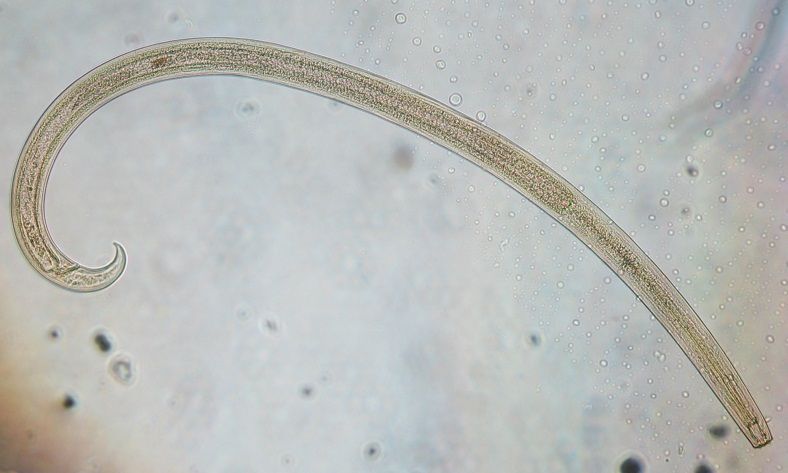
Nematodes are microscopic roundworms living in soils that help regulate nutrients available to plants through mineralization, control pest populations and spread of disease, as well as contribute to food chains through their central roles both as consumers and prey for other predatory organisms. There are some species that are commonly known agricultural pests because they feed on plant roots, however most species are beneficial to their environment. 


Nematodes also have important roles in composting processes, and can be biological indicators of overall soil health based on the species and numbers present in a given sample.


Photo courtesy of:Cristina Menta, CC BY 3.0 <https://creativecommons.org/licenses/by/3.0>, via Wikimedia Commons

Fungi & Mycorrhiza

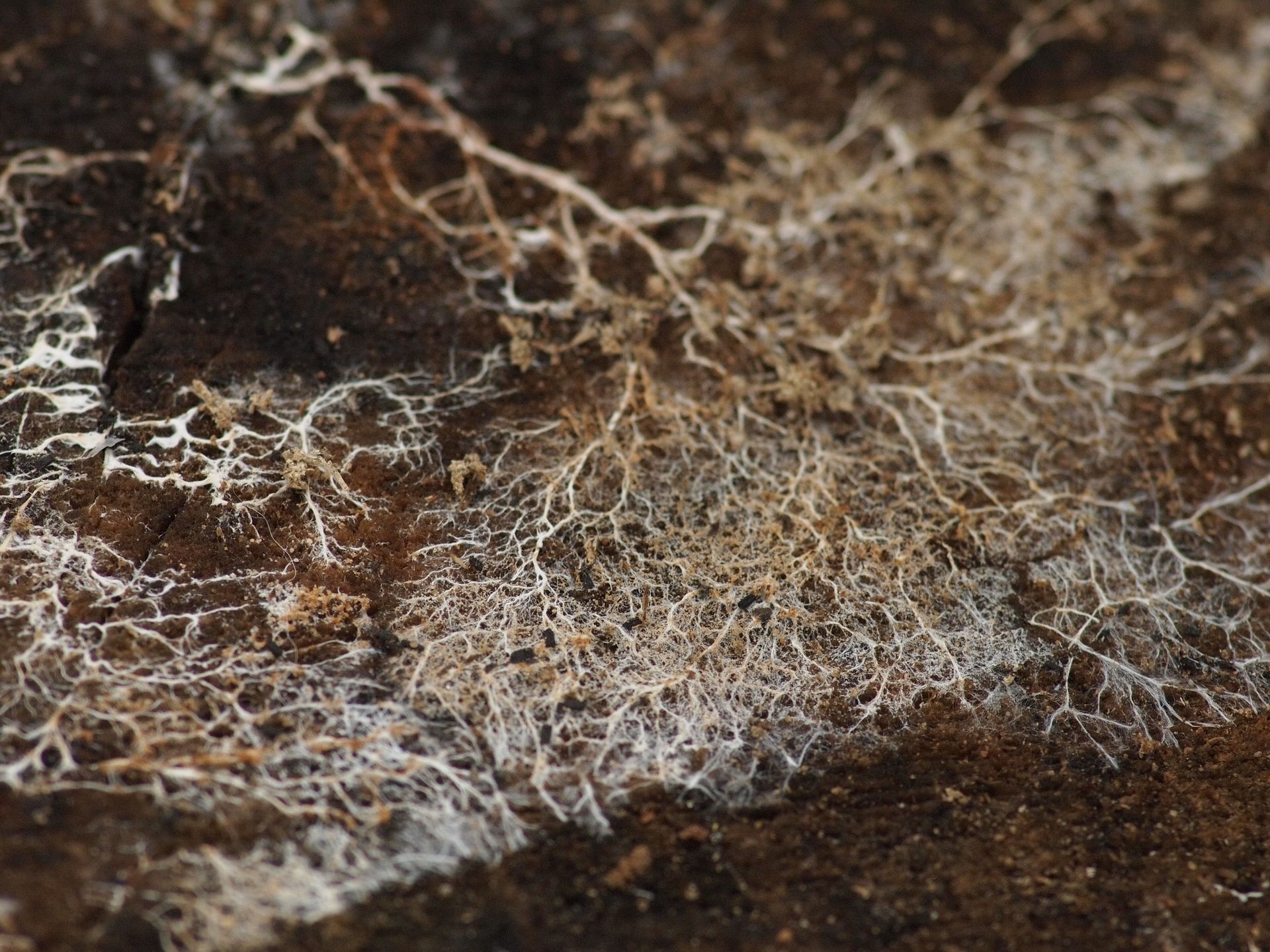
When most people think of mushrooms, they picture the classic stem and cap, or what makes up the ‘fruiting body’ of fungi. But do you know what’s happening beneath the surface? Underground, fungi have root-like strands called hyphae and mycelium that form a mutually beneficial (symbiotic) relationship with the plant and tree roots around them. This is collectively called a mycorrhizal network, and this helps plants and fungi to share resources like nutrients and water. In that same teaspoon of healthy soil we were talking about earlier, it is estimated there are hundreds of yards or even miles of mycelium present. There is ongoing research into this network and its ability to help plants communicate with each other about disease, pests, and drought. 


Not only does mycorrhiza help plants and fungi to share resources, but it improves soil health through aggregation of soil particles in its hyphal netting and the production of a glue-like substance called
glomalin. Fungi are important decomposers of wood and other organic materials aiding in nutrient cycling and availability. Fungi encompasses a broad group of organisms like yeasts and molds that reproduce via microscopic spores.

Fun fact! The Illinois state microbeis Penicillium rubens, the species of mold that produces the antibiotic penicillin. It was found by Mary Hunt growing on a moldy cantaloupe in Peoria in 1928.

Moss & Lichen

To us, moss and lichen probably seem pretty small - after all most of them are. However, they make up a complex ecosystem of microbial life that resembles our familiar tree-filled forests and the wildlife inhabiting them. Mosses are functionally simplifiedplants, with roots and leaves, but lack some key parts that true vascular plants have, like the xylem and phloem. Still, they effectively regulate ‘surface microclimates’ - influencing soil temperature and moisture to support other life and improve soil health by ingesting water from the atmosphere. Mosses also aid in soil stability by reducing bare and exposed soil. 


To compound their microscopic nature, mosses reproduce via spores so small that scientists measure them in nanometers and must view them under microscopes. These tiny particles, depending on the species of moss, can be released
by the millions

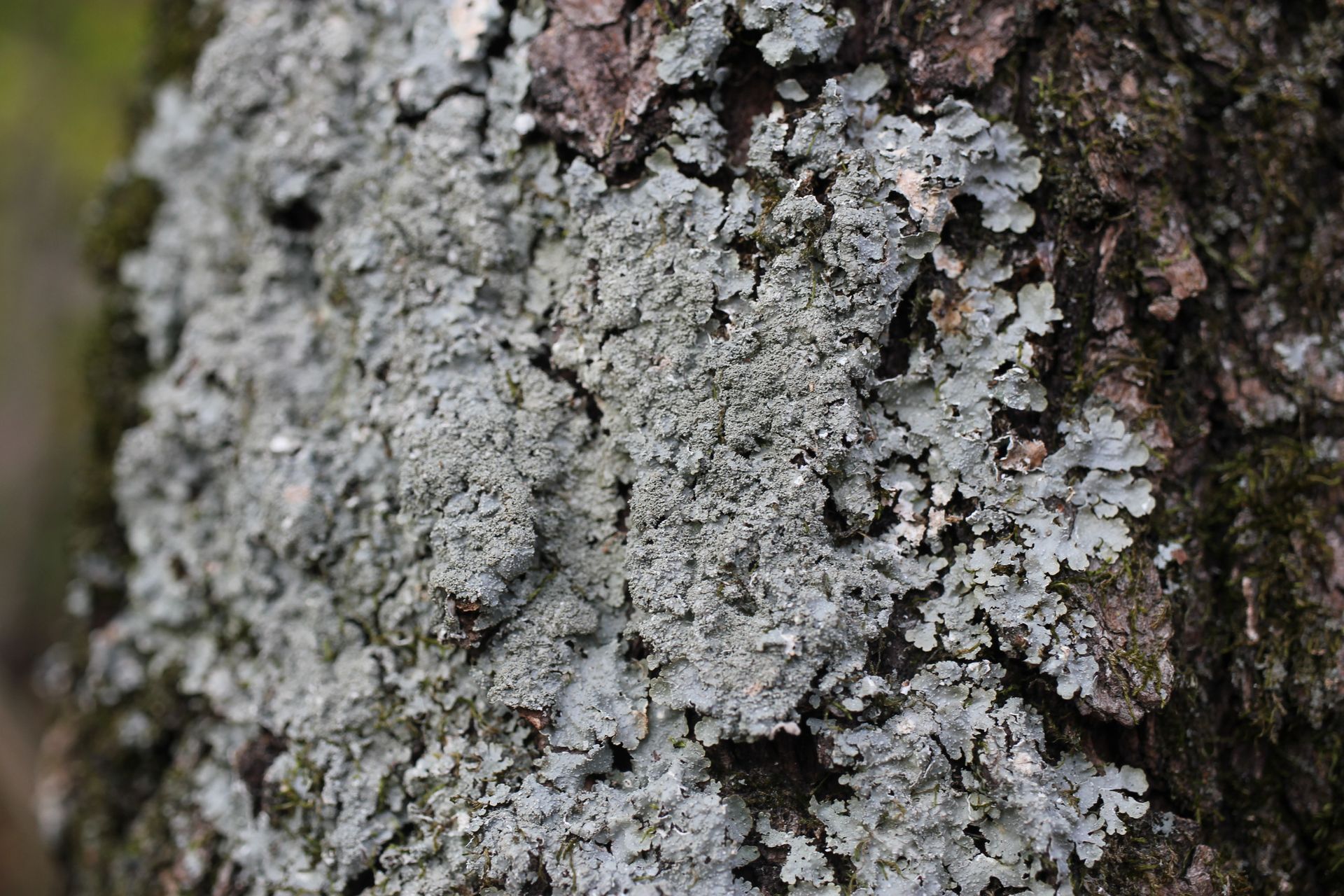
Often found in the same niches as moss, lichen is a unique combination of fungi, algae, and yeast working together in symbiosis. They act as food and shelter for other organisms, and aid in decomposition. Lichen and moss often grow in similar habitats like moist surfaces where they can absorb nutrients from the environment. 

Take aways?

An abundance of microscopic organisms and unique lifeforms call Severson Dells home - from our pond, to the soil under our forest, to the rich prairie earth. Thriving ecosystems contain a myriad of life that promote plant growth, nutrient cycling, soil stability, and carbon storage, which in turn improves the overall health of the planet. These critically important creatures live right below our noses, and often go unnoticed and un-thought of, but all forms of life depend on the services they provide and scientists are learning more about them every day.


Healthy soils benefit everyone!


Sources:

Soil Macrofauna https://www.sciencedirect.com/topics/agricultural-and-biological-sciences/soil-macrofauna

Soil Biota in Orchards

https://treefruit.wsu.edu/orchard-management/soils-nutrition/soil-biota/

Understanding Soil Microbes and Nutrient Recycling

 https://ohioline.osu.edu/factsheet/SAG-16

Soil Microbiology in Nebraska 

https://extensionpubs.unl.edu/publication/g2327/2020/html/view

Role of Nematodes in Soil Health and Their Use as Indicators

https://pmc.ncbi.nlm.nih.gov/articles/PMC2620512/pdf/161.pdf

Important soil microbiota's effects on plants and soils: a comprehensive 30-year systematic literature review

https://pmc.ncbi.nlm.nih.gov/articles/PMC10999704/

Michigan Extension: nematodes beneficial or harmful?

https://www.canr.msu.edu/news/are_soil_nematodes_beneficial_or_harmful

Why mosses are vital for the health of our soil and Earth https://www.unsw.edu.au/newsroom/news/2023/05/why-mosses-are-vital-for-the-health-of-our-soil-and-earth

Mycorrhizal ecology and evolution: the past, the present, and the future

https://nph.onlinelibrary.wiley.com/doi/full/10.1111/nph.13288

Tree and Plant Communication: common mycorrhizal networks

https://www.nps.gov/articles/species-spotlight-tree-and-plant-communication.htm

Tardigrade

https://kids.nationalgeographic.com/animals/invertebrates/facts/tardigrade

Tardigrades of North America: An Historical Collection from Kansas and Missouri

https://www.jstor.org/stable/20476313?read-now=1&seq=8#page_scan_tab_contents

Interview with forestry ecologist Suzanne Simard

https://www.npr.org/sections/health-shots/2021/05/04/993430007/trees-talk-to-each-other-mother-tree-ecologist-hears-lessons-for-people-too

Inter-plant communication through mycorrhizal networks mediates complex adaptive behaviour in plant communities

https://pmc.ncbi.nlm.nih.gov/articles/PMC4497361/

Plant communication: do trees really talk to each other?

https://www.interesjournals.org/articles/plant-communication-do-trees-really-talk-to-each-other.pdf

The secret society of soil

https://www.chicagobotanic.org/blog/plant-science-conservation/secret-society-soil

Soils & Organisms

https://www.ars.usda.gov/plains-area/sidney-mt/northern-plains-agricultural-research-laboratory/nparl-docs/just-for-kids/soils-organisms/

What are Nematodes? Their role in compost, soil health, and farming

https://onlineentomology.ifas.ufl.edu/about/entomology-articles/what-are-nematodes-their-role-in-compost-soil-health-and-farming/

Secrets of Soil: Exploring the Microbiome and its Applications

https://www.sciencesocieties.org/publications/csa-news/Secrets-of-Soil?q=publications/csa-news/Secrets-of-Soil/

Soil Nematodes

https://www.sciencedirect.com/topics/earth-and-planetary-sciences/soil-nematodes


RECENT ARTICLES

By Holly Hansen July 9, 2026
While many of you may already know me, allow me to introduce myself! I’m Holly and I’m the new community engagement manager here at Wild Roots Nature Center . While I am new to this role, I am not new to Wild Roots. I got my start at Wild Roots way back in 2019 as an environmental education AmeriCorps Volunteer. During my time, I was able to help connect people to nature and foster stewardship of our lands at all age levels. Even when COVID-19 hit, that didn’t stop us from planning for the future and coming up with ideas for how to engage people in our natural world. From there, I completed two more terms of service with AmeriCorps, one in Florida and one back here at Wild Roots with 815 Outside. (You’ll start to notice a pattern here.) As I finished my undergraduate degree in environmental studies and my master’s degree in higher education and student affairs, I remained a volunteer with Wild Roots, joining in on the fun of Science Saturdays, signature events like Luminaria, and canoe convoys. I simply never left this community. My most recent role as assistant director of campus sustainability at Northern Illinois University has prepared me for my return to Wild Roots. I’ve learned so much over the years about connecting with people of all different backgrounds, bridging the gap between nature and community. I look forward to continuing these conversations as the community engagement manager at Wild Roots Nature Center! Other fun facts: When I’m not in nature, you can find me among a circle of friends, crafting and laughing, making stained glass art, and immersing myself in a good book or tv show. I’m always happy to be a listening ear and I am fiercely loyal. Plus, I’ll never say no to a new adventure!
By Brandy Korth July 2, 2026
If there’s one thing you should know about me, it’s that I genuinely love people, organized chaos and finding joy in the little things. So, when the opportunity came to join the team at Wild Roots, it felt like everything came together in the best way. Professionally, I’ve spent more years than I’d like to admit in finance, bookkeeping and office management. I actually enjoy spreadsheets, balancing budgets, and making sure all of the behind-the-scenes pieces fit together (yes…I’m one of those people!). But my energetic and bubbly personality doesn’t always fit the type for an accounting aficionado. Before building my career in finance, I earned a degree in Elementary Education. Looking back, it makes perfect sense because teaching and finance have one thing in common – you need patience, flexibility, quick on your feet, and a good sense of humor! I absolutely love the fact that Wild Roots is so committed to outdoor education, and it is one of the biggest reasons I wanted to root myself here as well. Perfect blend of both of my worlds. Outside of work, I’m a proud mom to three wonderful (and very energetic!) boys. They keep me on my toes, whether we’re at a ball field, exploring a new park, or simply enjoying time together. Being their mom has taught me that the best adventures don’t have to be big – they’re usually found in the simple moments, especially when you’re outside exploring together! That’s one of the reasons Wild Roots already feels like the perfect place. I believe nature has an incredible way of bringing people together, slowing us down, and reminding us to appreciate the world around us. Knowing that I get to support an organization that helps families, students and our community experience that every day is something I am truly excited about.  I’m incredibly grateful to be here and can’t wait to be part of everything that makes this place so special. Here’s to new beginnings, new connections, and plenty of time spent enjoying the beauty of nature together!
By Becca Rankins June 25, 2026
This article has been adapted from it's original publication in "Notes From the Dells" Vol 47 No. 1