FIELD NOTES BLOG

Happy National Make-A-Will Month

Linda Sandquist
August 7, 2025

As we observe National Make-A-Will Month this August, I want to relate a personal story about preparing my own will. 


Have you ever heard the saying “the cobbler’s children have no shoes”? Up until a month ago, this statement described me since my husband is a lawyer and we had no will or estate plan. I counted myself in good company when I learned that Abraham Lincoln, Picasso, Sonny Bono, and Aretha Franklin all died without a will. And I had a lot in common with the 72% of Americans who have not officially spelled out what should happen to their assets upon their death.


Wills and estate plans are easy to put off. They feel too complicated, too time-consuming and too official. And frankly it’s not much fun to think about who should get what, knowing that at least one person is going to be disappointed and someone will most likely think they were left with the short end of the stick. 


While a will can’t soothe hurt feelings, one with a named executor will speed up the probate process and ensure that your wishes are fulfilled. Creating a will doesn’t have to be time-consuming or difficult - there are many resources online to help you write a document that needs only to be witnessed and notarized. The resources I found were free, very helpful, and very legal. Steps were simplified and I completed my will in less than an hour. If your wishes are more complicated, finding an estate attorney is also easy and can be very affordable.


Another benefit of making a will or estate plan is that you get to decide what charities and nonprofit organizations will receive a final gift from you. If you’ve been a passionate supporter of something over your lifetime, wouldn’t you like to give them a final gift that really means something? It’s easy to direct a certain dollar amount or a certain percentage of your estate to an organization you really care about. And the organization is bound by law to follow your intentions - you can choose whether you want your gift to go to a certain program, operations and overhead, building maintenance, or an endowment fund. Equally as impactful, is making your favorite charitable organization the beneficiary of your retirement fund, IRA, or life insurance policy. 


Here at Severson Dells Nature Center, we ask that you consider including us in your estate plans. When you do, you become part of our Heritage Society, a group of like-minded folks, dedicated to the future of nature education in our region. Your gift, large or small, will make a difference. 


In 2016, a bequest from Orville and Ruth Varland to Severson Dells created an endowment fund to support field trips for students from the Rockford Public Schools. The fund has grown over time and continues to make a difference in the lives of young people who come to the Dells, many experiencing nature for the first time. Each year, students who have never been in a forest, seen a natural creek, or sat in the grass are here because of the Varlands. The legacy of Orville and Ruth lives on and on and on.


I invite you to celebrate and Make-A-Will this month. Take the time to look for online resources or contact your attorney. Make sure your intentions are clearly written down so that when the time comes, there is no question about what you wanted. Please consider including Severson Dells in your will and join our Heritage Society. And let us know that you included us so we can thank and celebrate you now!


If you've already considered Severson Dells in your estate plans, let us know! Email me at linda@seversondells.org or call me at 815-335-2915.


*
Please note: Severson Dells Education Foundation is not a legal entity and cannot give legal advice. We encourage you to seek out legal advice should you have any questions about the process of making a will or leaving an estate gift. Our Tax ID number is 36-2985870

RECENT ARTICLES
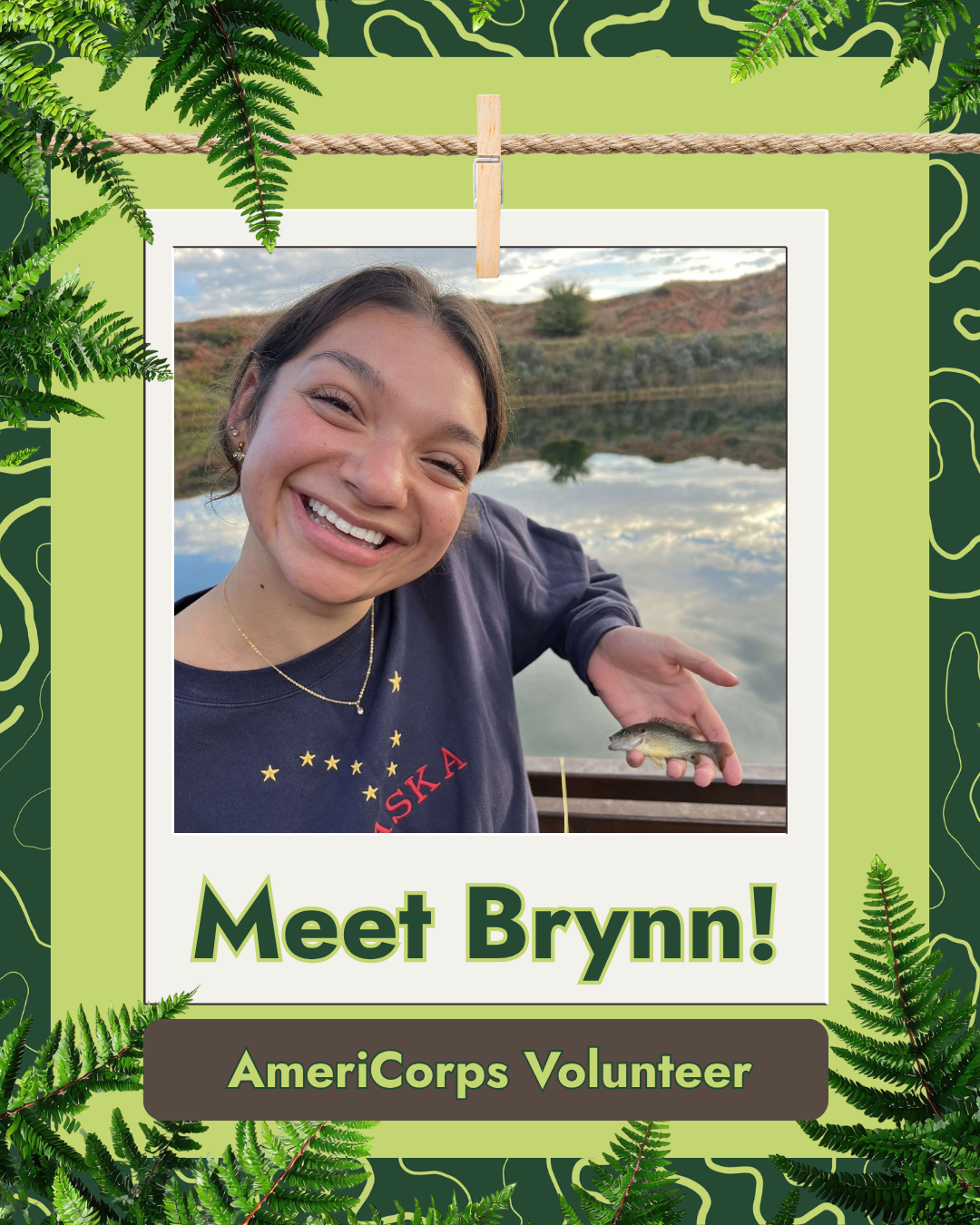
By Brynn Vega • October 6, 2026
Introducing Brynn!
By Lauren Bonavia • September 24, 2026
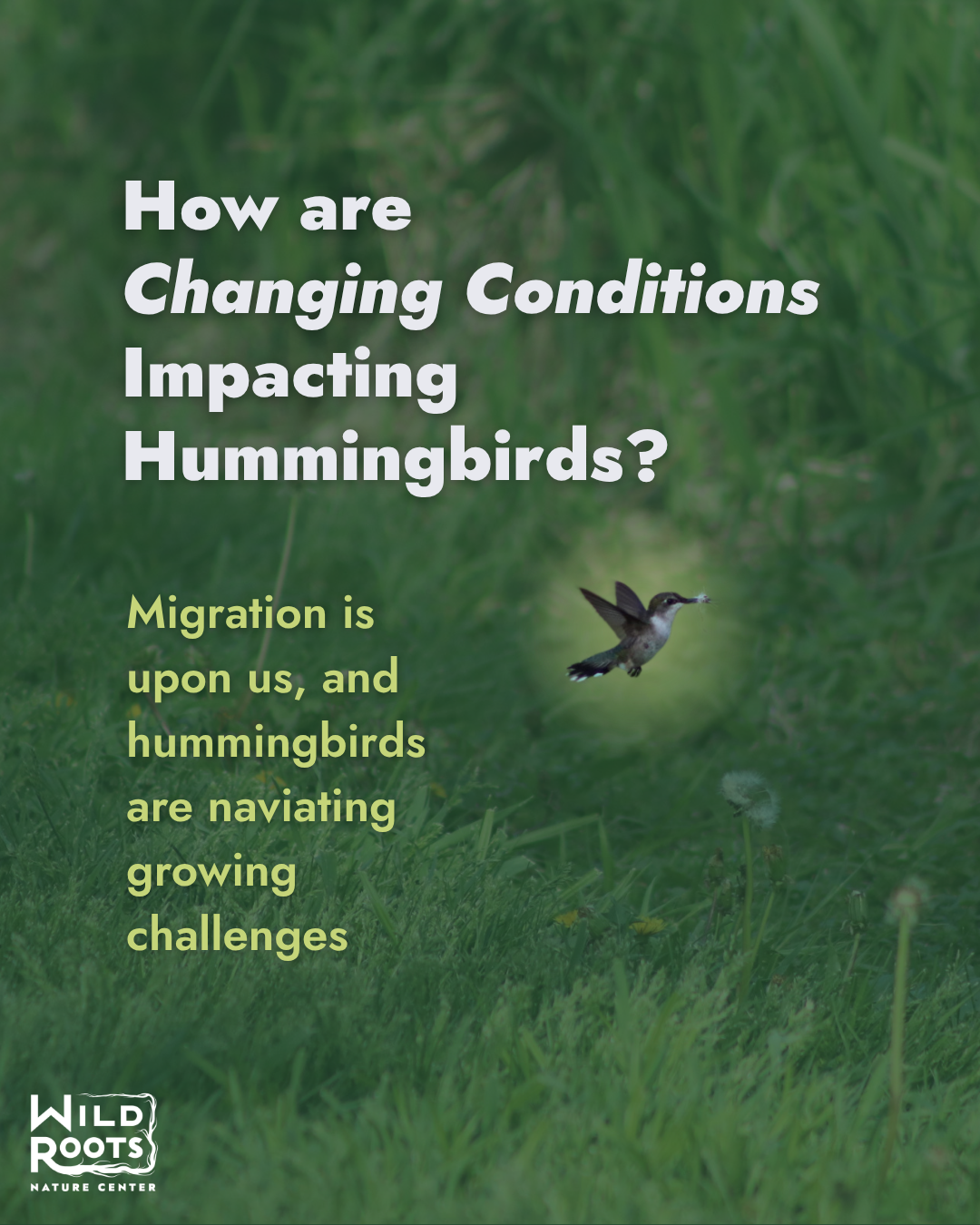
With fall’s cool air upon us, and the shorter days following the Autumn equinox on September 22nd, migration has been set into motion. Migration is the cyclical phenomenon where animals move over large distances, driven by environmental changes such as length of day and temperature. Meet the Ruby-throated Hummingbird Ruby-throated hummingbirds are our resident hummingbird species in the Great Lakes region, and throughout the Eastern United States. They are metallic green, with males sporting the namesake bright ruby throat. Adults measure only 3 to 4 inches long, and weigh 2-6 grams - that is less than a quarter! Ruby-throated hummingbirds breed in the forests and fields of eastern North America during spring and summer, and migrate south to tropical forests and scrublands to spend the fall and winter. Hummingbirds rely on nectar from flowering plants as their primary food source, and this develops a close relationship between the animal and the plant. Hovering, or the ultra-fast flying they are capable of, is an essential feeding behavior that is very energetically expensive to maintain, which is why it is so important that hummingbirds have adequate food sources to fuel themselves. Hummingbirds need to eat 5-6 times per hour to fuel their fast metabolism. Threats to Hummingbirds Flower Blooming Periods Imagine that you show up to your favorite restaurant just as they close the kitchen - even though the internet said they would be open and you have been there dozens of times before at that exact time - this is how a hummingbird feels. Plants are blooming at earlier times each year because of changing climate trends, causing concern that hummingbird arrival may become mismatched with the blooms they depend on so heavily. This is especially pronounced at higher latitudes, or closer to the poles, and could even create limits to migration and contract ranges if nesting success is impacted. This matters because hummingbirds also have important jobs in ecosystems. Because hummingbirds get the other non-nectar portion of their diet from insects, they play a role in balancing pest populations. Humans also depend on pollinators, like hummingbirds, to pollinate our food crops! Hummingbird Adaptations To combat the impacts of a changing world, some animals move physical locations to go somewhere else more suitable. Higher altitudes typically have lower temperatures, so moving up in elevation can counteract localized warming, but this is not a catch-all solution. Scientists with the National Science Foundation reported that hummingbirds that relocated to high altitudes had a significant decrease in metabolic rate, suggesting that low air pressure and oxygen availability reduces hovering performance in Anna’s hummingbirds, and even pushes them into nightly hibernation. Facing these physiological challenges only becomes more costly for low-elevation hummingbirds that are driven to find new food sources. Another study from The Auk assessed the migration of ruby-throated hummingbirds and found that the birds are moving roughly 2 weeks earlier than historical records show. The scientists found correlation between earlier arrivals to breeding grounds, and warmer winter and spring temperatures in North America, which is a trend that experts expect to continue. If they continue to leave early, they will arrive at different times than the flowers they feed on. How can I help hummingbirds? Scientists are still learning how hummingbirds are adapting, but there are lots of ways you can support these important pollinators amidst the challenges they are facing. The best place to start is your backyard. You can… Record data for community science projects like BudBurst to share flowering plant data with scientists Plant native flowering plants, like those found in this guide from the US Department of Agriculture suggests Supplement nectar resources in your backyard with birdfeeders that are monitored/cleaned regularly Next time you see a hummingbird, consider the distance it’s travelled for you to see it, and the amazing life that supported that journey!  Sources Courter, Jason R., et al. “Assessing migration of ruby-throated hummingbirds ( Archilochus colubris ) at broad spatial and temporal scales.” The Auk , vol. 130, no. 1, Jan. 2013, pp. 107–117, https://doi.org/10.1525/auk.2012.12058. McKinney, Amy M., et al. “Asynchronous changes in phenology of migrating broad‐tailed hummingbirds and their early‐season nectar resources.” Ecology , vol. 93, no. 9, Sept. 2012, pp. 1987–1993, https://doi.org/10.1890/12-0255.1. Spence, Austin R., et al. “Anna’s hummingbird ( Calypte anna ) physiological response to novel thermal and hypoxic conditions at high elevations.” Journal of Experimental Biology , vol. 225, no. 10, 15 May 2022, https://doi.org/10.1242/jeb.243294. Austin R. Spence, Hannah LeWinter, Morgan W. Tingley; Anna's hummingbird (Calypte anna) physiological response to novel thermal and hypoxic conditions at high elevations. J Exp Biol 15 May 2022; 225 (10): jeb243294. McKinney, A.M., CaraDonna, P.J., Inouye, D.W., Barr, B., Bertelsen, C.D. and Waser, N.M. (2012), Asynchronous changes in phenology of migrating Broad-tailed Hummingbirds and their early-season nectar resources. Ecology, 93: 1987-1993. Courter, J.R., Johnson, R.J., Bridges, W.C., Hubbard, K.G., " Assessing Migration of Ruby-Throated Hummingbirds (Archilochus colubris) at Broad Spatial and Temporal Scales ," The Auk, 130(1), 107-117, (1 January 2013) University of Maine Ruby-Throated Hummingbird Fact Sheet https://www.allaboutbirds.org/guide/Ruby-throated_Hummingbird/lifehistory This effect is pronounced at lower latitiudes (below 41 degrees?). Warmer winter and spring temperatures in North American breeding grounds were correlated with earlier arrivals at lower latitudes in our recent period. USDA Eastern US Hummingbird Flyer
By Linda Sandquist • September 17, 2026
Embracing Native Plants