FIELD NOTES BLOG
Are The Stars Getting Darker?
The Peseids, Light Pollution, and How Viewing May be Affected.
One of the year's most prolific and beloved meteor showers is almost here! Every August, the Perseid meteor shower lights up the night sky, and this year's conditions couldn't be much better for viewing. The peak of the shower, which is early August 13th, coincides with a new moon, meaning the sky will be darker than usual. With no bright moonlight washing out the stars, even faint meteors will be easier to spot. In dark areas, viewers can expect to see up to 100 meteors an hour! In Rockford, we can expect to see around 30-50 meteors an hour.
How Shooting Stars Work:
Despite their name, shooting stars aren't stars at all. The Perseids are tiny pieces of icy rock and dust left behind by Comet 109P/Swift-Tuttle as it travels around the Sun. Every August, Earth’s orbit passes through this stream of debris. When these meteors enter Earth’s atmosphere, the intense compression of gas and air in front of them causes the meteors to become incredibly hot, creating the brilliant streaks of light we call meteors. Most of these particles are no bigger than a grain of sand, but they burn so brightly that they can be seen from far distances. Although meteors may look close during a shower, they’re burning up typically between about 50 to 75 miles above Earth's surface.
Effects of Light Pollution:
Unfortunately, even when we have perfect viewing conditions for a meteor shower, it's becoming harder for many people to view them. Why, you might ask? One of the biggest reasons is light pollution. Light pollution comes from artificial light from streetlights, buildings, and billboards that brightens the night sky. With all of this artificial light, fainter light from stars and meteors becomes harder to see. On average, the night sky got brighter by 9.6% per year from 2011 to 2022, which is equivalent to doubling the sky brightness every 8 years.
Today, more than
80% of people worldwide live under light-polluted skies, and for many, the Milky Way is no longer visible. In the United States, more than 99% of people live in an area that experiences light pollution, including you and I in northern Illinois.
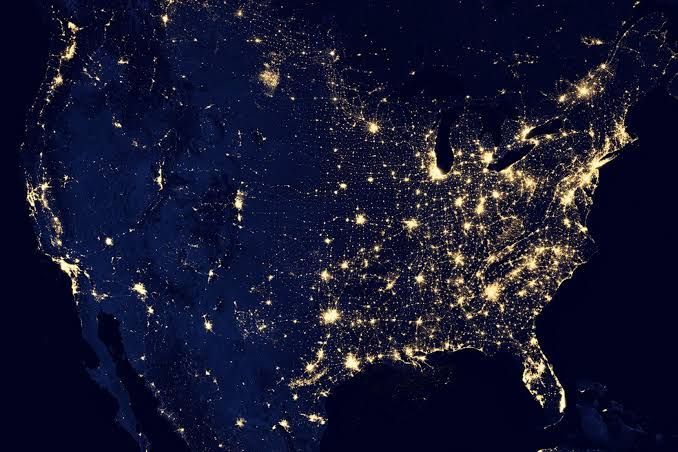
Losing dark skies affects far more than stargazing. Many animals rely on natural cycles of light and darkness to migrate, hunt, pollinate plants, and reproduce, and nighttime lighting can disrupt these behaviors. As animals, this also affects us. Artificial light at night
disrupts the human circadian rhythm by tricking the brain's internal clock. Light entering the eyes after dark suppresses melatonin production, delays sleep cycles, and alters hormone balances.
Air pollution is making the problem even worse in unexpected ways. Increased wildfires send ash and smoke into the atmosphere, scattering artificial city light across a wider geographic area, which makes light pollution appear worse. Other air pollution and smog works in a similar way, and the result is an even brighter night sky that makes faint stars and meteors harder to see.
What you Can Do About Light Pollution:
The good news is that light pollution, unlike many other global climate stressors, is easily reversible. In fact, we could reduce light pollution almost overnight with better lighting design! You can help reduce light pollution by:
- Turn off lights at night
- Direct outdoor lights downward with fully shielded fixtures
- Switch to warm LED lights with low Kelvin ratings
- Draw your curtains or blinds at night
How to View the Perseids:
This year, the Perseids meteor shower is visible from July 17th to August 24th, but it peaks overnight August 12th-13th, with the most meteors visible after midnight.
For a viewing you won't forget, join us at Severson Dells Forest Preserve from 4:00am-5:30 am. This event is a great way to experience the forest preserves when they're usually closed, and get away from some of the light pollution of downtown Rockford. We’ll have pastries and coffee provided, and we can’t wait to see you then!
If you can’t make it to the forest preserve, you can still view the shower at home! Find a dark area, with as little light pollution as possible. Give your eyes about 20 minutes to adjust to the darkness, skip the flashlight if you can, and simply look up. The perseids originate from the general direction of the constellation Perseus.
Looking for the darkest skies around? Check out this map!
Sources:
80% of World Population Lives Under Skyglow, New Study Finds - Dark Sky
The silent threat to our planet that’s easily solved: light pollution - Cranfield University
Light Pollution - National Park Service
Meteors - American Meteor Society
Total Solar Eclipse Sets Up Stunning Perseid Meteor Shower Peak - Forbes
RECENT ARTICLES