FIELD NOTES BLOG
La Niña Winter Ahead? Here’s What That Means for Us
Scientists predict that a La Niña winter is coming, with a 60% chance of it arriving by November. But what exactly is La Niña, and how does it affect us? Simply put, La Niña, and its opposite, El Niño, are natural climate patterns in the Pacific Ocean that impact weather worldwide. The
El Niño-Southern Oscillation (ENSO) cycle is an oscillating weather pattern where ocean temperatures in the tropical Pacific alternate between warm (El Niño), cold (La Niña), and neutral phases, referred to as ENSO-neutral. La Niña or El Niño events occur irregularly every 3-7 years and break these normal conditions. These effects can last 9-12 months, but sometimes they can last for years. Though they are inconsistent, El Niño typically occurs more often than La Niña, but La Niña events may last between one and three years, unlike El Niño, which usually lasts no more than a year. Both phenomena tend to peak during the Northern Hemisphere winter. La Niña occurs when ocean temperatures drop below normal near the equator, dramatically influencing winds and weather patterns, typically resulting in a colder winter up north. Once it arrives, it’ll stick around affecting weather patterns all winter and likely persist into at least early spring of next year.
This cycle plays a significant role in shaping rainfall and temperatures around the world. While it’s not the only factor influencing weather, ENSO events often make a noticeable impact on winters in the United Sates, both temperature and precipitation wise. These weather patterns are important because they affect everything from hurricane seasons to wildfire seasons, ecosystem assembly, and even global economies.
How la niña and el niño work:
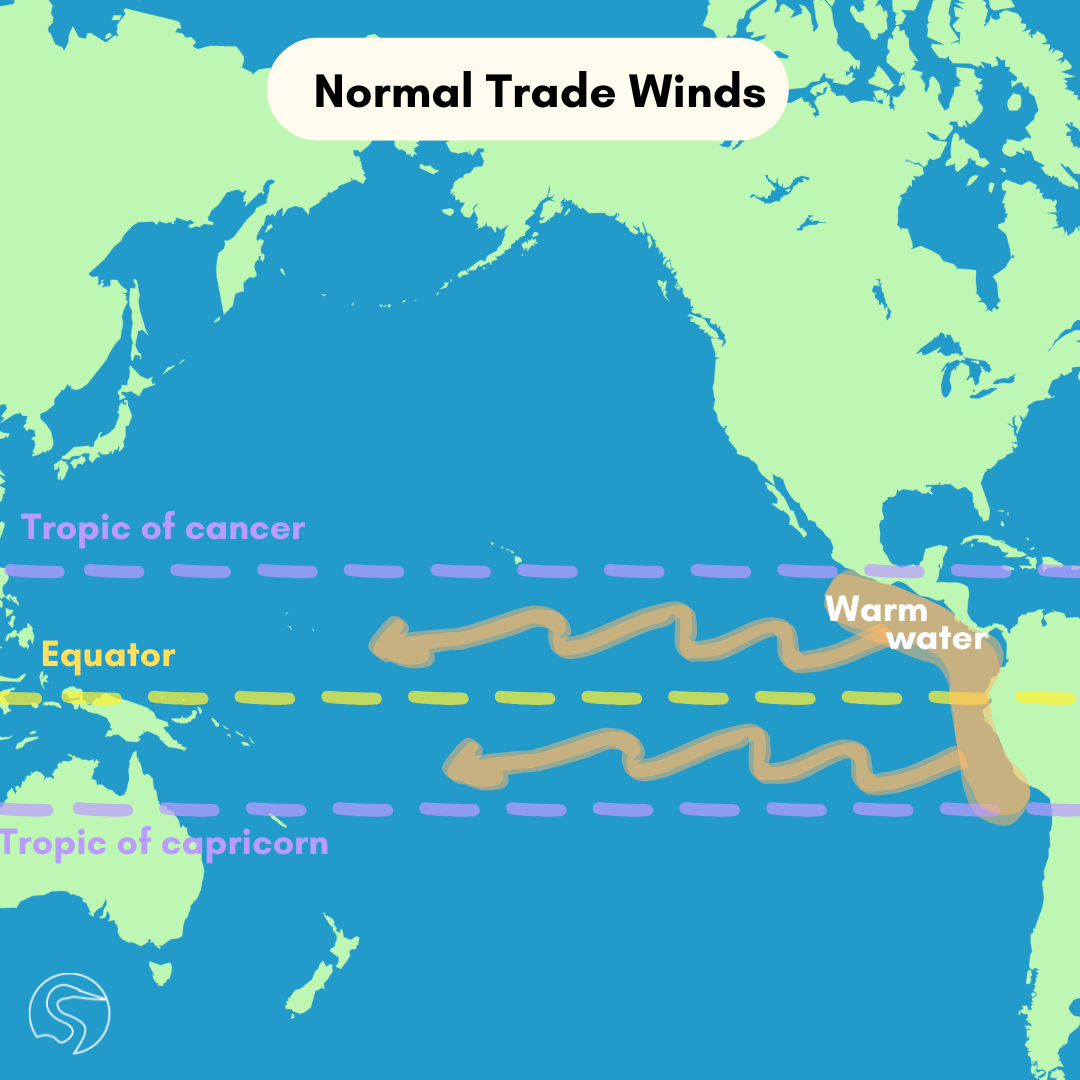
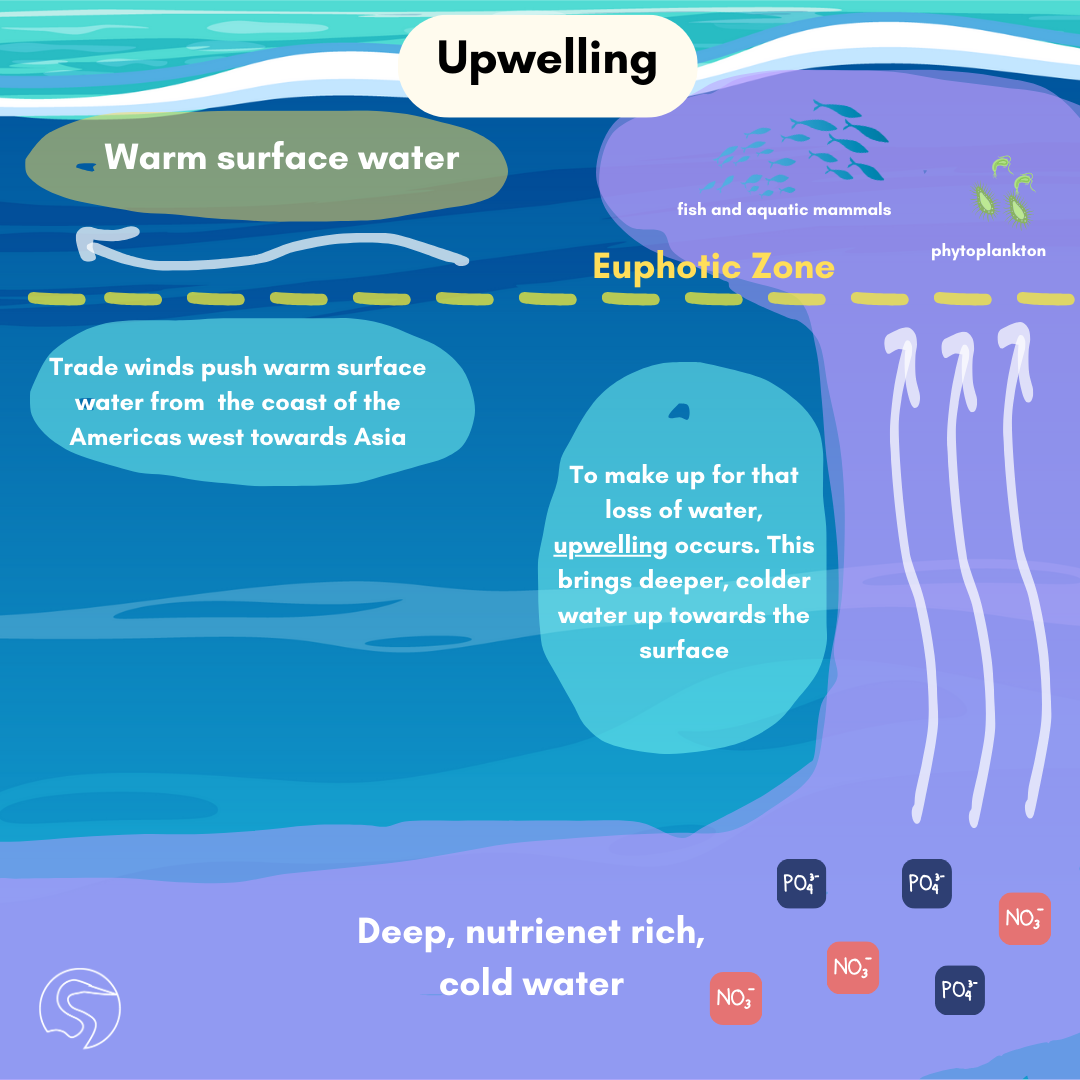
In order to understand what a La Niña or El Niño season is, we first need to understand the trade winds. Trade winds are found close to the Earth's surface along the equator, in between the Tropic of Cancer and the Tropic of Capricorn. Normally, trade winds push warm Pacific waters from the coast of the America's west toward Australia and Asia. To replace the water that was pushed west, waters from deeper in the ocean rise up to the surface in a process called
upwelling.
Upwelling
pulls cold, nutrient-rich water up from the ocean’s depths to the euphotic zone, the sunlit top layer where photosynthesis occurs. Packed with nutrients like nitrates and phosphates, this water fuels phytoplankton growth. Phytoplankton, which are a photosynthetic organism, form the base of the ocean food chain. They attract organisms that feed on them, creating a ripple effect in the environment. Soon, fish, clams, and even marine mammals gather near the surface, forming a thriving marine ecosystem.
La niña
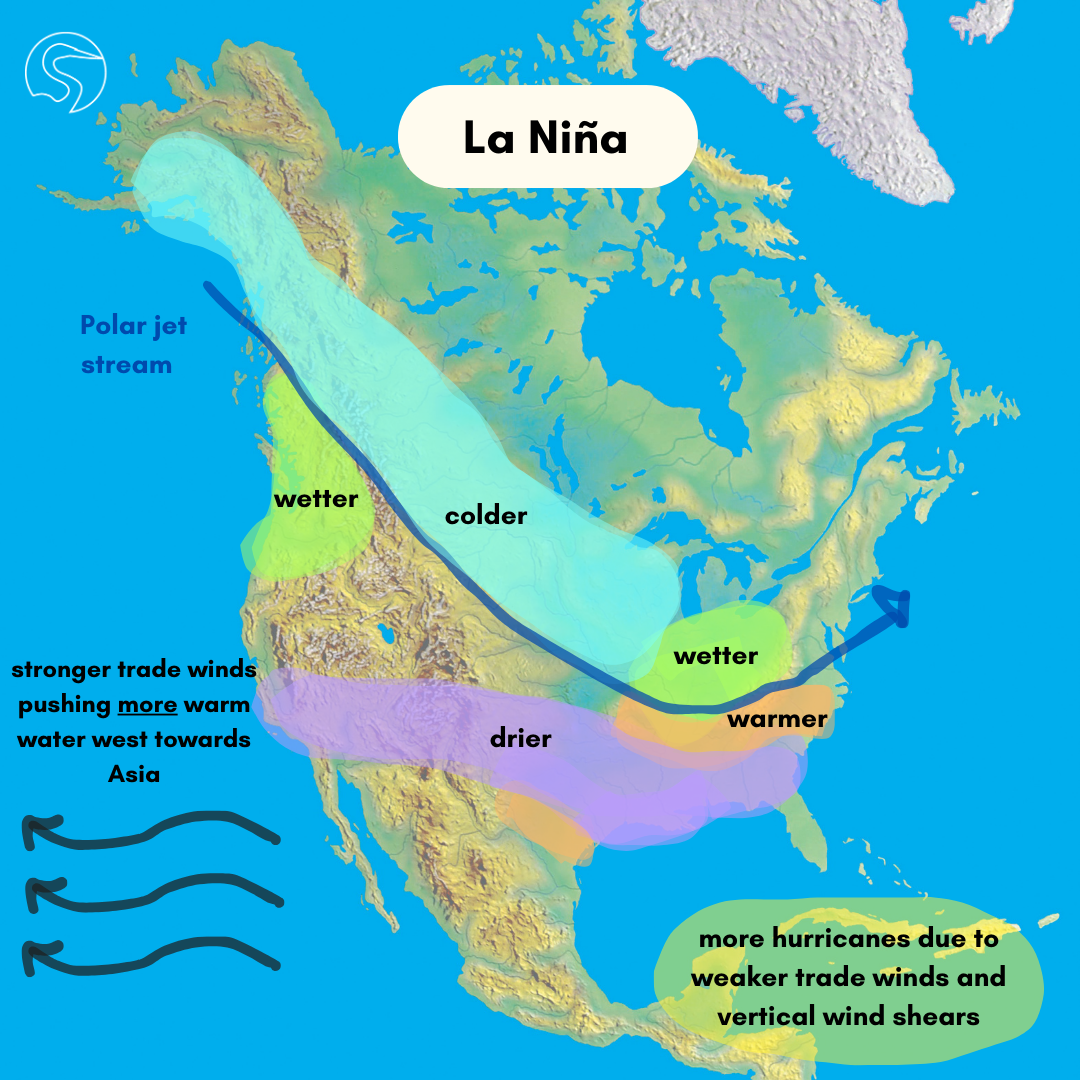
La Niña translates to "the little girl" in Spanish, and is the cold phase of the ENSO cycle. La Niña was first noticed after El Niño, so it is sometimes referred to as anti-El Niño or El Viejo ("the old man" in Spanish). During La Niña events, trade winds are even stronger than usual, pushing more warm water from the Americas toward west Asia. As a result, upwelling increases and intensifies. The waters off the Pacific coast are in turn colder and contain more nutrients than usual. As a result, these waters supports more marine life and bring more cold-water species, like squid and salmon, to places like the California coast. This cooling effect shifts the jet stream northward, leading to cooler, wetter weather in the Pacific Northwest and Midwest and drier conditions in the Southwest and Southeast. The result? Chilly northern winters and milder southern ones.
These effects aren't just limited to the United States. La Niña is characterized by lower-than-normal air pressure over the western Pacific, and these low-pressure zones contribute to increased rainfall in Southeast Asia and Australia. This increased rainfall often results in a more intense monsoon season in Southeast Asia, which benefits the Indian economy that heavily relies on monsoon season for agriculture production. However, this increased rainfall can have detrimental effects on Australia, which has historically suffered from intense flooding during these events. La Niña usually has a positive impact on the fishing industry of western South America, as upwelling brings nutrient-rich waters to the surface, along with marine life and big game fish.
La Niña can also intensify hurricane seasons along the East Coast, as we’ve seen this year. During La Niña years, weaker trade winds and reduced vertical wind shear over the Atlantic create favorable conditions for hurricanes. Vertical wind shear refers to changes in wind speed and direction at altitudes between 5,000-35,000 feet. When strong, this shear can disrupt or weaken hurricanes. But with less shear, storms can develop and strengthen more easily, leading to a more active hurricane season.
El niño
El Niño, the warm phase of the ENSO cycle, was first identified by Peruvian fishermen who noticed unusually warm waters along the coast. We don’t have a record of the indigenous Peruvian name for the event, but Spanish settlers referred to it as El Niño, which translates to “the little boy”. When capitalized, El Niño means the Christ Child, and was used because the phenomenon often arrived around Christmas.
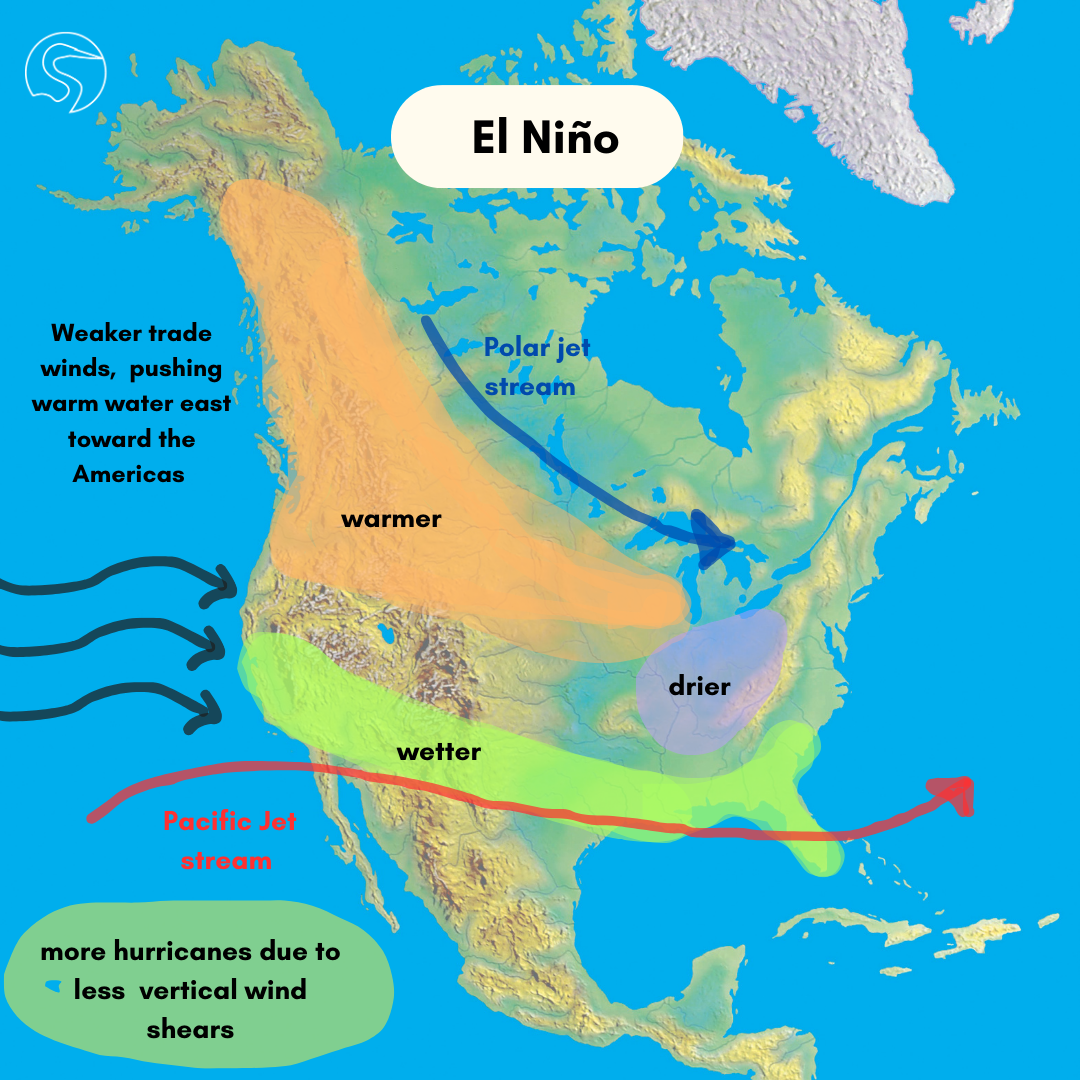
El Niño events are the counterpart to La Niña. During El Niño, trade winds are weaker than usual, and push warm water eastward back toward the Americas This disrupts the usual cold-water upwelling along the coast of the Eastern Pacific. Without this upwelling, the euphotic zone of the eastern Pacific can no longer support its normally productive coastal ecosystem. Fish populations die off or migrate, which in turn has a devastating impact on Ecuadorian and Peruvian economies, which rely heavily on fishing.
The warmer waters also shift the jet stream southward, bringing warmer, drier winters to the Northern U.S. and Midwest, while the Southwest and Southeast often experience increased rain and flooding. Last winter was the warmest winter on record in the lower 48, with both El Niño and global warming in play. Whether La Niña or El Niño, these patterns pack a punch on our weather—and this year, it looks like we’re in for a chillier, wetter winter up north.
Sources:
National Geographic- El Niño
National Geographic- La Niña
National Oceanic and Atmospheric Association- What are El Niño and La Niña?
National Oceanic and Atmospheric Association- Impacts of El Niño and La Niña on the hurricane season

RECENT ARTICLES