FIELD NOTES BLOG
How Climate Change is Making Hurricanes More Destructive
If you’ve been following the headlines—or even stepped outside and felt the wind this past weekend—you likely felt the power of Hurricane Helene. It made landfall on September 26, 2024, arriving as a Category 4 storm that slammed the Gulf Coast. While Helene slowly weakened as it moved northward, it left a trail of devastation across the Southeast, hitting states like Florida, Georgia, Tennessee, and the Carolinas the hardest. The southern Appalachian region was especially affected, as communities faced relentless rain, flooding, landslides, and wind. The toll the storm has taken on communities is staggering. At least 200 lives have been lost, with many still unaccounted for, and more than a million people remain without power. The full scope of the damage is still unfolding, as rescue teams work tirelessly to reach isolated areas. Hurricane Helene, however, is more than just a statistic. It is a glimpse into what future hurricanes may continue to look like, as climate change continues to intensify storms with each passing season. It's a reminder that climate change is not a problem 'over there' - it is happening here, now, and affecting us all. As we continue to watch aftermath of tis disaster unfold, I can't help but to remember the quote that "climate change will manifest as a series of disasters viewed through phones with footage that gets closer and closer to where you live until you're the one filming it."
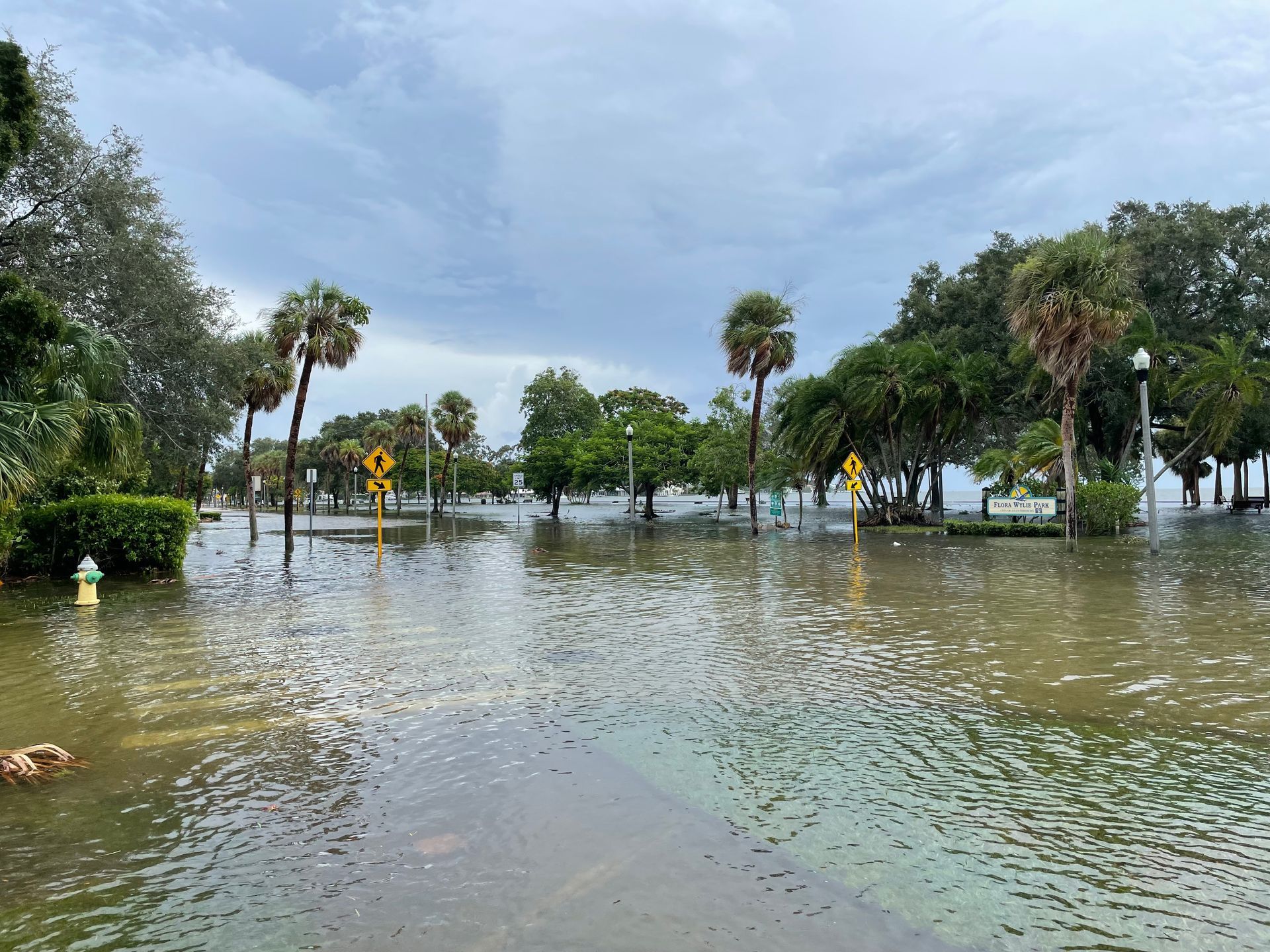
Simply stated, climate change is making hurricanes more destructive now than they were in the past. Although the number of hurricanes we experience each year isn't necessarily increasing, their intensity is. The hurricanes we see today are often stronger and more devastating than those of the past. In fact, researchers have found that the proportion of major hurricanes (Category 3 or above) in the Atlantic has nearly doubled since 1980. This trend is driven by rising ocean and atmospheric temperatures, as well as higher sea levels—all of which are consequences of climate change.
Warm oceans fuel hurricanes, and the oceans are heating up. Human-caused climate change has trapped enormous amounts of extra heat on the planet, and over 90% of that heat has been absorbed into the ocean. The Atlantic waters, particularly in the Gulf of Mexico and the Caribbean, are getting warmer, creating the perfect conditions for storms to grow. As hurricanes move across these warmer waters, they absorb more heat and moisture. This extra energy supercharges the storm, leading to stronger winds, heavier rainfall, and increased flooding when it makes landfall.
It’s not just the oceans heating up. The atmosphere is also warming, and that plays a major role in the changing behavior of hurricanes. Think of heating up a pot of water on the stove. Once the liquid water becomes hot enough, it boils and creates steam (or hot water vapor), and evaporates into the air. A similar process happens at Earth’s surface. As surface temperatures rise, more liquid water evaporates from the land and ocean. The warmer the air, the more water vapor it can hold. So as global temperatures rise, the air becomes more saturated with water molecules. This excess moisture often turns into torrential downpours during hurricanes. In the case of Hurricane Helene, much of the flooding in Appalachia was exacerbated by unusually heavy rainfall that preceded the hurricane. The already saturated ground could not absorb anymore water, resulting in flooding far beyond what we’ve seen in previous decades.
Another key factor is the jet stream, which has been slowing down due to climate change. The jet stream is a fast-flowing air current that helps guide weather systems. As it slows, hurricanes are lingering longer over certain areas, rather than quickly moving on. This means storms are not only more intense, but also more stationary, causing them to dump significantly more rain on the same region. Studies suggest that these slower-moving storms can unleash up to twice as much rain as they did just a few decades ago. We saw this with Hurricane Helene, which lingered over parts of the Southeast, leading to prolonged flooding and destruction.
Storm surges are also rising and becoming more dangerous during hurricanes. A storm surge occurs when the sea level rises far beyond normal high tide. Rising sea levels, another effect of climate change, are pushing water farther inland during hurricane-related storm surges than before. In the last century, sea levels along the U.S. coast have risen by about a foot. This may not sound like much, but when combined with the power of a hurricane, that extra foot of water can inundate coastal areas, destroying homes, infrastructure, and entire communities. During storms like Hurricane Helene, these surges can be catastrophic, contributing to the extensive flooding and damage along the Gulf Coast.
As we reflect on the devastation caused by Hurricane Helene, it's clear that climate change is no longer a distant threat—it's here, and it's reshaping the world we live in. The science shows that rising temperatures, both in the ocean and the atmosphere, are making hurricanes more intense and more destructive. While we may not be able to prevent hurricanes, understanding the link between climate change and these extreme weather events is crucial to preparing for the future. It's not just about adapting to stronger storms, but also addressing the root causes of climate change to protect our communities from even greater destruction in the years to come.
How to Help:
Hurricane Helene is already shaping up to be one of the deadliest hurricanes in U.S. History. If you wish to contribute to relief funds, here are some options. The Federal Emergency Management Agency (FEMA) has said that giving money is better than donating materials, that way organizations on the ground can put financial contributions to use where they are needed most. The agency also recommended making a donation to trusted organizations.
For those unsure where to donate, Charity Navigator rates charities based on their cost effectiveness and efficiency. Otherwise, here are some good places to start:
North Carolina Voluntary Organizations Active in Disaster: https://pay.payitgov.com/ncdonations
North Carolina Disaster Relief Fund: https://pay.payitgov.com/ncdonations
Florida Disaster Relief Fund: https://www.volunteerflorida.org/donatefdf/
Send Relief: https://www.sendrelief.org/projects/hurricane-helene/
Americares: https:///my.americares.org/give/623680#!/donation/checkout
American Red Cross:
https://www.redcross.org/donate/dr/hurricane-helene.html/
References:
Mortality caused by tropical cyclones in the United States Peer Reviewed Study by Young et al. Published in Nature.
Recent intense hurricane response to global climate change Peer Reviewed Study by Holland et al. Published in Climate Dynamics.
Hurricane stalling along the North American coast and implications for rainfall Peer Reviewed Study by Hall et al. Published in Nature.
How climate change makes hurricanes more destructive published by the Environmental Defense Fund
A force of nature: hurricanes in a changing climate published by NASA
How to help victims of Hurricane Helene: an article by the New York Times

RECENT ARTICLES