FIELD NOTES BLOG
September Bird Blog
Green-winged Teal
Anas Crecca or Anas Carolinensis
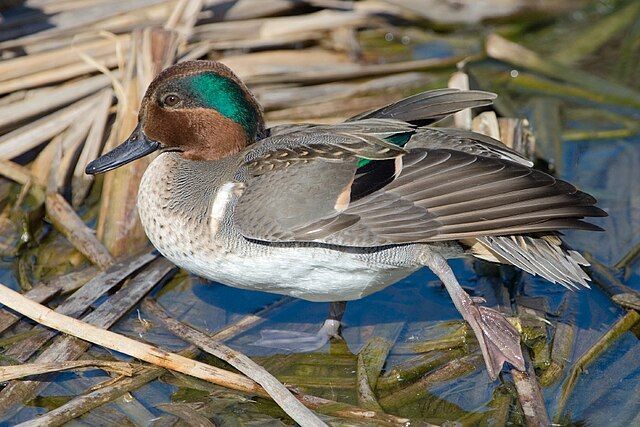
This is the smallest species of dabbling duck in North america. It is quite the beautiful little bird with males having a cinnamon colored head and a green crescent emerging from the eye. Their bodies are an overall gray with thin black and white mottles on the breast and a more solid gray-brown coloration on the wings. Females are more drab with an overall brown coloration reminiscent of the female mallard barring their yellow streak on the tail. Both sexes can be easily identified in flight as they possess their titular “green wings”, which is actually a green patch of flight feathers known as a speculum. More vegetarian than other ducks as most of their diet is focused on the aquatic seeds and leaves from plants such as pondweeds; with only occasional consumption of aquatic invertebrates. The green-winged teal doesn't spend a great deal of time in the area as they spend the breeding season across Alaska, Canada and the great lakes; while spending the winter months on vacation in the southern states, the west coast, and Mexico. As such we will mainly catch them appearing during their spring migration and their fall migration which often peaks in the month of September, meaning that this month is your best time to catch a glimpse of one. Unlike other waterfowl they prefer to live in shallow calm water associated with marches, ponds, and streams. But most important to their selection of habitat would be the presence of dense vegetation that offers them plenty of food and protective cover. So good locations spot one would be the wetlands at Nygren, Pecatonica, Ferguson, and Sugar River. Interestingly there is heavy debate in the scientific community over whether or not the green-winged teal is its own species or just an American subspecies of the Eurasian common teal. Their call is quite whistley.
Northern Saw-whet Owl
Aegolius acadicus
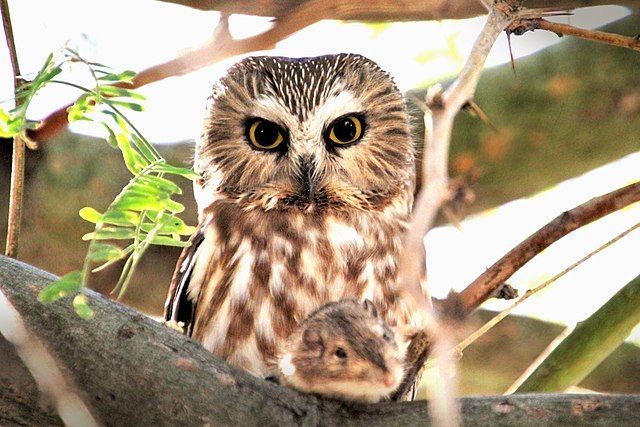
In my opinion this bird definitely holds the title of North America’s cutest bird of prey. It is a rather miniscule bird, being only 8 inches in height and having a two foot wingspan, making them relatively similar in size to the American Robin. To help camouflage in forest they are an overall brown color with a lighter tan belly and a few white spots across the back and wings. The round face of the owl plays host to a pair of large yellow eyes and a light colored “Y-shaped” mark between the eyes. They lack the ear tufts present on some other owls. A fun fact about their wings is that if you shine a UV light onto the underside they glow a bright neon pink. There is no visual difference between the two sexes. They’re small size and cute appearance hides the fact that they are voracious predators, specializing in eating small rodents such as deer mice. Unlike many other owls who swallow their prey whole, the saw-whet must shred them into pieces and one has to eat their prey over the course of two days. Most of the birds we are looking at in this month's blog are migratory and the northern saw-whet is no exception, but it is unique. This is because though the saw whet migrates it doesn't do so in a normal pattern. In fall some individuals will choose to move to lower altitudes or migrate south for the winter while others will choose to stay in their homes year round. But every 4 years an increasing number of individuals will migrate south for unknown reasons. In rockford we have both resident and migratory populations present being found in their preferred habitat of dense forests. Though they won't be hanging around your bird feeders you can attract them to your area by hanging up nest boxes in trees around your property. The appearance of these owls can be deduced from the sound of their interesting call.
Olive-sided Flycatcher
Contopus cooperi
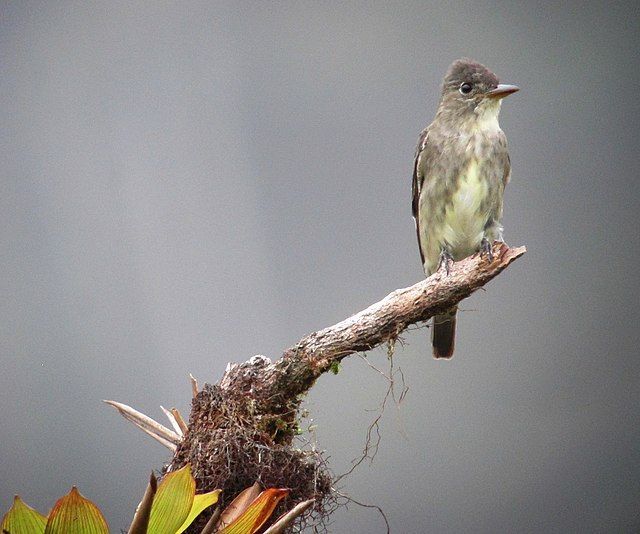
Another passerby like the teal, the only times we can regularly find the olive-sided flycatcher in our neck of the woods is during their fall and spring migrations as they head towards the tropics. This bird shares many physical characteristics with other tyrant flycatchers such as the eastern phoebe and the eastern wood pewee; most notably their shape and coloration. These birds are rather small, being between the size of a song sparrow and a robin. Their head and wing plumage ranges from olive-gray to gray-brown except for their breast and throat which are white, the olive coloration they get their names from is located on their flanks and can only truly be seen in good lighting for when they molt. Like other flycatchers they possess a small crest atop their head and beak that ends in a shallow hook. They can be visually separated from other similar looking species based on minor coloration and size differences and the fact they rarely flick their tails. You should bring along your binoculars with you if attempting to see them as they are normally perched higher in the trees, to give themselves a better view of prey. Speaking of prey, as their name suggests these birds exclusively eat insects quickly catching them while in flight before returning to a perch. While on their perches you hear their calls which sounds like a
high-pitched “quick, three beers” however don’t have high expectations since they can be more on the silent side in fall. Unfortunately like many tropical migrants they have seen population declines of up to 79% due to climate change and habitat loss reducing the abundance of the insects they eat.
Palm Warbler
Setophaga palmarum
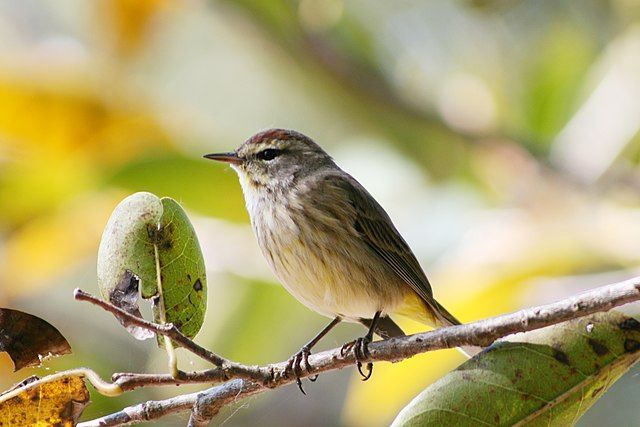
There are two distinct subspecies of this bird which differ in appearance and where they live. The eastern palm warbler, Setophaga palmarum hypochrysea, lives east of the great lakes while the western palm warbler, Setophaga palmarum palmarum, lives from the great lakes across the Canadian boreal forests. Here in Illinois we get the later subspecies, meaning that our palm warblers are a little more drab in coloration with both sexes being overall brown with a tint of yellow. They have a rusty red crown, a yellow face, and a black stripe running from the bill past the eye in the breeding season. But it's likely that we'll catch them in their non-breeding plumage where they are going to be an olive-bron all over except for a lighter colored breast and their yellow rumps. Like lots of other warblers their favorite foods are insects which they will pick off from tree branches, shrubbery, and the ground. They will also eat berries as they come into season. To give themselves easy access to their food palm warblers are normally found in open woodland areas and shallow wetlands. They are unique amongst the warblers as they are one of two species that will bob their tails while standing on a perch. Their call is a monotonous buzzy trill.
Red-eyed Vireo
Vireo olivaceus
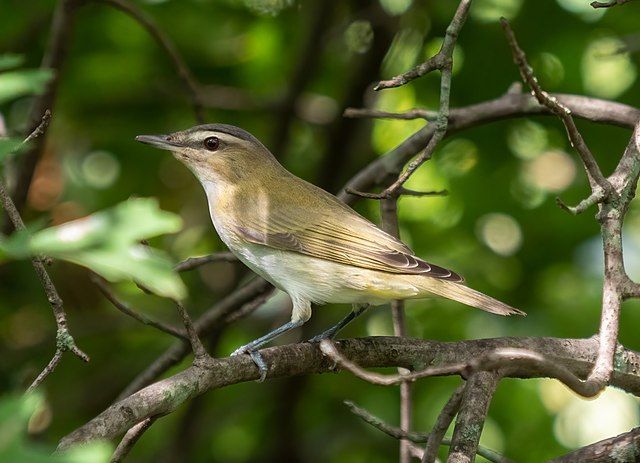
In the late summer forest while enjoying the shallow warmth of the early morning or late afternoon you might lock eyes with a pair of piercing red eyes. These eyes belong to a small but brutal predator of the forest canopy, the Red-eyed vireo. These are a small song bird, about the size of a tufted titmouse, that makes its summer home across the Central and Eastern United States and Canada. They are not sexually dimorphic and both males and females have their iconic red eyes, though immature individuals will have brown eyes instead. Adults are primarily olive green in color with white underparts and an ‘oreo’-pattern eye stripes (black - white - black) around the eye. Their legs are blue-gray and their bill is short and stout, ending in a shallow hook. There is a slight yellow tinge to their flanks and undertail feathers. Like the warbler and the flycatcher these birds are insect eating specialists, though they will eat fruits to build up energy before migration, but they hunt them in a different way. Instead of on the wing or pursuing them on foot the vireo uses a strategy called gleaning, where the bird will fly past an insect on a leaf and catch them before returning to the perch. Their favorite prey include caterpillars and other soft bodied larvae. They are prolific singers and you can hear them still filling the treetops with their iconic nyaah calls and slurred noted song. They hold one of the records for most songs sung in a single day with one individual singing over 20,000 songs.

RECENT ARTICLES