FIELD NOTES BLOG
November Bird Blog
Shorter days and longer nights bring with them cold winds and the chance of snow. Though this change in the weather has driven away most of our summer time friends it brings in a whole new enclave of birds. Because even though we think our winters are quite cold, they are nothing compared to the frigid areas of Canada and the arctic whose intense winters actually push their species further south into the great lakes area. So we will be exploring several species that have decided to stick around our parts
Bufflehead
Bucephala albeola
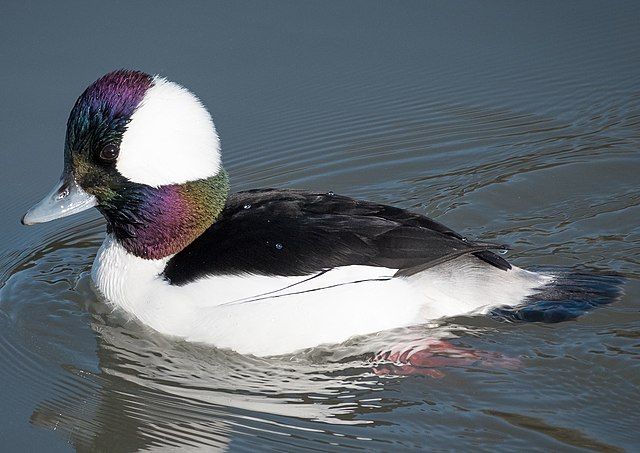
It gets its name from its bulbous cranium with “bufflehead” being a combination of the words “buffalo” and “head”; as their heads share a similar shape to the large American mammal. Their large heads are often made even larger by the males who will puff out their feathers. The large head of the bird is quite comical given that it is the second smallest species of duck in North America, with only the green-winged teal being smaller. Only weighing about 1 to 1 1⁄2 pounds and having a wingspan of less than two feet, no one could blame you if you missed while out birding. Like most other ducks they show clear differences in color between the sexes. Females are drab with a gray underbelly and breast, a dark brown-black back and head, complemented by white splotch on their cheeks. Males have their wings and undersides covered in snow-white feathers and have a black back. Their large heads are iridescent purple and green and have the same white splotch as the females but larger, wrapping around the back of the head. Both sexes possess a solid white speculum on the wings. . Though since it isn’t breeding season expect the males to be less colorful. Buffleheads are in the family of waterfowl known as “sea ducks” which is quite funny because the preferred habitat isn't the sea at all but actually forest wetlands, making them more similar to wood ducks in behavior. The best place to spot them while they are in Rockford would be along the forested edges of the Kishwaukee and Rock rivers or in the lakes and ponds of your local forest preserves. Males and females have different calls with males quelling and growling but the females make a cuk-cuk-cuk call.
Pine Siskin
Spinus pinus
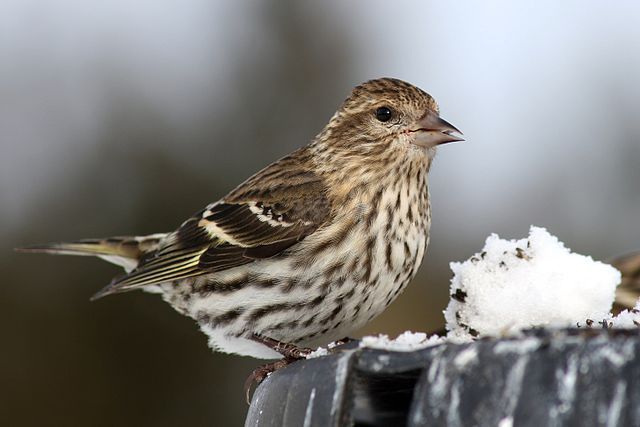
This species belongs to the family of birds that includes finches, grosbeaks, and Hawaiian honeycreepers; thus they share quite a few similarities with several other local species. Most notable the siskin is a similar size to the American goldfinch, making it quite small. They are a good example of a LBB, little brown bird, since both males and females are overall tan in color with brown flecks peppered throughout. The only real color comes from the black and pastel yellow color on their wings. They spend their summers breeding in the large pine forest of canada and alaska but with the onset of colder weather will begin to move south. During migration they form very large groups with them being easy to identify thanks to their high-pitched, elongated zreeeeeeet call. When they spend their winters here their habitat becomes more varied as they won't just stick to pine forests but will branch out to live in deciduous forest, grasslands, and backyards. These birds are a common sight as they will form large groups around good food sources. To increase your chances at spotting one it's best to put out a feeder filled with thistle or millet.
Mute Swan
Cygnus olor
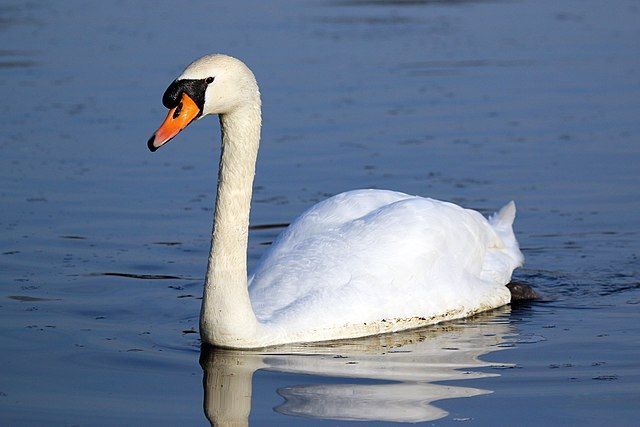
This bird often triggers images of beautiful gardens, elegant princesses, and artistic ballet. However, in her in the United States it would only trigger thoughts of INVASION, because the mute swan isn’t a native species but instead was brought over from Europe in the late 1800s due to their beauty. This beauty comes from their solid white bodies, save from the tannish discoloration present on the upper neck and head which is caused by iron and rooting plant matter staining it. The face is covered in a black mask and ends with a bright orange bill which possesses a distinctive knob. Hard to miss due to their large size, the mute swan is one of the heaviest flying birds currently living on earth at around 25 - 30 pounds. On land they stand taller than other large waterfowl, such as canada geese, as they can reach height up to 5 ft. This size makes them easy to spot on their preferred habitats which in the USA are mainly manmade lakes and other bodies of water near people. The US population also does not migrate meaning that you can see them throughout the whole year. As you might be able to tell from their name, these birds are not very vocal but they aren't truly mute. The sound you are most likely to hear would be an aggressive hiss or a territorial call that sounds like a muffled trumpet. The types of calls they make allude to why they are so problematic, that being that they are very aggressive. They are quick to attack native waterfowl species that venture to close, often drowning them or beating them to death with their wings. This has reduced the population of certain species in where they take up residence. Several land management agencies have tried to control population but have been stopped due to the popularity of the bird amongst the general public and other special interest groups.
Northern harrier
Circus hudsonius
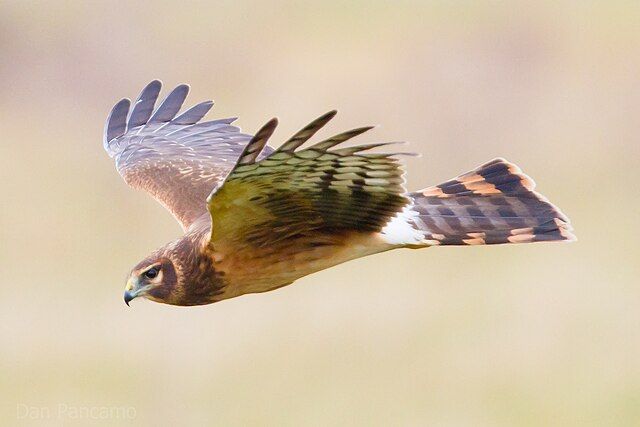
Harriers are not spoken about as much as other birds of prey such as hawks, eagles, owls, and falcons; but that doesn’t make them any less interesting than their cousins. This might be attributed to the fact that the northern harrier is the only species native to the United States. They are open land specialists who spend their summers living on the tundra, grasslands, and marshes of Canada and Alaska before migrating south to the prairies and wetlands of Mexico and the continental USA. Though here in Rockford we are lucky enough to have them present year around. Overall they are medium sized birds with long, broad wings and long tails Unlike most other medium to large birds of prey this species is sexually dimorphic in plumage. Males are overall gray in color with black edges on the wings and tails. Females are pale brown to white in the body with dark brown head, back and wings. The brown parts of the body have white streaking across the body. The best places to view them in Rockford would be to keep your eyes on the prairies and crop fields where you might see them flying low across the areas looking for small mammals. Their calls are higher-pitched kek notes used when they feel threatened, coupled with the occasional scream.
Northern hawk Owl
Surnia ulula
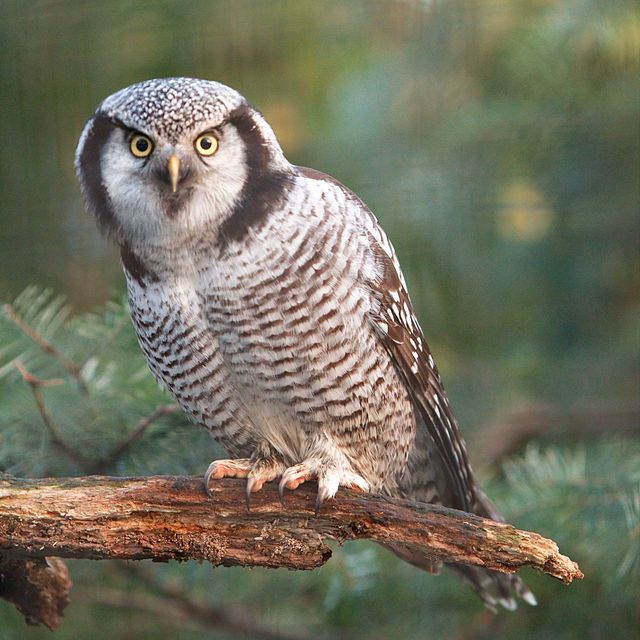
A solitary hunter of rodents in the cold forests of Canada, Alaska, and Eurasia; the northern hawk owl is a rare sight here in Winnebago County. Occasionally young birds will disperse into the northern United States and from their parents' territories in their natural range; similar to what happens in snowy owls, especially when the winters become too harsh further north. They are on the smaller size of North American owls being larger than the screech but smaller than the barred. They have an oval-shaped body with a long tail. They are overall off-white in coloration. Their breast, tail, and wings have brown bars with two especially thick ones being present on the upper breast and neck. The backsides of the bird are chocolate brown with white speckles. The head is quite gray with two black borders around the facial disk and plays host to two bright yellow eyes. These birds are quite easy to spot as unlike other owls they show little fear for humans and, more importantly, they are active during the day. These use their large eyes to locate small rodents from up to half a mile away. Different sexes employ different calls in different contexts. When perching at a possible nest site, the male typically makes a sound like tu-wita-wit, tiwita-tu-wita, wita, and rolls his whistle to attract a partner. Typically, the female calls with greater shrillness and less consistency. The northern hawk-owl makes a sound like "rike, rike, rike, rike" to warn of impending danger.
RECENT ARTICLES