FIELD NOTES BLOG
The wonder of the moving earth: what to look out for in the sky during 2026
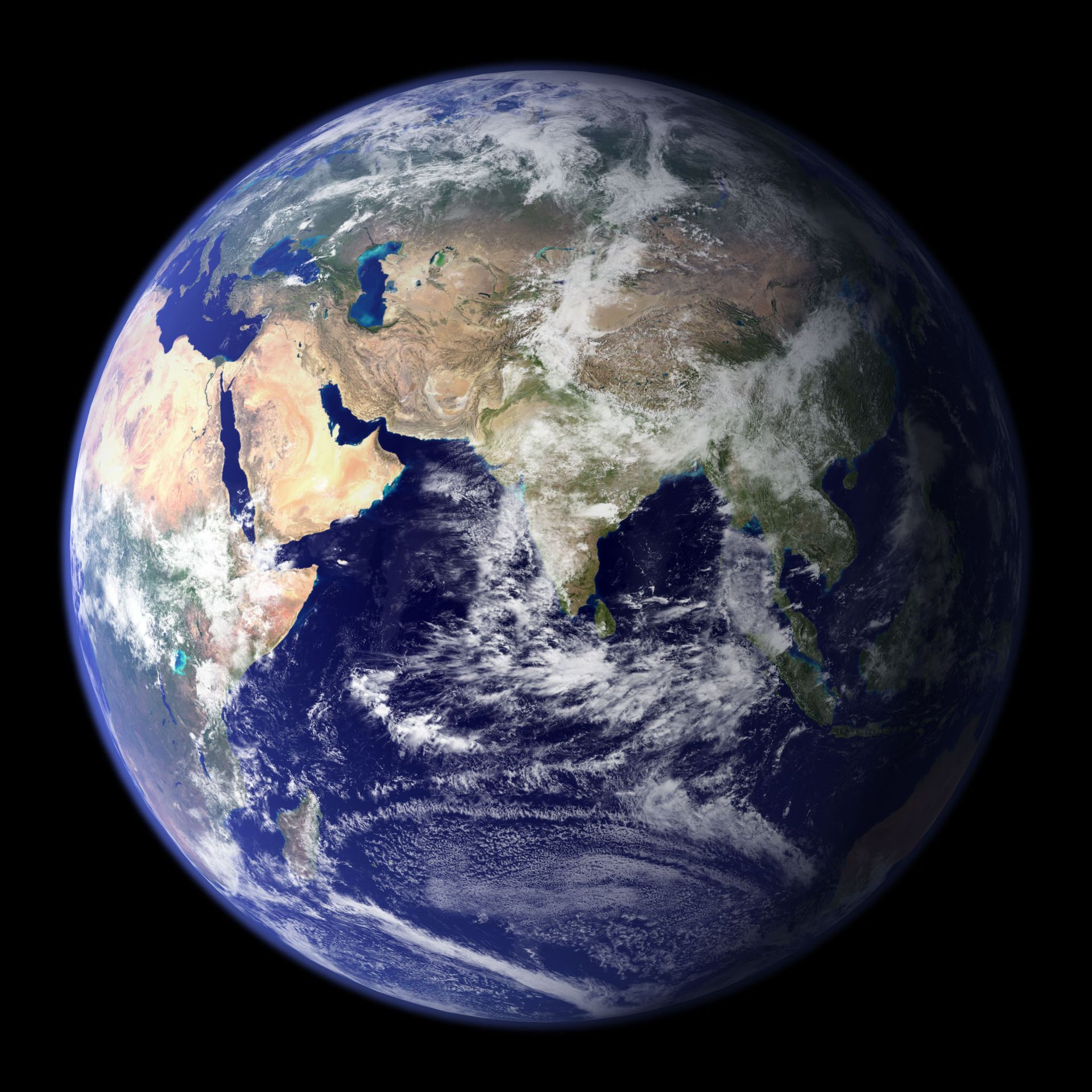
Rivers move and snow falls and hillsides weather while tectonic plates settle snugly across the crust of our earth. The wind blows and trees bow down on stormy days, and deep under our feet the molten parts of our planet’s body flow, as above our heads we see the wispy clouds marking the flow of airs of our sky swirling just the same. Just beyond these skies we see the moving pinpricks and round splotches of light which cross our eyelines through each daily cycle, marking just one of the myriad multiscale rotations of our planet, solar system, and galaxy.
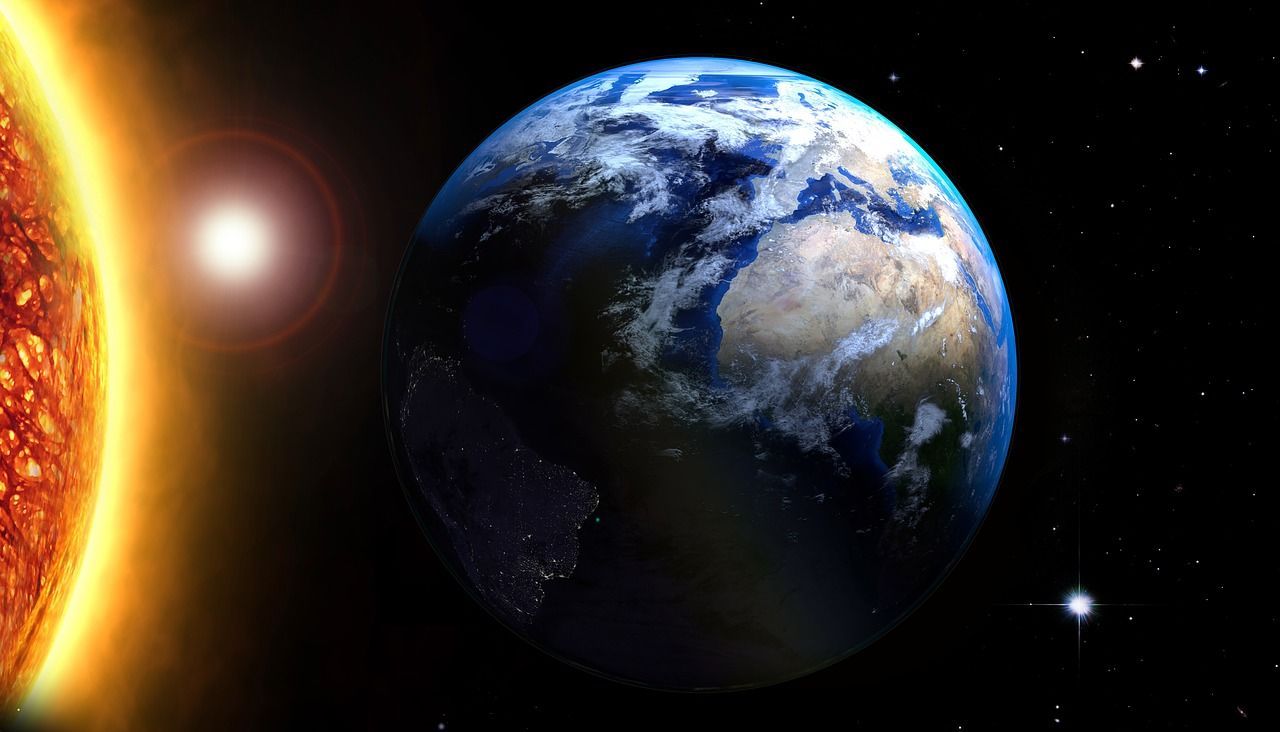
All of these movements and visions remind us of our place in the universe, sailing through space on our planet, in relation to the many other bodies that are floating around us, some of whom we know like close friends. The dance of these cosmic forms in and out of our skies measuring for us, and many living systems on this planet, the cadence of our lives—the most immediate being of course our spinning round our own axis in front of the magnificent sun, which lights each day and heats our entire solar system.
Solar Eclipses
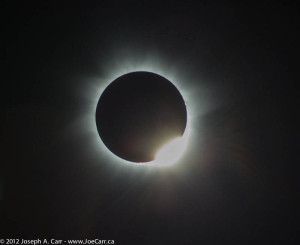
During one of these remarkable series of movements—earth’s impending full rotation of our sun (the year 2026)—a particularly awe inspiring phenomena will occur as our moon glides between the star and our planet, blocking our usual open view. This event, called a solar eclipse, will happen twice this year, once in July and another time more fully in August. Although they won’t be visible in the United States this time, it will be in totality, or fully darkened, over parts of Spain, Iceland, Greenland, and the Arctic on August 12th. During this movement, the sun will cast, at its peak, an eerie and wonderful sort of false sunset around the entire horizon for viewers.
Blood Moon
The moon will alter the color of our skies earlier in the year. On March 3rd, it will slip from the sun’s light into our earthly shadow, putting on a shocking red, caused by sunlight sparkling onto its surface through only the very edges of Earth’s blue-light-scattering atmosphere, on the day of the full moon. This will be visible from Northern Illinois: here you can see an estimate of what time of night to look up and see this wonder known as the Blood Moon or Worm Moon.

Lunar effects on natural cycles
The moon’s movements not only have visual effects, but also physical, its gravity tugging at the tides of our oceans, and even the great Lake Michigan not too far to the East. Although Lake Michigan’s water levels are more affected by wind and barometric pressure changes, designating it a nontidal body, it still does experience water level changes twice a day from the strong gravitational pullings of both sun and moon. The moon’s movements are both theorized and mythologized to have many other cyclical effects on Earth’s living systems, too, like research that shows it structures reproduction in some living organisms, affects human sleep, and causes changes in plant growth. There have also long been beliefs, wonderings, and experiences of the human menstrual cycle syncing to the rhythm of the moon, and recently there has been more scientific exploration of its movement’s effects on human bodies in this way. Although there is too little and inconclusive inquiry to show a clear link, it is an interesting, emerging body of research.
Full moons
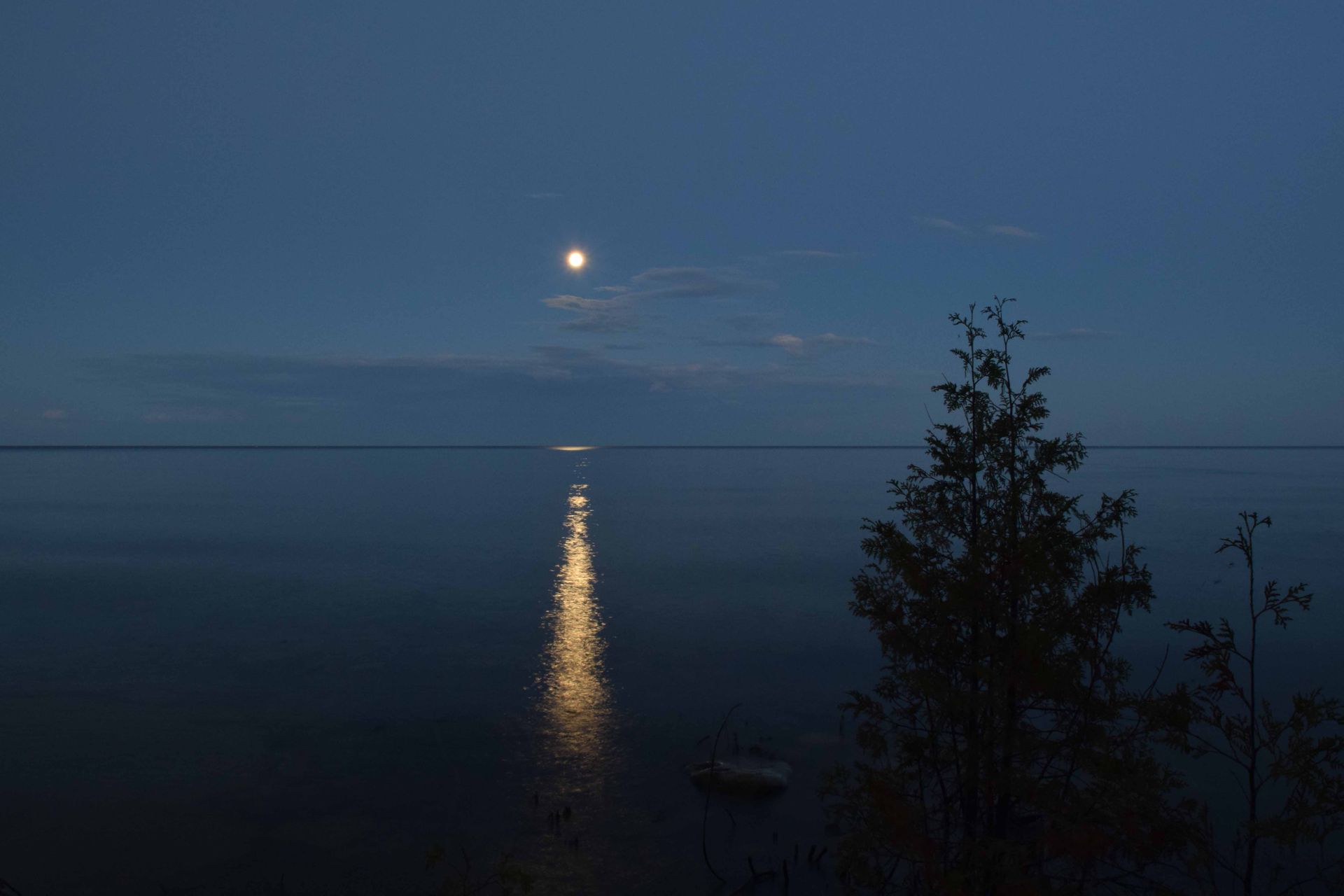
The full moons in an earth year come each time the satellite (a word used to describe any celestial or human made body rotating earth) moves to a position in its orbit which gives us the entire view of its lit, rounded face. This upcoming rotation around the sun will also bring us a blue moon, this particular one designated a monthly blue moon because it will be the second time a full moon appears within one Gregorian calendar month. This means that we’ll get 13 chances to see the moon’s full phase in 2026, a cadence of months actually reflected in some cultural and religious calendars locally and across the globe, like those of some Anishinaabeg, Mayan, and Ethiopian traditions.
Although it may seem from its name that the moon would don a blue tint at this time, really the term “blue” denotes an extra
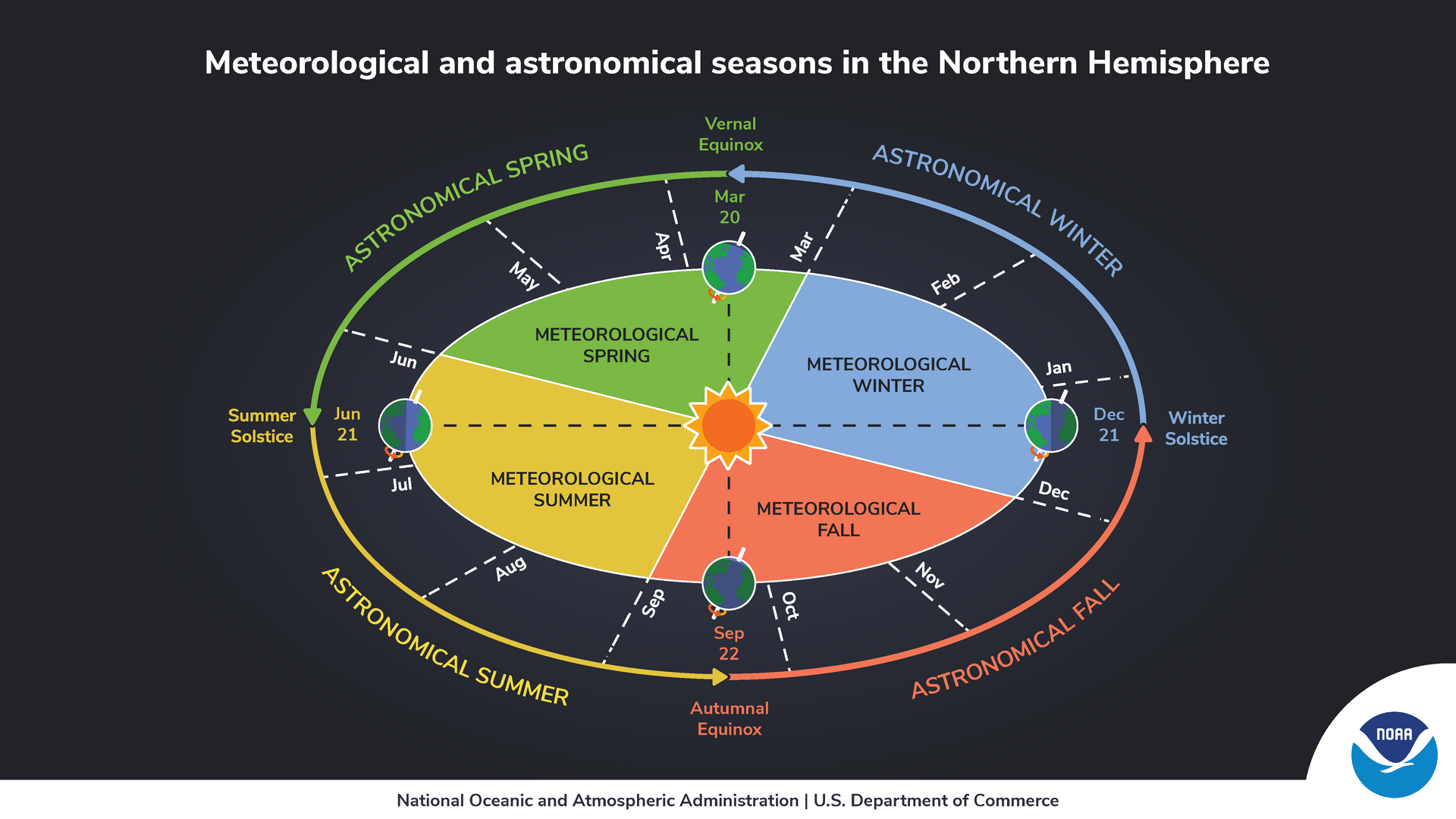
full moon, either within one month(such as the one we’ll be able to view on May 31st, 2026) or within what is called an “astronomical season”, the time between one of the four equinoxes and solstices in each year. An equinox is when, as the earth traces, tilted at 23.4 degrees, its path around the sun, neither the south nor north poles angle toward our star, marking a change in daylight and nearly equal lengths of day and night. A solstice marks a shift in sunlight as well, by denoting twice a year the moment that one of Earth’s poles is most angled toward the sun. NOAA provides
this concise visual and explanation mapping the astronomical and meteorological seasons of the Northern Hemisphere, as well as the equinoxes and solstices, along earth’s yearly orbit of the sun.
Meteor Showers and More
On our big yearly orbit, we use all these positionings of our planet in relation to our moon and sun to divvy up our time and govern loosely or formally many of our human social structures. Modern humans have been attentive to these movements for a long time, as evidenced by ancient astronomical texts, and also from archeological findings of carved bones which appear to track the movements of the moon, thought to date back 30,000 years(for context the estimation of when the Homo Sapiens emerged as a separate species is between 550,000 and 750,000 years ago). The Sun and Moon are not the only things that we’ve been watching for millennia, though: the multitude of other stars, planets, and meteors, etc. that dot the dark night have been and are still an important part of our human experience, too.
In 2026, we’ll be able to see some of these phenomena, such as the Perseids meteors from July 17th to August 24th. Many other showers will be visible this upcoming year, with the Quadrantids ringing in the new year January 2-3rd, and the Geminids rounding out the year from December 4th through 17th. Some of these showers can be seen with the naked eye. Additionally, here is one local
observatory with regular free public night sky viewings.
Planetary Alignment
Come February of this year, another special event will happen in our solar system as six planets align themselves. This alignment(although from Earth it will appear more like a scattering) will be most visible in this region’s skies on the evening of February 28th, with Jupiter, Saturn, Venus, and Mercury able to be seen without binoculars or a telescope.
A Year in the Sky
Our upcoming trip around the sun will light Earth’s night sky with many celestial experiences, reminding us of our planet’s unique place in outer space. All of these ongoing movements of bodies in space affect Earth in special ways, and observing them can make us aware of the scale of our own human bodies in the universe, bringing new awe and wonder each year.

Sources
- https://osr.org/blog/astronomy/celestial-events-calender/?srsltid=AfmBOoql7P9c2pHYcYFHNwJ_bzAmf5DunXO3Em0h_k4BGKyd64PBW8GA#major-astronomical-events-in-2026
- https://www.timeanddate.com/eclipse/globe/2026-march-3
- https://oceanservice.noaa.gov/facts/gltides.html
- https://www.health.harvard.edu/staying-healthy/moonlight-may-affect-sleep-cycles
- https://pmc.ncbi.nlm.nih.gov/articles/PMC10004791/
- https://spaceplace.nasa.gov/full-moons/en/
- https://www.timeanddate.com/calendar/march-equinox.html
- https://science.nasa.gov/solar-system/skywatching/night-sky-network/tropical-solstice-shadows/
- https://www.planetquest.org/learn/ishango.html
- https://www.google.com/search?q=does+the+moon+actually+affect+mestration+cycles+in+humans&oq=does+the+moon+actually+affect+mestration+cycles+in+humans&gs_lcrp=EgZjaHJvbWUyBggAEEUYOTIHCAEQABiABDIHCAIQABiABDIHCAMQABiABDIHCAQQABiABDIHCAUQABiABDIICAYQABgWGB4yCAgHEAAYFhgeMggICBAAGBYYHjIICAkQABgWGB7SAQkxMjg0OWowajeoAgCwAgA&sourceid=chrome&ie=UTF-8
- https://helloclue.com/articles/cycle-a-z/myth-moon-phases-menstruation
- https://www.science.org/doi/10.1126/sciadv.abe1358?intcmp=trendmd-adv
- https://pubmed.ncbi.nlm.nih.gov/23889481/
- https://www.discoverwildlife.com/animal-facts/ways-moon-affects-wildlife
- https://nmu.edu/nativeamericanstudies/moons-anishinaabeg-0
- https://ethos.lps.library.cmu.edu/article/id/520/
- https://ethiopianembassy.org/ethiopian-time/
- https://www.noaa.gov/education/multimedia/infographic/infographic-meteorological-and-astronomical-seasons
- https://astro4dev.org/7-ancient-cultures-and-how-they-shaped-astronomy-guest-blog/
- https://www.smithsonianmag.com/science-nature/essential-timeline-understanding-evolution-homo-sapiens-180976807/
- https://www.amsmeteors.org/meteor-showers/meteor-shower-calendar/
https://starwalk.space/en/news/what-is-planet-parade#where--when-to-see-planetary-alignment-today
RECENT ARTICLES