FIELD NOTES BLOG
January Bird Blog (2024)
New Year New Birds
Welcome to the new year my friendly bird enthusiasts. The bird blog continues to thrive as we dive deeper into the realm of avian wonders. The 2024 year is here and I am here to share more about birds! This month we have two bird themed events going on. First off we have the end of the Christmas Bird Count which starts the 14th of December and ends the 5th of January. And to mark the end of the Christmas Bird Count (on January 5th) a holiday has been made called National Bird Day.
The Christmas Bird Count is a conservation based event created by ornithologist Frank M. Chapman in 1900. The Audubon Society people worked together to count and track how many birds go through specific areas to develop an accurate census that can be used to protect birds and their habitat.
Inspired by this communal work of counting the Avian Welfare Coalition started National Bird Day. So on the last day of the Christmas Bird Count, a holiday made in part to raise awareness about birds held in captivity and the problems that come with it. Many birds are captured from the wild and even more are bred in captivity, which neither are good for the longevity of the birds as a whole. There are over 10,000 bird species in the world and about 1,500 of them are considered globally threatened. The end goal of this campaign is to show the world the importance of birds living free and in the wild!
Now onto the five fascinating birds I want to highlight this month
Carolina Wren
Thryothorus ludovicianus
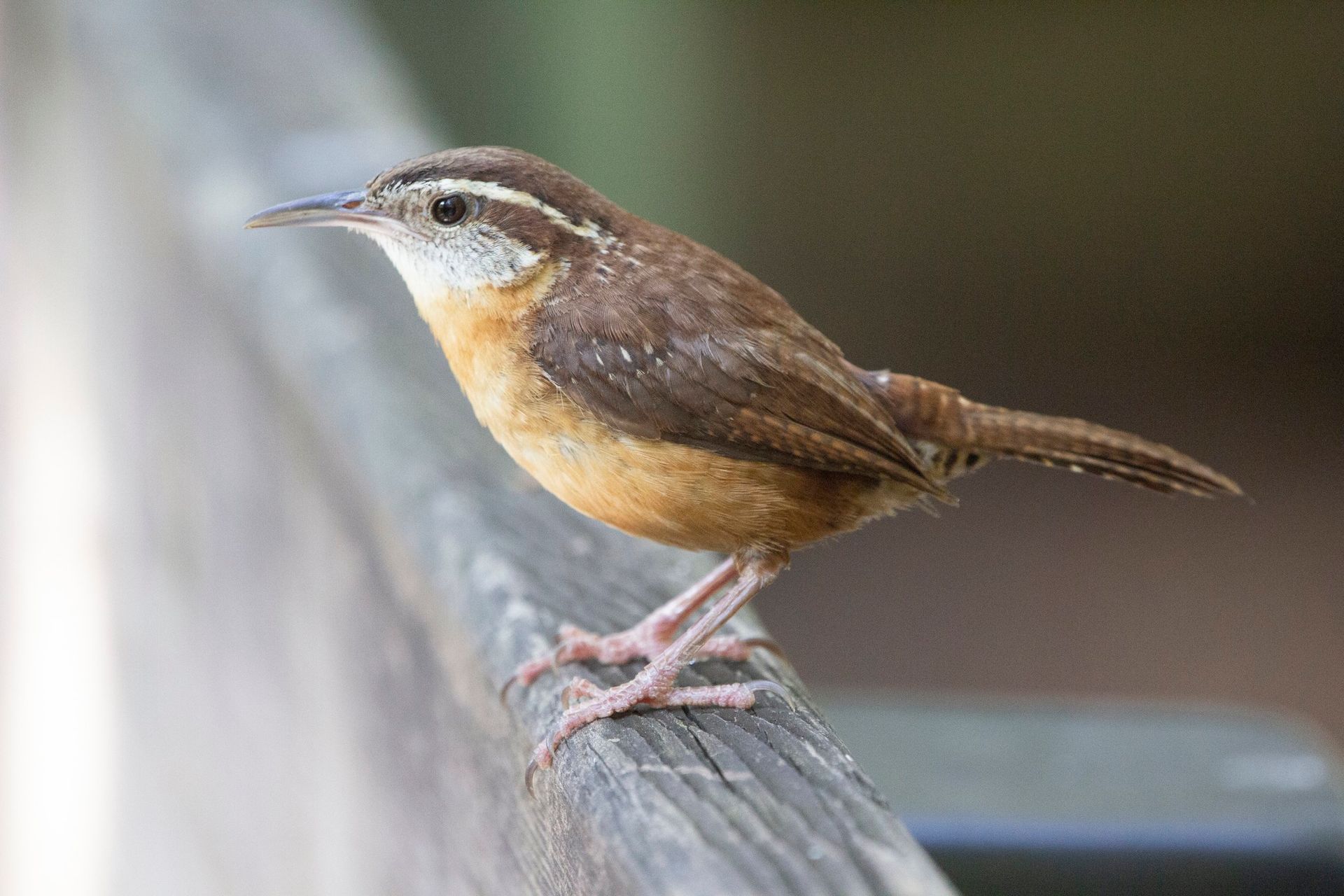
Adding a little bit of southern charm into Illinois the Carolina Wren is a noisy little critter with a variety of piercing vocal noises and its sounds like they are saying teakettle-teakettle. The Carolina Wren has a cinnamon-y plumage that becomes lighter towards its underside, white eyebrow stripes racing away from its eyes, and a long tail at the end. This Wren tends to be hard to see so you have to keep an ear out for them. This wren has a thicker body with just as stocky of a neck connecting to its large head. Fortunately they don’t migrate so you can always find them year round out. When the Carolina Wren form a bond with another of its kind they stay together for life and stay on their territory year-round. They do enjoy backyards if food is given so make sure to keep an eye out along fences and grasses for them! The Carolina Wren defends their territories with constant singing so if you want to hear what that sounds like click here.
Northern Flicker
Colaptes auratus
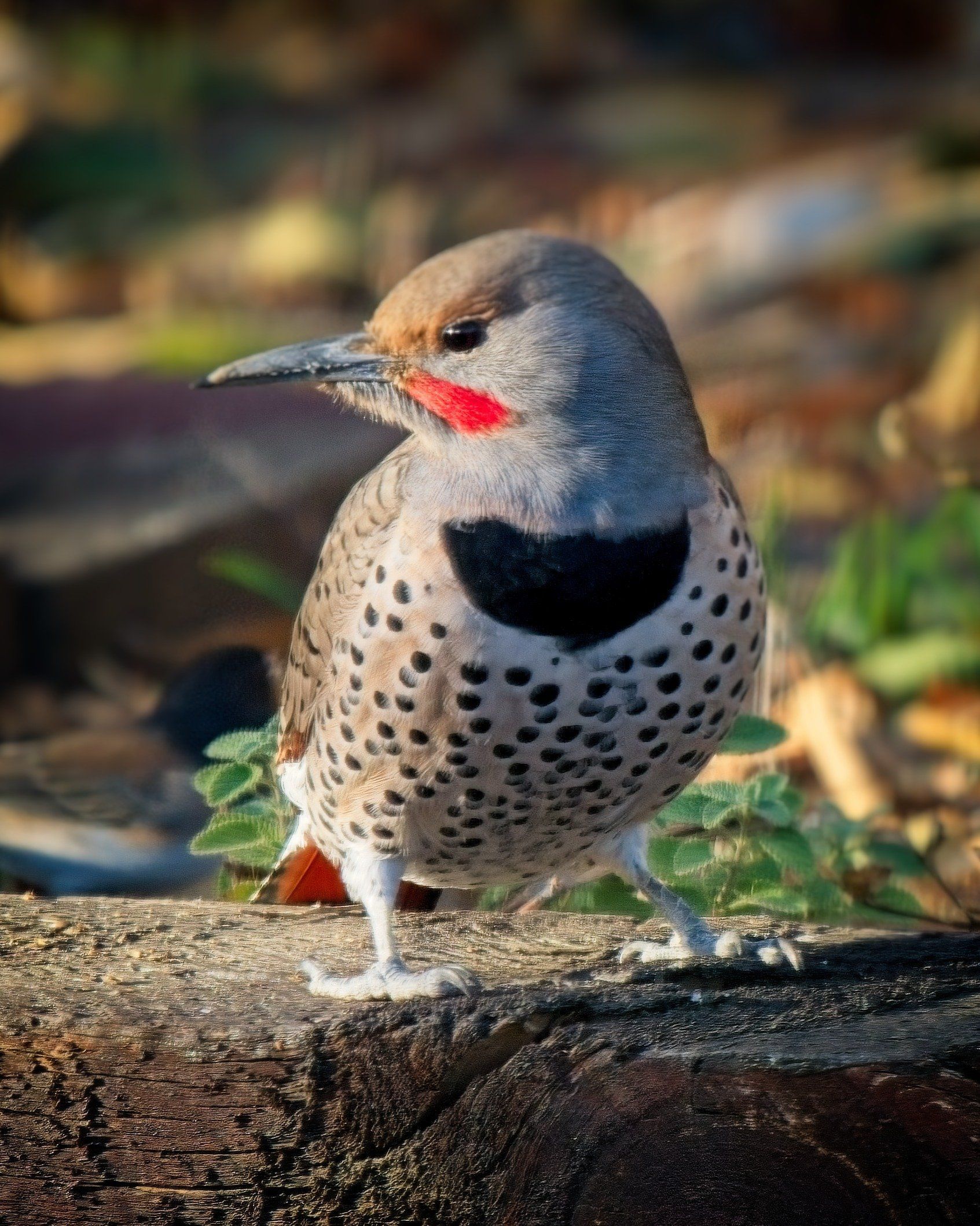
Our next bird up is another residential bird. One that either doesn’t migrate or might go a very short distance, the Northern Flicker. A variant of the average woodpecker, they tend to prefer to not slam their head into trees to drag food out of it. The Northern Flicker mainly eats ants and beetles so they tend to spend a lot of time on the ground digging around for bugs. They also use their hammering ability, that woodpeckers have, to break into soil to find nutritious insects in the ground. When insects aren’t as plentiful (like in the winter) they won’t turn down some seeds or berries. This flicker has a unique variety of patterns and colors along its brownish-gray body. It hosts a striking black bib, speckled underparts, a ruddy red or bright yellow on its tail (a regional difference), and a flash of red on the back of its neck. If you are trying to find them here at the Severson Nature Center look along the creek on either side and you might have some luck! Click here to listen to their calls.
Swamp Sparrow
Melospiza georgiana
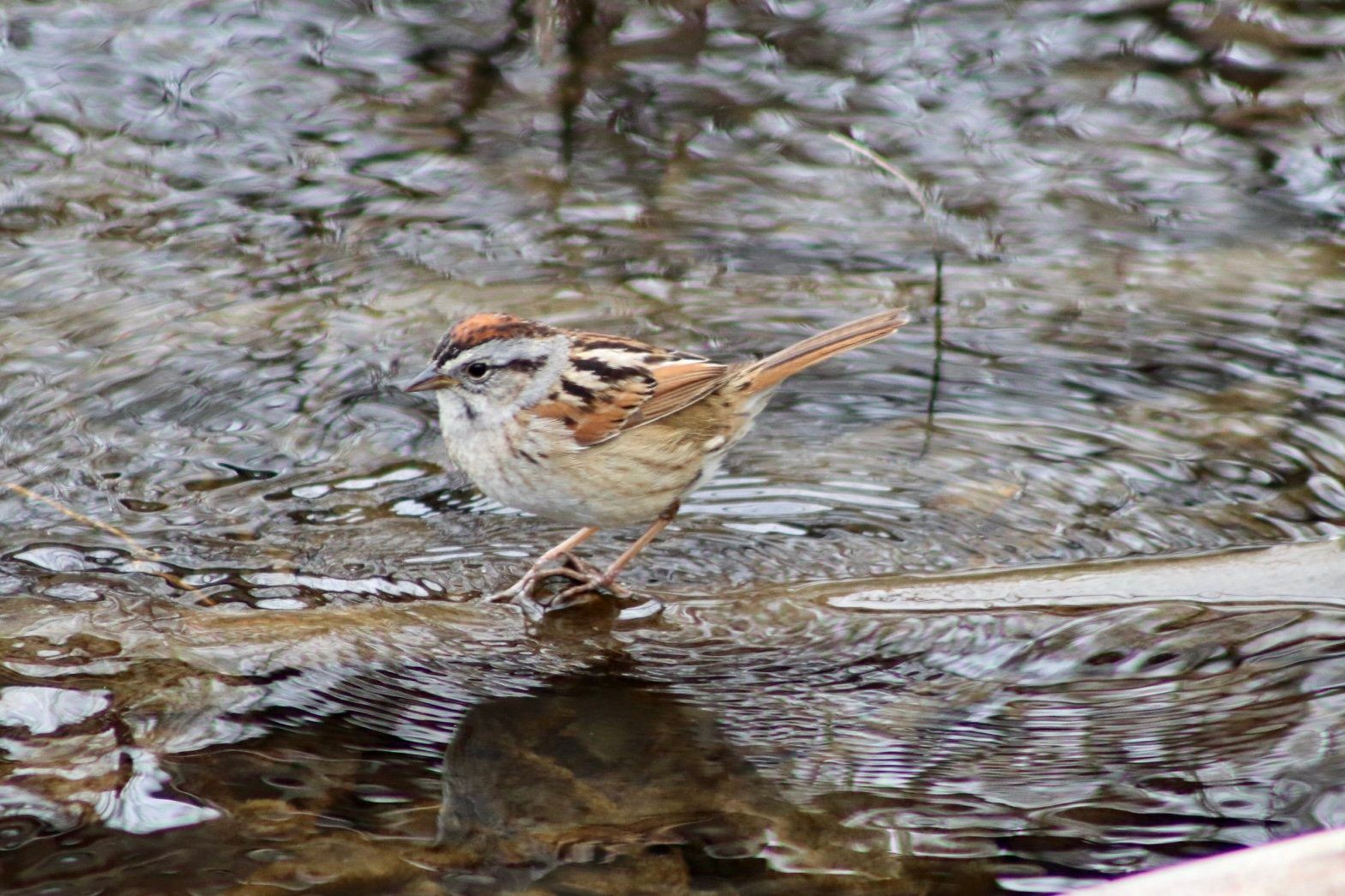
Photographed by Ashlyn Rogers in 2022
To find the Swamp Sparrow look into the hidden corners of marshes or wetlands, or here at Severson check on the sedge meadows on the eastern edge. This bird has a simpler coloration of earthy tones with a splash of rust along its head and wings, streaks of black, it also has longer legs than other members of the sparrow family to allow it an easier chance at wading through shallow water. The rest of its body is much more compact and short with a small bill. When they nest it's only in wetlands among the lower foliage like grasses or reeds. They can eat a variety of things (seeds, fruits, and invertebrates). The Swamp Sparrow hunts for invertebrates while wading through the water and sometimes fully submerging their head to catch their prey. These sparrows are medium distance migrants but even during their travels they stay near water almost all of the time. If you want to listen to the rich notes from their songs click here.
White-Throated Sparrow
Zonotrichia albicollis
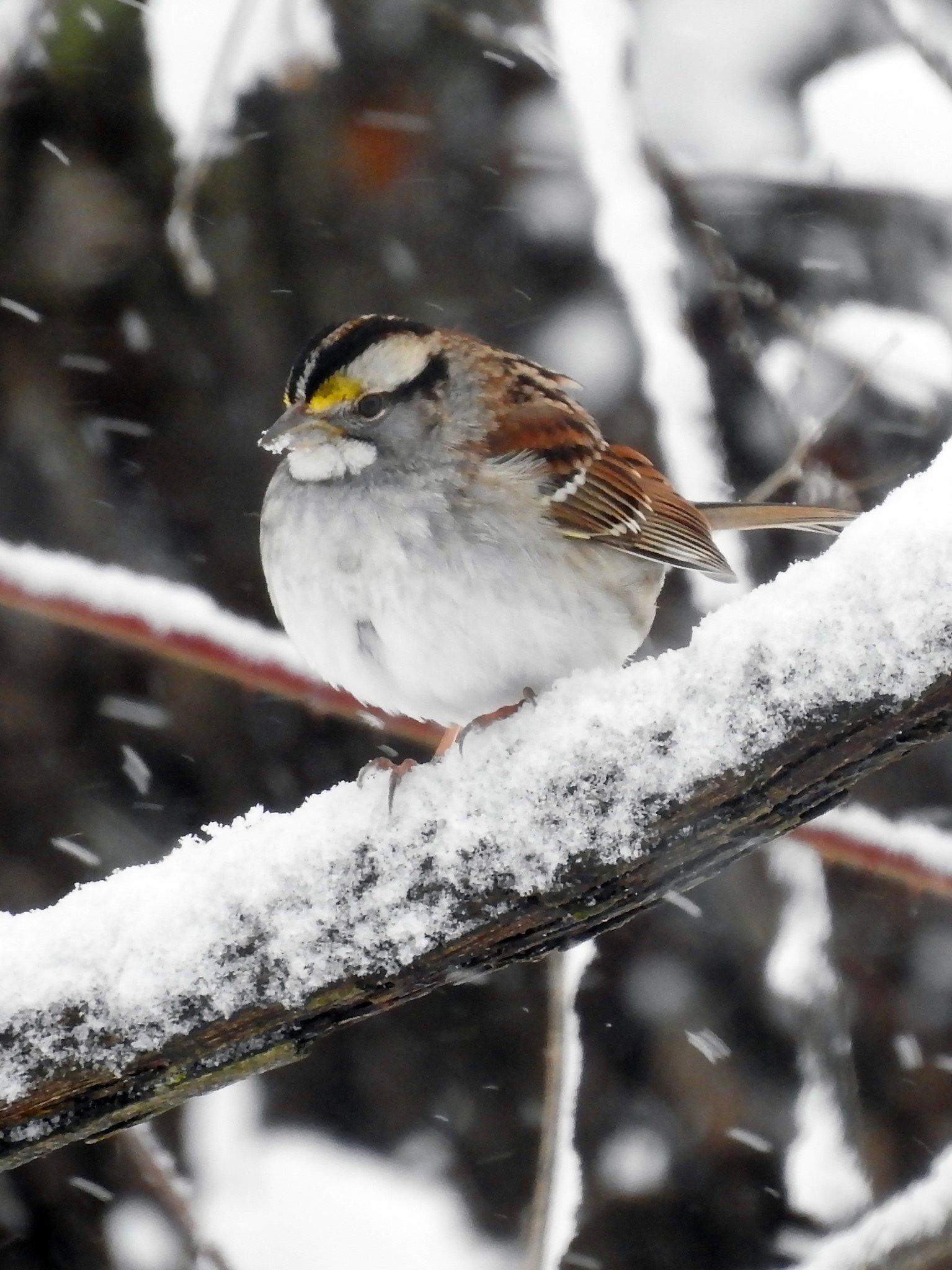
A ground-dwelling bird most of the time, the White-throated Sparrow is a larger sparrow with a short but wide bill. It has a longer body with a long tail and legs to complete it. Its coloration involve brown on the top side with black stripes and a gray and white underbelly. Its head is more striking with its white throat, a black and white head, and two bold yellow marks on its face. Spending time near the ground it scratches through leaves in search of food, mostly seeds from grasses and weeds, but aren’t too picky. If you have bird feeders you might be lucky enough to see them just keep an eye out for those yellow splashes on their face. They make their nest hidden in a depression in the ground and gather up all kinds of material for it like moss, twigs, grass, hair, and leaves. The White-throated Sparrow sings throughout all the seasons frequently even in the coldest months click here to listen!
Eastern Bluebird
Sialia sialis
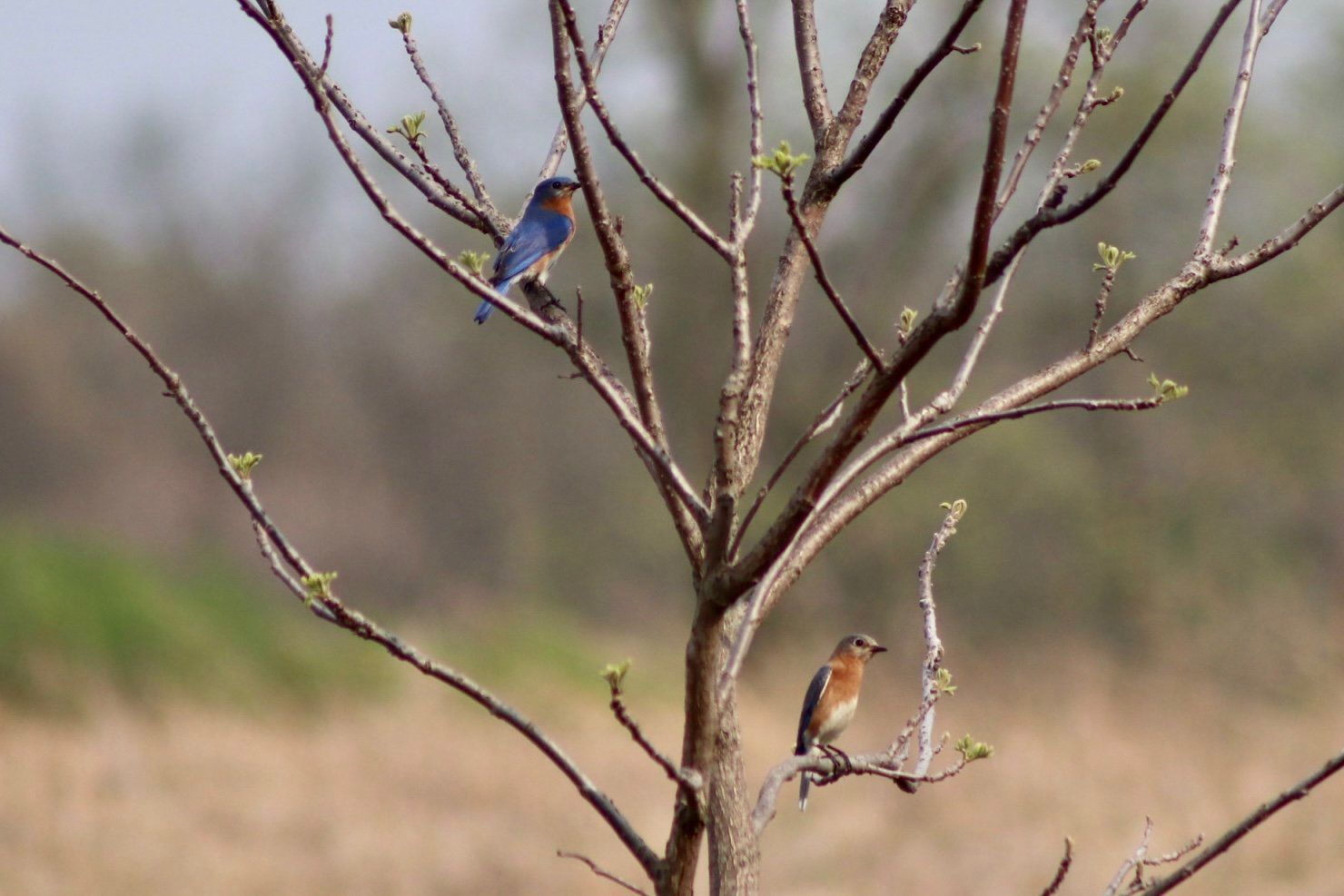
A splash of azure takes flight as the Eastern Bluebird sparkles in the sunlight as it spends its time hunting for food. This bird has a brilliant coloration of cobalt blue along its head and back with its chest and throat being rusty red. It has a big head and body with long blue wings. But it has a fairly short tail and legs. The Eastern Bluebird lives in the open country around trees with little understory, so agricultural fields and backyards are perfect places for them to set up and thrive in. They hunt for insects when it's available by scanning the ground from a low perch and dropping on them when spotted. The Male Bluebird will aggressively protect its cavity based nesting location against all kinds of birds. The Eastern Blue birds that live in Illinois tend to migrate but some who live farther south are permanent residents. The song of this blue bundle of feathers is fairly low-pitched with many phrases!
As we embark on this avian journey into 2024 the wings of curiosity continue to carry us through the boundless skies of knowledge. Part of why I do these blogs is to show the variety of birds that exist just in our little area. We have so much interesting and dynamic life around us and I think it would be a shame to not learn a little bit more about them every day that we can. Birds are an important aspect of life on every continent and we have so much to still learn about them. May the melodies of birdsong and the wonders of these feathered creatures deepen our appreciation for the world. So make sure to keep an eye to the sky as the birds fly by.

RECENT ARTICLES