FIELD NOTES BLOG

Severson Dells Adventure Packs

Liz Wiener
February 22, 2024

Do you want to turn “I’m boreeeeed…what do you mean go explore outside, there isn’t anything to DO outside” into “Can we turn this tablet off and go explore at Severson Dells with an Adventure Backpack?” in one simple step*?

*Number of steps to amazement and wonder not guaranteed

With the new Adventure Backpacks by Severson Dells, your outdoor wanderings can turn to outdoor amazement!

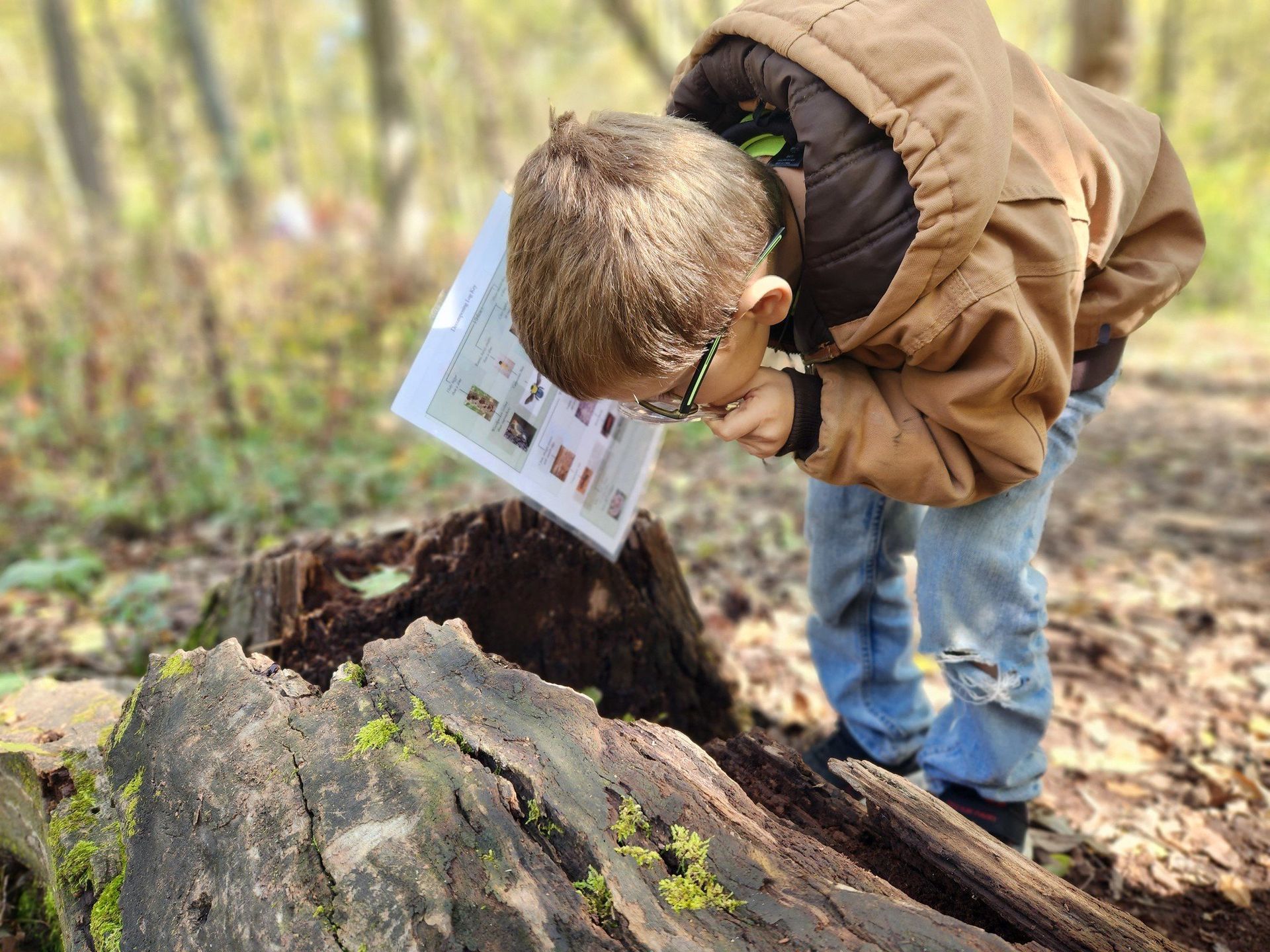
Take your day from this… To this!

These Adventure Backpacks were graciously sponsored by the Alpine Kiwanis Club and expertly curated by the Severson Dells Nature Center education team! Designed for the modern explorer, these backpacks are your ticket to experiencing the great outdoors like never before.

Each backpack is stocked with a variety of tools to help enhance your experience while out on the trail. We’ve also included a handy dandy guide of activities, scavenger hunts, and tips and tricks in each pack!

Let’s dive into each pack to learn more about what is inside them!

Beaks and Binoculars
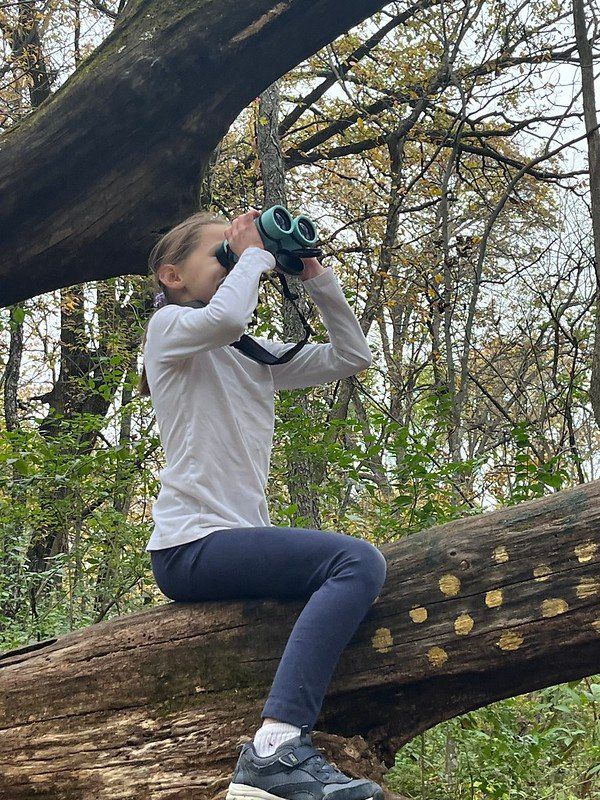
Do you have a budding birder on your hands? The Beaks and Binoculars backpack is designed for avian enthusiasts, complete with binoculars, bird ID guides, bird song books and even a monocular with a cell phone adapter! We’ve included an “Adventure Log” so you can write down all of the feathered friends you encounter on your journey. 

Bug Watch
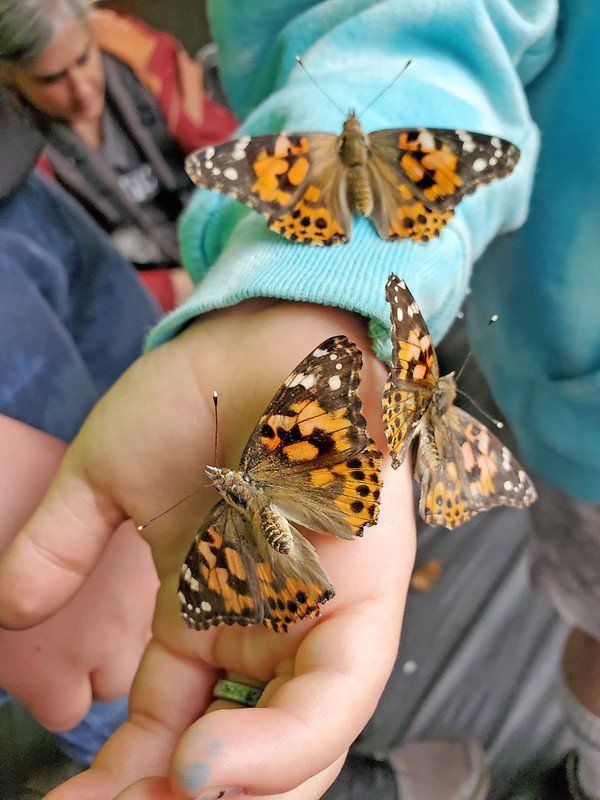
For those that love the “creepy-crawlies”, be sure to check out the Bug Watch Backpack. This pack comes with a bug net, magnifying bug viewers, ID guides, hand lenses, and story books to enhance your outdoor time. “Good Trick Walking Stick” is a staff favorite! 


Nature’s Palette
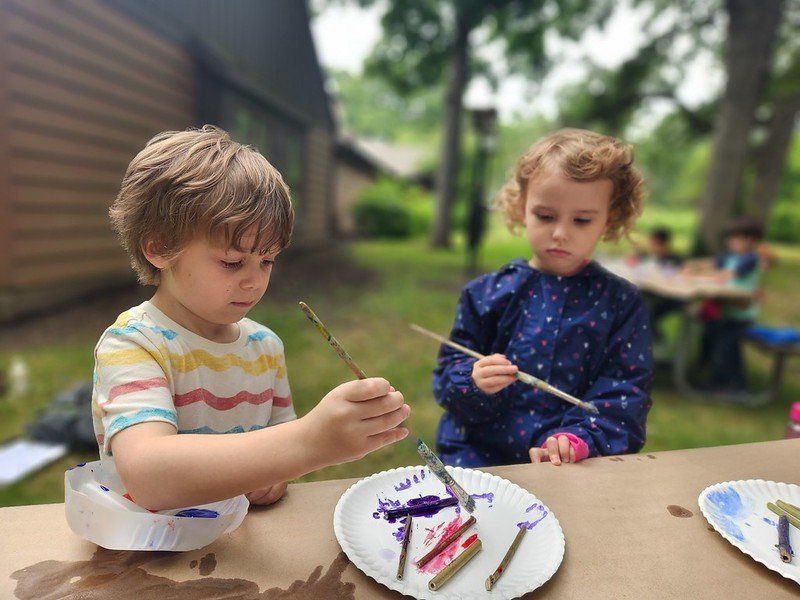
Move over, Monet! With Nature’s Palette, your aspiring artist can draw, paint, sketch, and color everything that inspires them. This pack includes watercolor postcards, a sketchbook, paints, crayons, colored pencils and more! When you have finished your creation, you get to keep the postcards and sketchbook! 


Rock On!

This pack rocks…literally! Explore the 458 million year old Dells and surrounding area with this pack, and really get in touch with a piece of history! Included in this pack are hand lenses, a bag of fossils to inspect, a geological calendar, and a “Mohs Scale” for testing the hardness of different rocks and minerals. 


Plant Pursuers
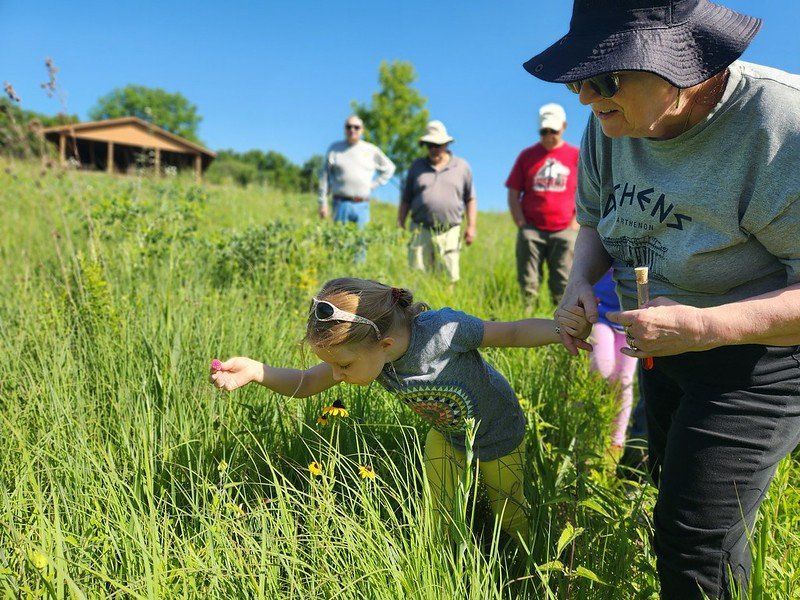
Let your imagination bloom with this pack! You can use this pack to identify trees, flowers, grasses, and more! Use the Super Secret Smellum Potion™ to unlock secret smells of the prairie (we recommend smelling the bergamot!). Take home a rubbing of your favorite leaf or bark, and be sure to check this pack out every season to see what’s growing! 

These packs are designed to inspire curiosity and foster a deeper connection with the natural world, and are packed with resources and tools to ignite a passion for exploration and discovery. 

The best part about these packs (besides all the amazing hands-on learning contained inside them)? They are completely FREE to check out! You can use a pack from 8am-4:30pm any day the Nature Center is open (Monday-Saturday). If you are a Severson Dells member, you can reserve a pack by calling 815-335-2915 or emailing admin@seversondells.org . All packs must be returned on the day they are checked out. 

So, what do you think? Are you ready to get out on the trails and explore with a Severson Dells Adventure Backpack? Come on in and then get out! We can’t wait to hear what you discover! 

Adventure Packs are 100% recommended by severson campers, photo by sdnc staff

RECENT ARTICLES
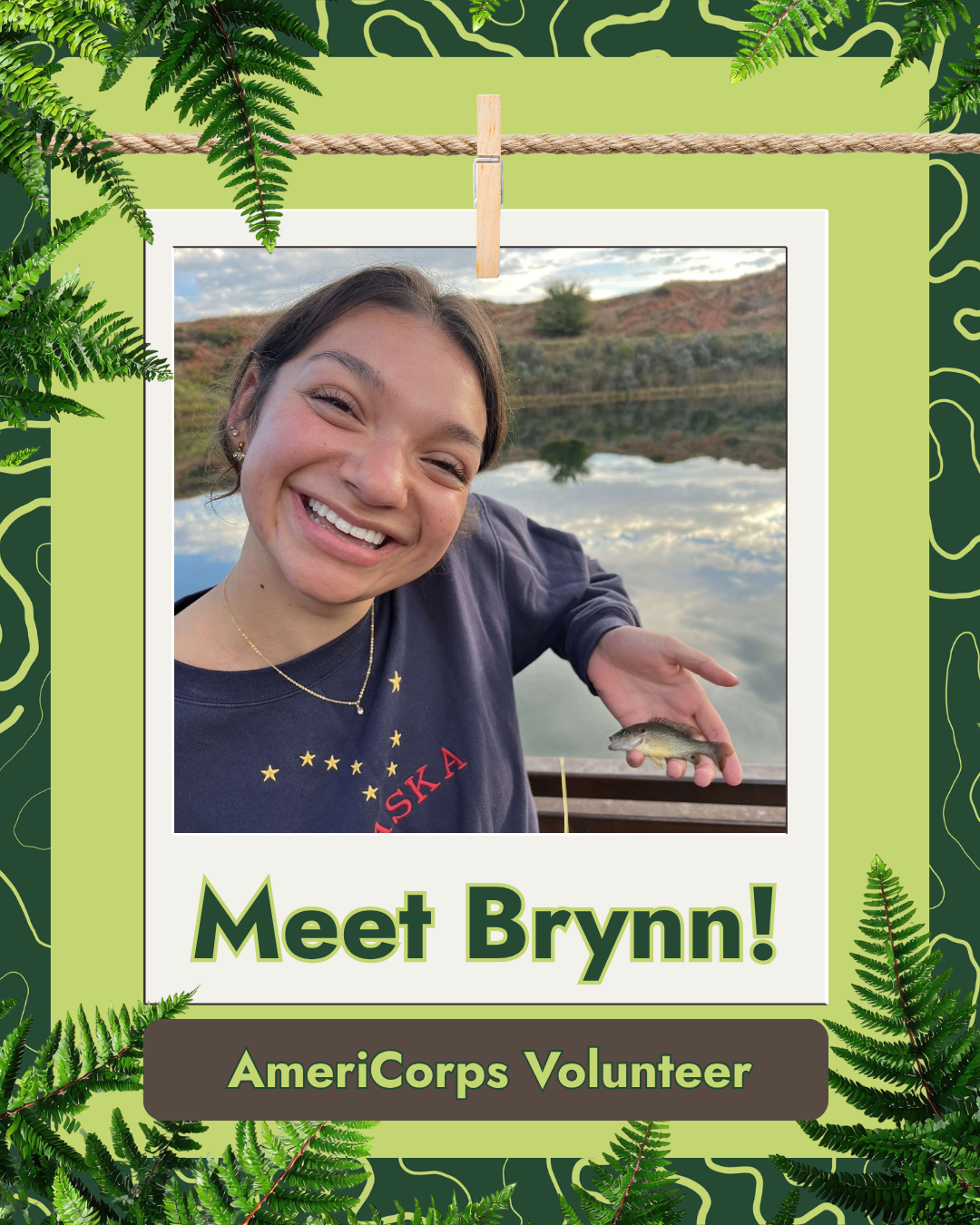
By Brynn Vega • October 6, 2026
Introducing Brynn!
By Lauren Bonavia • September 24, 2026
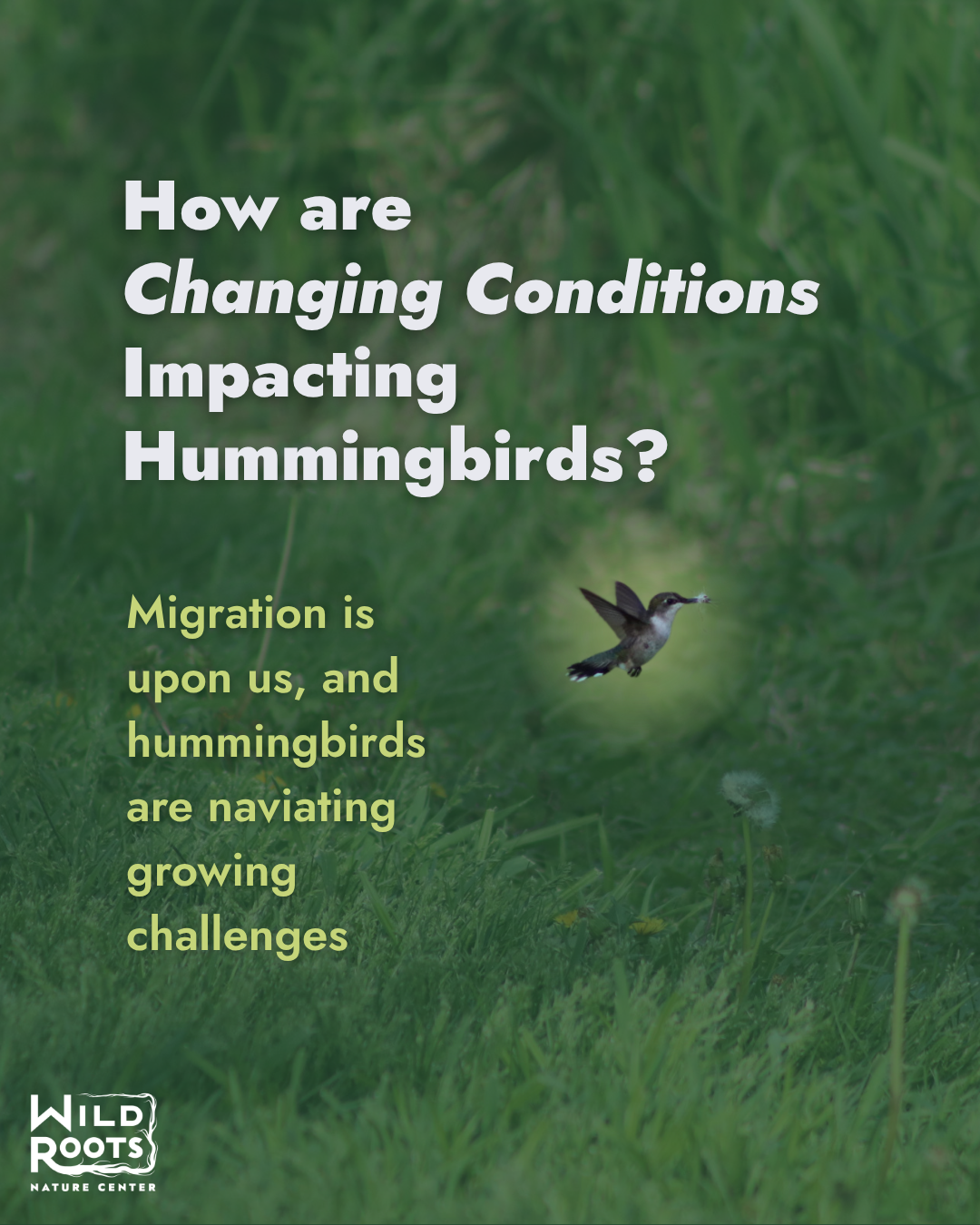
With fall’s cool air upon us, and the shorter days following the Autumn equinox on September 22nd, migration has been set into motion. Migration is the cyclical phenomenon where animals move over large distances, driven by environmental changes such as length of day and temperature. Meet the Ruby-throated Hummingbird Ruby-throated hummingbirds are our resident hummingbird species in the Great Lakes region, and throughout the Eastern United States. They are metallic green, with males sporting the namesake bright ruby throat. Adults measure only 3 to 4 inches long, and weigh 2-6 grams - that is less than a quarter! Ruby-throated hummingbirds breed in the forests and fields of eastern North America during spring and summer, and migrate south to tropical forests and scrublands to spend the fall and winter. Hummingbirds rely on nectar from flowering plants as their primary food source, and this develops a close relationship between the animal and the plant. Hovering, or the ultra-fast flying they are capable of, is an essential feeding behavior that is very energetically expensive to maintain, which is why it is so important that hummingbirds have adequate food sources to fuel themselves. Hummingbirds need to eat 5-6 times per hour to fuel their fast metabolism. Threats to Hummingbirds Flower Blooming Periods Imagine that you show up to your favorite restaurant just as they close the kitchen - even though the internet said they would be open and you have been there dozens of times before at that exact time - this is how a hummingbird feels. Plants are blooming at earlier times each year because of changing climate trends, causing concern that hummingbird arrival may become mismatched with the blooms they depend on so heavily. This is especially pronounced at higher latitudes, or closer to the poles, and could even create limits to migration and contract ranges if nesting success is impacted. This matters because hummingbirds also have important jobs in ecosystems. Because hummingbirds get the other non-nectar portion of their diet from insects, they play a role in balancing pest populations. Humans also depend on pollinators, like hummingbirds, to pollinate our food crops! Hummingbird Adaptations To combat the impacts of a changing world, some animals move physical locations to go somewhere else more suitable. Higher altitudes typically have lower temperatures, so moving up in elevation can counteract localized warming, but this is not a catch-all solution. Scientists with the National Science Foundation reported that hummingbirds that relocated to high altitudes had a significant decrease in metabolic rate, suggesting that low air pressure and oxygen availability reduces hovering performance in Anna’s hummingbirds, and even pushes them into nightly hibernation. Facing these physiological challenges only becomes more costly for low-elevation hummingbirds that are driven to find new food sources. Another study from The Auk assessed the migration of ruby-throated hummingbirds and found that the birds are moving roughly 2 weeks earlier than historical records show. The scientists found correlation between earlier arrivals to breeding grounds, and warmer winter and spring temperatures in North America, which is a trend that experts expect to continue. If they continue to leave early, they will arrive at different times than the flowers they feed on. How can I help hummingbirds? Scientists are still learning how hummingbirds are adapting, but there are lots of ways you can support these important pollinators amidst the challenges they are facing. The best place to start is your backyard. You can… Record data for community science projects like BudBurst to share flowering plant data with scientists Plant native flowering plants, like those found in this guide from the US Department of Agriculture suggests Supplement nectar resources in your backyard with birdfeeders that are monitored/cleaned regularly Next time you see a hummingbird, consider the distance it’s travelled for you to see it, and the amazing life that supported that journey!  Sources Courter, Jason R., et al. “Assessing migration of ruby-throated hummingbirds ( Archilochus colubris ) at broad spatial and temporal scales.” The Auk , vol. 130, no. 1, Jan. 2013, pp. 107–117, https://doi.org/10.1525/auk.2012.12058. McKinney, Amy M., et al. “Asynchronous changes in phenology of migrating broad‐tailed hummingbirds and their early‐season nectar resources.” Ecology , vol. 93, no. 9, Sept. 2012, pp. 1987–1993, https://doi.org/10.1890/12-0255.1. Spence, Austin R., et al. “Anna’s hummingbird ( Calypte anna ) physiological response to novel thermal and hypoxic conditions at high elevations.” Journal of Experimental Biology , vol. 225, no. 10, 15 May 2022, https://doi.org/10.1242/jeb.243294. Austin R. Spence, Hannah LeWinter, Morgan W. Tingley; Anna's hummingbird (Calypte anna) physiological response to novel thermal and hypoxic conditions at high elevations. J Exp Biol 15 May 2022; 225 (10): jeb243294. McKinney, A.M., CaraDonna, P.J., Inouye, D.W., Barr, B., Bertelsen, C.D. and Waser, N.M. (2012), Asynchronous changes in phenology of migrating Broad-tailed Hummingbirds and their early-season nectar resources. Ecology, 93: 1987-1993. Courter, J.R., Johnson, R.J., Bridges, W.C., Hubbard, K.G., " Assessing Migration of Ruby-Throated Hummingbirds (Archilochus colubris) at Broad Spatial and Temporal Scales ," The Auk, 130(1), 107-117, (1 January 2013) University of Maine Ruby-Throated Hummingbird Fact Sheet https://www.allaboutbirds.org/guide/Ruby-throated_Hummingbird/lifehistory This effect is pronounced at lower latitiudes (below 41 degrees?). Warmer winter and spring temperatures in North American breeding grounds were correlated with earlier arrivals at lower latitudes in our recent period. USDA Eastern US Hummingbird Flyer
By Linda Sandquist • September 17, 2026
Embracing Native Plants