FIELD NOTES BLOG
Solstice, Sunlight, and Seasonal Affective Disorder
As we approach the winter solstice and step into a new year filled with longer days, I invite you to consider some of the following practices. Thursday, December 21st will have the shortest day of the year for residents of the Northern Hemisphere. Rockfordians will experience only 9 hours and 4 minutes of daylight. This is due to two factors:
-
The Earth’s 23.44° tilt means the North Pole is at its furthest point away from the sun.
-
The Earth is stationed at the furthest point away from the sun on its elliptical orbit.
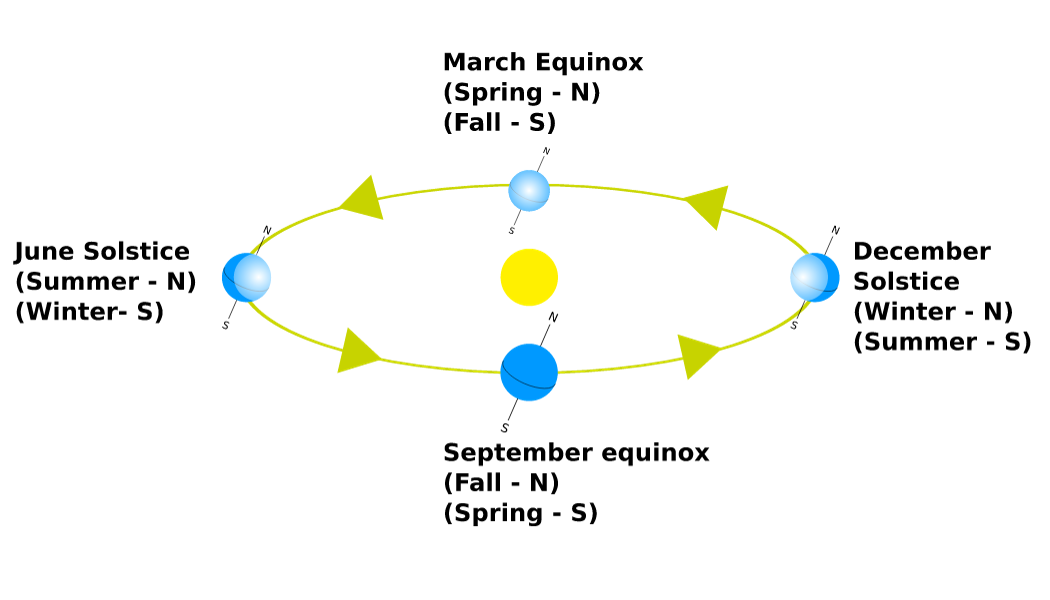
The Earth’s orbit throughout the year (Wikimedia)
After the solstice passes, the days will grow longer and nature begins its quiet awakening into spring. Animals are highly sensitive to day length; their circadian rhythms and other systems depend on signals from the sun. Goldfinches turn from brilliant gold to muted tawny, Groundhogs metabolism decline in preparation for a long slumber, some birds lose or change their song, antlers drop off Deer, flighted friends gather for migration, Coyotes grow a coat of thick guard hairs, and so on. If other citizens of the natural world are so in-tune with the seasonal ebbs and flow of light, it makes sense that humans still feel the same.
Our daily life is pumped full with artificial light: fluorescent bulbs overhead in your office and grocery stores, LED screens, street lights, and even holiday displays. These are no substitute for the radiance of the sun, though. Illuminance (light) can be measured in lux, which is a measurement equal to the illumination of one square meter of surface that is one meter away from a candle. Here’s how some natural and artificial light sources compare:
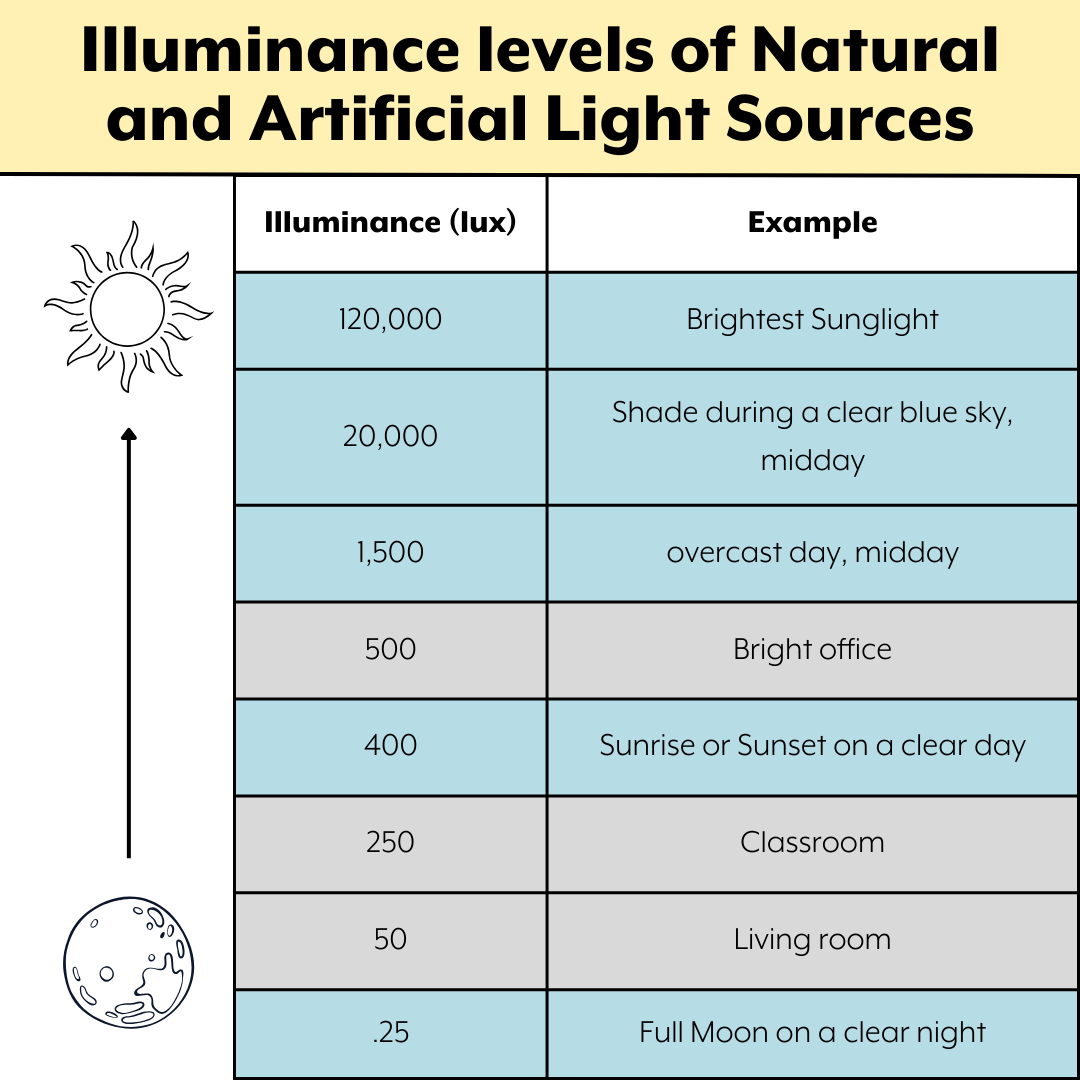
It’s clear that, while we spend a lot of time in well-lit spaces, they don’t compare to the brightness of the sun. In the cold month of December, we are offered less sunlight and tend to spend less time outside. Our total light exposure drops from 4,140 kJ of solar irradiance/ square meter (a measurement of sunlight exposure) in June to 1,625 kJ of solar irradiance/ square meter in December ( CDC National Environmental Public Health Tracking Network ). Our artificial light doesn’t match the varying color of natural light either.
I remember sitting in a packed lecture hall in college listening to a lecture from a crew member of NASA’s Hera missions . While the lecturer never went to space, he spent weeks in a simulated Mars module where NASA scientists monitored the impact of environmental conditions on his health. It became clear that blue-toned, cooler daylight acted as a stimulant for the brain and boosted performance on tasks. Cool light diminished the quality of rest, though. Instead, dim, orange-toned light during early morning and late evening improved the quality of his sleep.
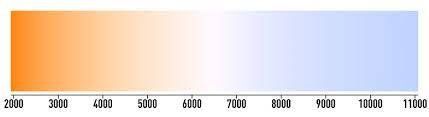
Color temperature scale measured in kelvin
For those familiar with circadian rhythms, or the cycles our bodies experience throughout a day, this is probably not surprising. Our bodies are naturally responsive to shifts in light color temperature as our brains depend on signals from the sun’s light. The sun’s deep angle in the morning and evening means that light moves differently through the atmosphere, giving it a warm hue (think of “golden hour”). Warm, dim light from the sun during dusk and dawn triggers a melatonin release in the brain. As the sun rises throughout the day, its rays are scattered differently and come across as bright, clear, cool-toned light. This improves productivity and activity levels.
When most of us spend the winters inside and under artificial light, our circadian rhythms are disrupted . Our body craves the bright, varied light of the sun throughout the day. Time in the sun actually elevates serotonin- a neurotransmitter responsible for happiness- levels in the brain. It also encourages vitamin D production, which can improve bone health, reduce inflammation, help control infection, and reduce cancer cell growt h. The lack of “sun-time” can lead to feelings of melancholy, sensitivity, fatigue, anxiety, and more that are often attributed to “winter blues.”
Many Americans experience some degree of winter blues throughout these darker, colder months. Sometimes these symptoms escalate to a condition called Seasonal Affective Disorder (SAD). According to the American Psychiatric Association, about 5% of adults experience clinical SAD . If you are feeling some of these winter blues, there’s good news for you! First, and most importantly, this disclaimer from the American Psychiatric Association:
“If you feel you have symptoms of SAD, seek the help of a trained medical professional. Just as with other forms of depression, it is important to make sure there is no other medical condition causing symptoms. SAD can be misdiagnosed in the presence of hypothyroidism, hypoglycemia, infectious mononucleosis, and other viral infections, so proper evaluation is key. A mental health professional can diagnose the condition and discuss therapy options. With the right treatment, SAD can be a manageable condition.
If you feel your depression is severe or if you are experiencing suicidal thoughts, consult a doctor immediately or seek help at the closest emergency room. National Suicide Prevention Lifeline – 800-273-TALK (8255).”

Therapy and medications are both proven treatments for SAD , according to John Hopkins Medicine. Another treatment that may help on its own or in conjunction with other treatments is free and readily available to everyone: the sun. In its own way, the sun can serve as medicine for our brains! Sunlight therapy can be as simple as taking a walk in the morning, or over lunch. Time outside even improves stress levels, muscle tension, heart rate and blood pressure, and your immune system. Be sure to prioritize time outside during this season, even if it means putting on a couple of layers!
We like to tell our students that animals have three choices in the winter- hibernate, migrate, or adapt- and you have the same options. Taking a walk outside to combate symptoms of SAD can be considered an adaptation! Consider what else the season might be calling you to. No other being in nature operates at peak productivity year round! It may be time for you to enter a light hibernation and allow your body more time to rest. Maybe it is a season for you to gather together with loved ones and “burrow up” like some of our mammalian friends. Or, if you have the means, maybe you should try a short-term migration to a warm and sunny climate on vacation!

RECENT ARTICLES