FIELD NOTES BLOG
The Environmental Threat of Salt Pollution
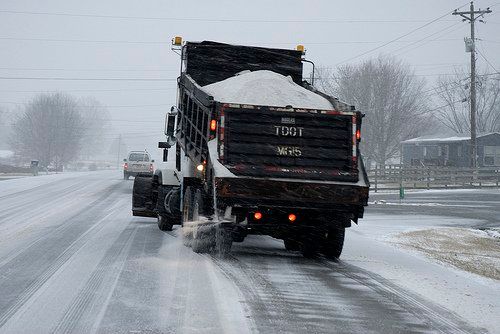
Imaged Sourced from Thomas Brueckner on Flickr
The days are getting shorter, the air is getting colder, and the beginning of a Midwest winter is descending upon us. Soon, the landscape will become a blanket of snow and ice, and communities across the region will initiate a time-honored ritual: salting the roads. For decades, the practice of road salting has been a trusted ally in the battle against treacherous winter conditions, ensuring safer winter travel for us Midwesterners. However, beneath the reassuring salted roadways lies a tale of unintended consequences and environmental threat.
In an age where environmental concerns have taken center stage, one alarming issue has often remained concealed quite literally beneath the surface: salt pollution. The silent devastation caused by excessive salt runoff into our freshwater bodies wreaks havoc on aquatic ecosystems, water quality, and human health. Salt pollution may not have the same visibility as some of its environmental counterparts, but its catastrophic effects need our attention.
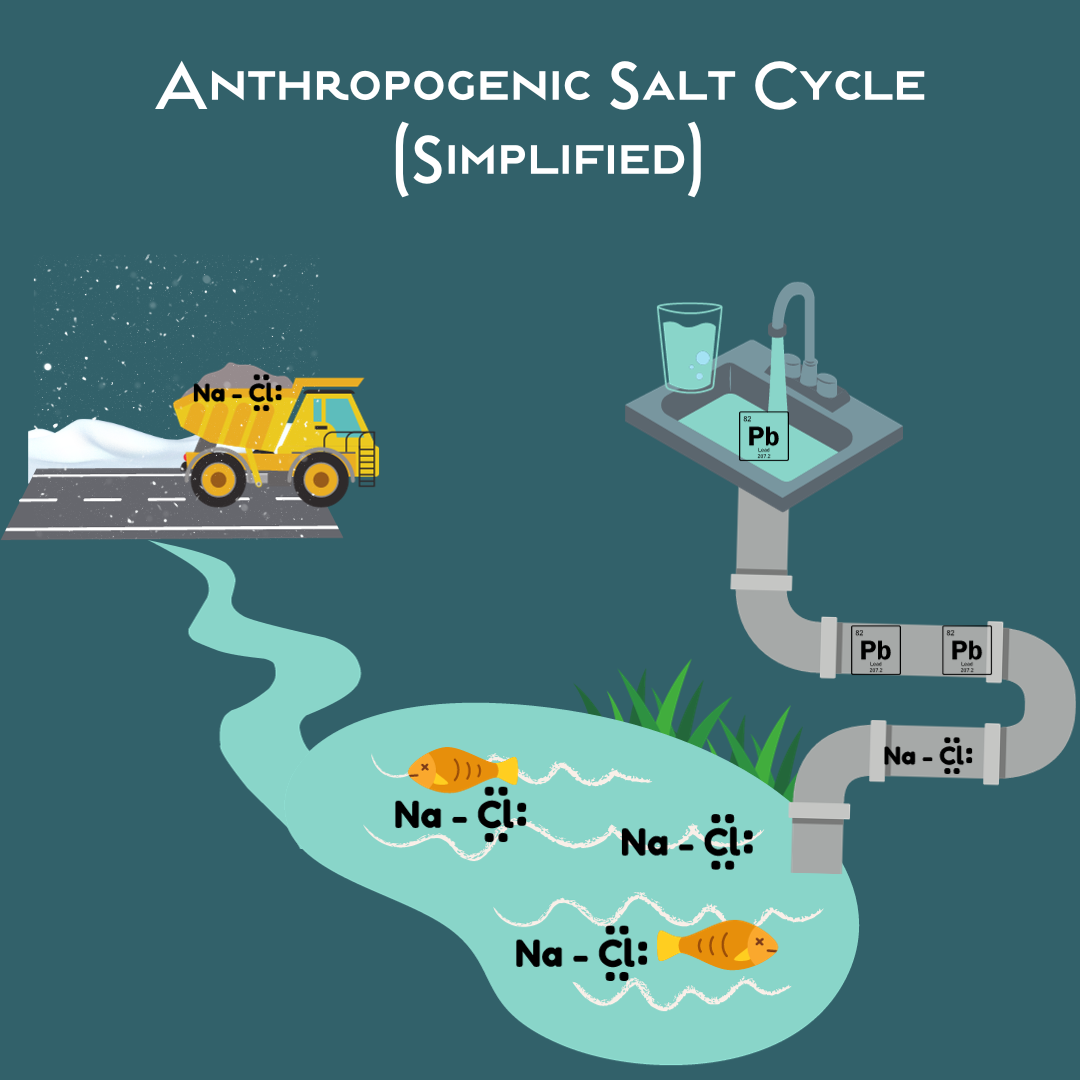
Salt, or sodium chloride, is a natural, integral component of Earth. The natural salt cycle is primarily driven by slow geologic processes that bring salts to the surface of the Earth. However, anthropogenic activities, such as road treatment, have altered and accelerated this process, creating a new anthropogenic salt cycle
. This excess salt in the environment then infiltrates nearby surface and ground waters and contaminates drinking water
reservoirs and wells. This contamination is amplified by the corrosive nature of salt, which abrades metal piping, exacerbating heavy metal contamination in drinking water (think Flint Michigan
, 2014). In the United States, where an estimated 9 million
lead pipes are used to deliver clean drinking water to homes, the effects of corrosion from saline water puts millions at risk for devastating harms, including permanent neurological damage and coronary heart disease.
Elevated levels of chloride in water bodies can also be toxic to aquatic life . Chloride occurs naturally in lakes and streams, but elevated levels can cause cells to lose water and become deprived of nutrients, ultimately killing fish, amphibians, plants and other aquatic organisms. The effects of chloride have shown to trigger trophic cascades , resulting in detrimental consequences for the entire aquatic ecosystem.

Image Sourced from Wikimedia Commons. Authored by Hlsoeve
Chloride does not break down or settle out of water, so oftentimes these effects on the environment are irreversible. That being said, prevention is our only solution. Although there are a multitude of anthropogenic sources of salt, salt used to de-ice roads is the single biggest source in the U.S. From 2013 to 2017, road salt made up 44% of the country’s entire salt consumption. However, there are several safer alternatives to road salt that still keep our roads ice free, without risking the health and well being of our precious water sources.
Beet juice , for example, is an immediate, cost effective solution. As odd as it may initially sound, beet juice brine works in a very similar manner to traditional road salt, only without excess salt and the environmental threats that come along with it. Beet juice brine helps lower the freezing point of ice, sticks to roads more effectively, and is better for the environment. It is also a solution that our very own city of Rockford, IL is utilizing in order to reduce the amount of road salt used in the winter.
The environmental repercussions of road salt pollution extend far beyond the immediate winter season. Anthropogenic changes in salinity are an existential threat to freshwater supplies and aquatic ecosystems. Only about 3% of all water sources are freshwater, and salt is increasingly diminishing that small inventory. As we navigate the slippery roads of this complex issue, we must consider the true cost of salting our way through winter, exploring alternative strategies that balance safety with environmental responsibility.

RECENT ARTICLES