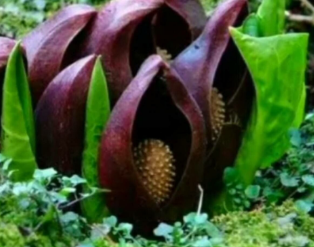
- Latin Name: Symplocarpus foetidus
- Appearance: The flowering part of this plant emerges before the leaves. The tiny petalless white flowers are on a club-shaped spadix, which is covered with a deep purple spotted hood known as a spathe. After the flower, leaves burst into large cabbage-like foliage. You may smell this plant before you see it because skunk cabbage emits a foul, skunky odor to attract pollinators such as flies, gnats, and beetles.
- When: February - April
- Locally found: Rock Cut State Park, Severson Dells
- Habitat: wet, marshy habitats.
- Fun Fact: Skunk cabbage is usually one of the first plants to sprout in early spring, even through ice and snow! This is because the flower carrying spadix produces heat that can melt the surrounding area for its emergence.
FIELD NOTES BLOG
Spring Wildflower Spotting
Sydney Sherbitsky
April 10, 2025
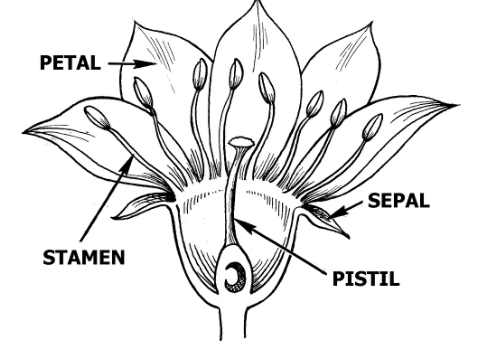
There are so many signs of spring around us this time of year. The world feels like it is waking up again when you feel the sun on your face, spot birds flying north, and perhaps see the prettiest sign: wildflowers. Between our prairie, forest, and aquatic habitats at Severson Dells and beyond, there will be countless wildflower blooms to discover within a few weeks. To point out these fantastic flowers by name, you will need to know some identifying features. To help you on this quest, you can start by familiarizing yourself with some of the fundamental components of flowers in the diagram below. Once you are a flower anatomical expert, you can read about some of our local wildflowers and how each one is uniquely beautiful!
Skunk Cabbage
White Trout Lily
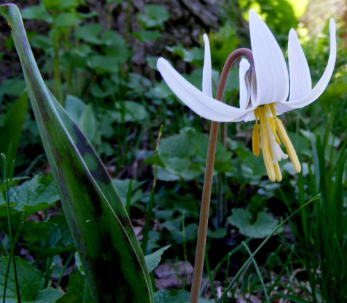
- Latin Name: Erythronium albidum
- Appearance: Trout lilies have downturned white flowers at the end of a thin stem. The flower has 6 petals outturned from the 6 stamens in its center. The green leaves are sometimes marbled green and brown and are gathered around the base of the plant.
- When: March - May
- Locally found: Along the Kishwaukee River Forest Preserve and surrounding preserves, Aldeen Park, Alpine Park, Severson Dells
- Habitat: damp deciduous woodlands and openings in eastern North America
- Fun Fact: This plant’s name, Trout Lily, comes from the leaf appearance being similar to that of a brook trout.
Wild Ginger
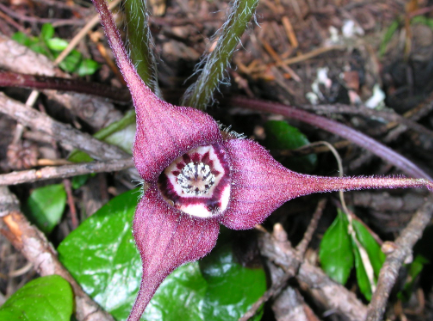
- Latin Name: Asarum canadense
- Appearance: This plant has large heart-shaped leaves that may even cover this interesting bloom. If you have the chance to see the bell-shaped flower, its 3 outturned purple-brown petals will surely make you want to take a closer look.
- When: April - June
- Locally found: Blackhawk Springs Forest Preserve, Kishwaukee River Forest Preserve, Atwood Park, Severson Dells Nature Center
- Habitat: Shaded and moist forests in eastern and central North America
- Fun Fact: Its color is meant to look like decomposing flesh to lure in pollinating flies looking for the leftovers of an animal that did not survive the winter. Additionally, its seeds are primarily dispersed by ants, who take them back to their nests to eat the outside elaiosome structure and discard the seed into the soil, where it may germinate into a new plant.
Sharp-lobed Hepatica
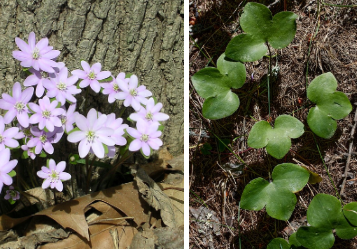
- Latin Name: Hepatica acutiloba
- Appearance: This low-lying flower has 6 - 10 small petals ranging from white to blue to pink, with tiny yellow stamens forming a dome shape in the center. Once the flowers disappear, the thick 3 three-lobed liver-shaped leaves appear and stick around all winter. This leaf shape is where this plant gets its other name, ‘liverleaf’.
- When: March to early May.
- Locally Found: Rock Cut State Park, Kishwaukee Gorge North Forest Preserve, Atwood Center, Severson Dells Nature Center.
- Habiat: Shaded woodland slopes in eastern North America.
- Fun Fact: Various colored flowers can occur within a single colony of this plant.
Bloodroot
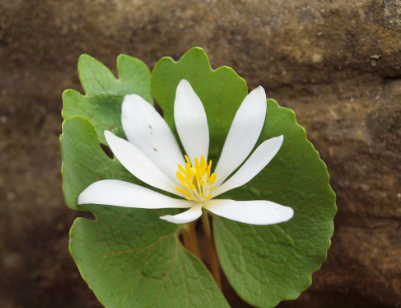
- Latin Name: Sanguinaria canadensis
- Appearance: The flower has 8 white petals surrounding a bright yellow center. The small flower sits upon a red-brown stem. The large lobed and veiny leaves circle the stem.
- When: mid-March to mid-April
- Locally Found: Roock Cut State Park, Blackhawk Springs Forest Preserve, Anna Page Park, Severson Dells Nature Center.
- Habitat: deciduous woodlands in eastern and midwestern North America.
- Fun Fact: Native Americans used the orange-red sap from the rooting rhizomes for dye, which relates to its name!
Dutchman's Breeches
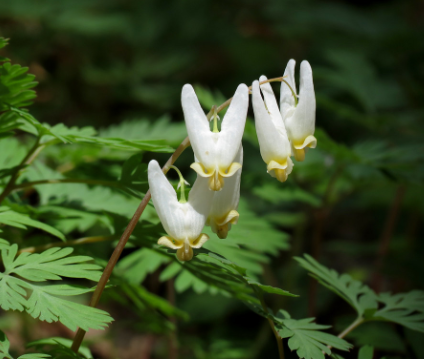
- Latin Name: Dicentra cucullaria
- Appearance: The v-shaped flowers resemble upside-down pants or ‘breeches’ hanging on a leafless stalk with 4- 10 flowers per stalk. These flowers can range in color from white to light pink. The leaves look similar to that of a fern.
- When: March to April
- Locally Found: Kings Bluff Forest Preserve, Flora Prairie Nature Preserve, Severson Dells Nature Center
- Habitat: moist, shaded woodland areas in Eastern North America.
- Fun Fact: Due to this flower’s unique shape, its most effective pollinators are long-tongued bumblebees that emerge in the early spring when this plant blooms.
Virginia Waterleaf
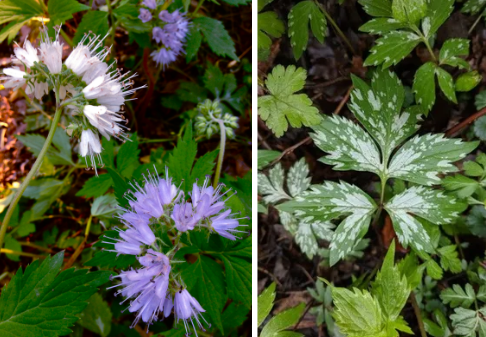
- Latin Name: Hydrophyllum virginianum
- Appearance: Each small bell-shaped flower will have 5 petals and 5 stamens in the center that change from yellow to purple with age. The petals can be white, pink, blue, or purple. This flower grows in groups of 8-20 flowers at the top of a stem that rises above the leaves. The leaves form a triangular shape with 3-7 sections and a toothed edge. The first emerging leaves will develop white spots on their green background that resemble water drops.
- When: May- June
- Locally Found: Oak Ridge Forest Preserve, Rockford Rotary Forest Preserve, Severson Dells Nature Center.
- Habitat: moist and shady woodlands of eastern North America.
- Fun Fact: This wildflower can form large colonies that grow 1-2.5 feet tall.
Prairie Trillium
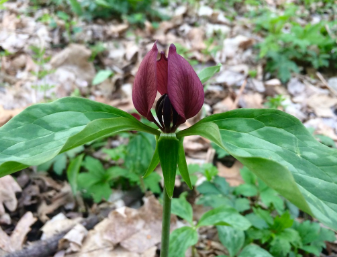
- Latin Name: Trillium recurvatum
- Appearance: Prairie trillium is recognizable by its 3 leaves and 3 petals. The 3 red-wine-colored, diamond-shaped petals curve toward the center, where there are 6 dark stamens. The three broad tapering leaves have smooth edges but appear wrinkled due to their veins and mottled coloration.
- When: April - May
- Locally Found: Rock Cut State Park, Aldeen Park, Alpine Park, Blackhawk Springs Forest Preserve and surrounding preserves, Severson Dells Nature Center
- Habitat: Central and eastern United States in partially shaded woodlands and oak savannas.
- Fun Fact: The word prairie in its name is a misnomer because this plant does not prefer to live in prairies.
Virginia Bluebells
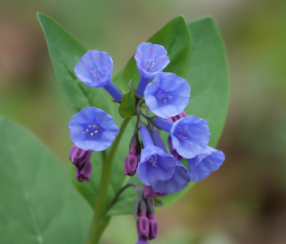
- Latin Name: Mertensia virginica
- Appearance: The small downturned clusters of pink buds change to sky blue trumpet-shaped flowers when they bloom due to an increase in pH in the flower as its acidity decreases. The leaves are smooth and oval. This plant’s stalks grow up to 2 feet tall.
- When: April - May
- Locally Found: Spencer Park, Anna Page Park, Deer Run Forest Preserve, Severson Dells Nature Center.
- Habitat: moist woodlands and floodplains in eastern North America
- Fun Fact: Bluebells are associated with fairie folklore, where they are called fairy flowers.
Common Blue Violet
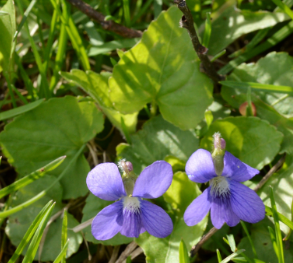
- Latin Name: Viola sororia
- Appearance: Leaves are heart-shaped with a scalloped edge and connect at the base of the plant. A singular purple, blue, or white flower with a white center stands at the end of a hairy stem.
- When: March - June and sometimes again in the fall
- Locally Found: Rock Cut State Park, Deer Run Forest Preserve, Spencer Park.
- Habitat: Moist, shady areas including woods, meadows, and along streambeds in eastern North America.
- Fun Fact: This is Illinois’s state flower!
Mayapple
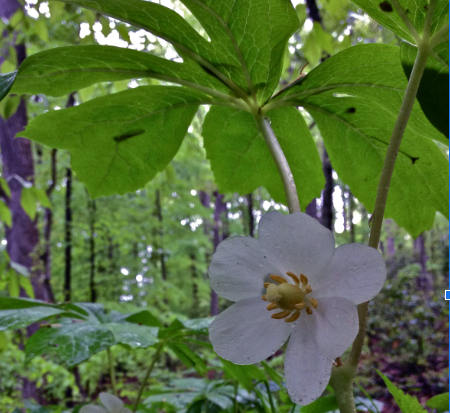
- Latin Name: Podophyllum peltatum
- Appearance: This plant is recognizable for its distinctive 2 umbrella-shaped leaves with a single white or light pink flower where the two leaf stems meet. This plant also produces small yellow fruits.
- When: April - May
- Locally Found: Rock Cut State Park, Aldeen Park, Indian Springs at Blackhawk Forest Preserve, Severson Dells Nature Center
- Habitat: Eastern United States in sandy or peaty woods and clearings with acidic soils.
- Fun Fact: The only non-toxic part of the plant is the ripe fruit, commonly eaten by box turtles. However, foraging for Mayapple fruits is not permitted at Forest Preserves.
Cut-Leaved Toothwort
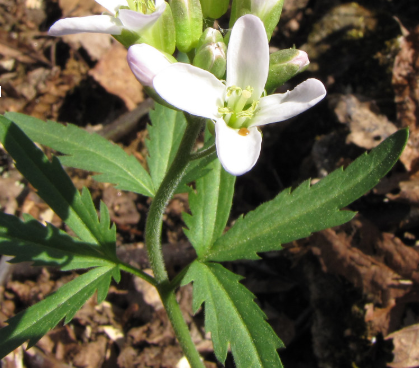
- Latin Name: Cardamine concatenata
- Appearance: This plant species is most commonly characterized by its thin leaves with serrated or pointed teeth-like edges in groups of 3. The small white blooming flowers are approximately 1 foot from the ground at the top of each stem.
- When: March - May
- Found Locally: Rock Cut State Park, Oak Ridge Forest Preserve, Severson Dells Nature Center
- Habitat: In eastern North America, this plant can be found in sloped forests where it prefers a thick layer of leaf litter and organic matter.
- Fun Fact: There is only one known population of this plant in Maine, but it is much more abundant in other areas of the U.S.
Pasque Flower
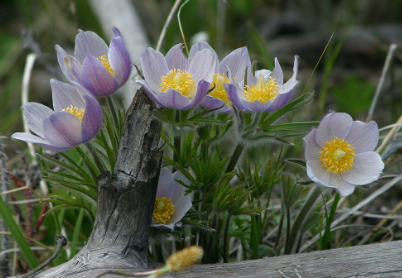
- Latin Name: Pulsatilla nuttalliana
- Appearance: The bell-shaped flowers held up by fuzzy stems consist of 6 to 8 blue or purple petal-like sepals surrounding the 150-200 yellow stamens in the center. After blooming, this plant develops a feathery seed head. The leaves are silky, fern-like, and have a silvery-green color.
- When: March - May
- Locally Found: Harlem Hills Nature Preserve, Flora Prairie Nature Preserve.
- Habitat: Prairies, open slopes, and woods in the Northern Hemisphere
- Fun Fact: ‘pasque’ comes from the French word for Easter.
New Paragraph
Sources
Ohio Department of Natural Resources - Skunk Cabbage
University of Texas Wildflower Center - White Trout Lily
U.S. Forest Service - Wild Ginger
Grow native Missouri Prairie Foundation - Sharp-lobed Hepatica
Britannica - Bloodroot
U.S. Forest Service - Dutchman’s Breeches
Wisconsin Horticurture - Virginia Waterleaf
The Moron Arboretum - Prairie Trillium
Cornell Botanic Gardens - Virginia Bluebells
NC State Extension - Viola Sororia
Cornell Botanic Gardens - Mayapple
U.S. Forest Service - Cut-leaved Toothwort
Montana Field Guide - Pasqueflower
iNaturalist - Observations Map
RECENT ARTICLES
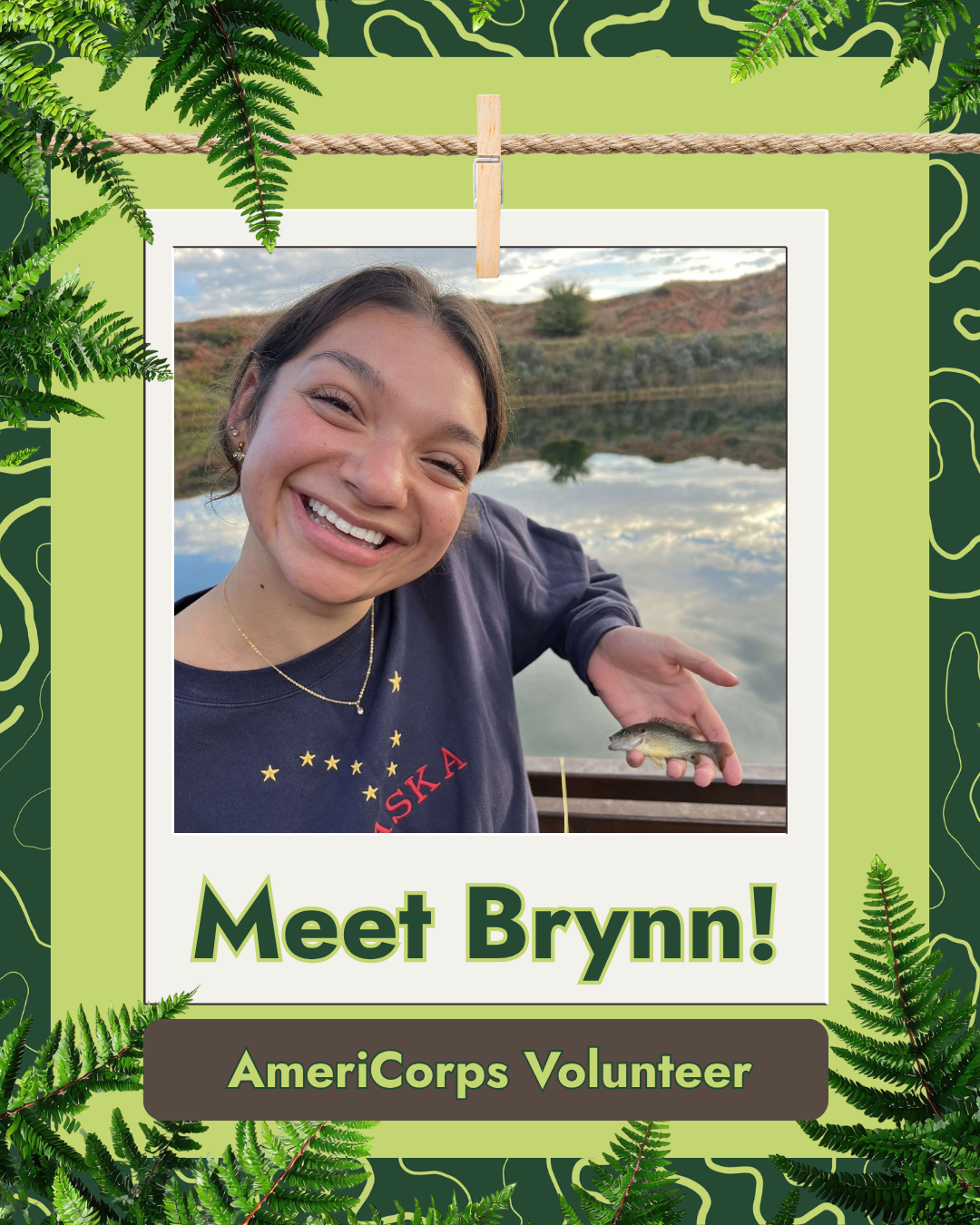
Introducing Brynn!
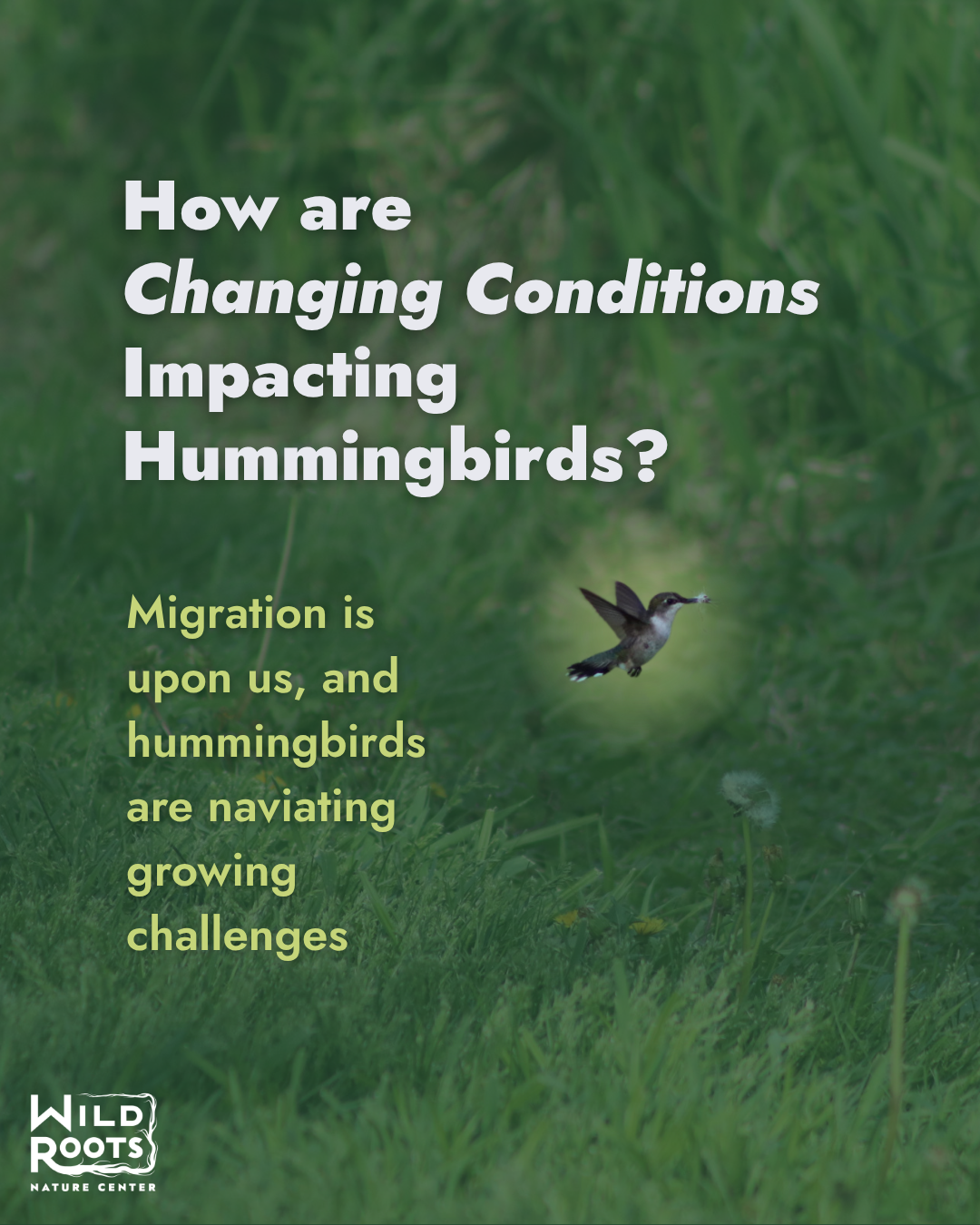
With fall’s cool air upon us, and the shorter days following the Autumn equinox on September 22nd, migration has been set into motion. Migration is the cyclical phenomenon where animals move over large distances, driven by environmental changes such as length of day and temperature. Meet the Ruby-throated Hummingbird Ruby-throated hummingbirds are our resident hummingbird species in the Great Lakes region, and throughout the Eastern United States. They are metallic green, with males sporting the namesake bright ruby throat. Adults measure only 3 to 4 inches long, and weigh 2-6 grams - that is less than a quarter! Ruby-throated hummingbirds breed in the forests and fields of eastern North America during spring and summer, and migrate south to tropical forests and scrublands to spend the fall and winter. Hummingbirds rely on nectar from flowering plants as their primary food source, and this develops a close relationship between the animal and the plant. Hovering, or the ultra-fast flying they are capable of, is an essential feeding behavior that is very energetically expensive to maintain, which is why it is so important that hummingbirds have adequate food sources to fuel themselves. Hummingbirds need to eat 5-6 times per hour to fuel their fast metabolism. Threats to Hummingbirds Flower Blooming Periods Imagine that you show up to your favorite restaurant just as they close the kitchen - even though the internet said they would be open and you have been there dozens of times before at that exact time - this is how a hummingbird feels. Plants are blooming at earlier times each year because of changing climate trends, causing concern that hummingbird arrival may become mismatched with the blooms they depend on so heavily. This is especially pronounced at higher latitudes, or closer to the poles, and could even create limits to migration and contract ranges if nesting success is impacted. This matters because hummingbirds also have important jobs in ecosystems. Because hummingbirds get the other non-nectar portion of their diet from insects, they play a role in balancing pest populations. Humans also depend on pollinators, like hummingbirds, to pollinate our food crops! Hummingbird Adaptations To combat the impacts of a changing world, some animals move physical locations to go somewhere else more suitable. Higher altitudes typically have lower temperatures, so moving up in elevation can counteract localized warming, but this is not a catch-all solution. Scientists with the National Science Foundation reported that hummingbirds that relocated to high altitudes had a significant decrease in metabolic rate, suggesting that low air pressure and oxygen availability reduces hovering performance in Anna’s hummingbirds, and even pushes them into nightly hibernation. Facing these physiological challenges only becomes more costly for low-elevation hummingbirds that are driven to find new food sources. Another study from The Auk assessed the migration of ruby-throated hummingbirds and found that the birds are moving roughly 2 weeks earlier than historical records show. The scientists found correlation between earlier arrivals to breeding grounds, and warmer winter and spring temperatures in North America, which is a trend that experts expect to continue. If they continue to leave early, they will arrive at different times than the flowers they feed on. How can I help hummingbirds? Scientists are still learning how hummingbirds are adapting, but there are lots of ways you can support these important pollinators amidst the challenges they are facing. The best place to start is your backyard. You can… Record data for community science projects like BudBurst to share flowering plant data with scientists Plant native flowering plants, like those found in this guide from the US Department of Agriculture suggests Supplement nectar resources in your backyard with birdfeeders that are monitored/cleaned regularly Next time you see a hummingbird, consider the distance it’s travelled for you to see it, and the amazing life that supported that journey! Sources Courter, Jason R., et al. “Assessing migration of ruby-throated hummingbirds ( Archilochus colubris ) at broad spatial and temporal scales.” The Auk , vol. 130, no. 1, Jan. 2013, pp. 107–117, https://doi.org/10.1525/auk.2012.12058. McKinney, Amy M., et al. “Asynchronous changes in phenology of migrating broad‐tailed hummingbirds and their early‐season nectar resources.” Ecology , vol. 93, no. 9, Sept. 2012, pp. 1987–1993, https://doi.org/10.1890/12-0255.1. Spence, Austin R., et al. “Anna’s hummingbird ( Calypte anna ) physiological response to novel thermal and hypoxic conditions at high elevations.” Journal of Experimental Biology , vol. 225, no. 10, 15 May 2022, https://doi.org/10.1242/jeb.243294. Austin R. Spence, Hannah LeWinter, Morgan W. Tingley; Anna's hummingbird (Calypte anna) physiological response to novel thermal and hypoxic conditions at high elevations. J Exp Biol 15 May 2022; 225 (10): jeb243294. McKinney, A.M., CaraDonna, P.J., Inouye, D.W., Barr, B., Bertelsen, C.D. and Waser, N.M. (2012), Asynchronous changes in phenology of migrating Broad-tailed Hummingbirds and their early-season nectar resources. Ecology, 93: 1987-1993. Courter, J.R., Johnson, R.J., Bridges, W.C., Hubbard, K.G., " Assessing Migration of Ruby-Throated Hummingbirds (Archilochus colubris) at Broad Spatial and Temporal Scales ," The Auk, 130(1), 107-117, (1 January 2013) University of Maine Ruby-Throated Hummingbird Fact Sheet https://www.allaboutbirds.org/guide/Ruby-throated_Hummingbird/lifehistory This effect is pronounced at lower latitiudes (below 41 degrees?). Warmer winter and spring temperatures in North American breeding grounds were correlated with earlier arrivals at lower latitudes in our recent period. USDA Eastern US Hummingbird Flyer
Embracing Native Plants