
FIELD NOTES BLOG
PFAS Found in Every Fish Tested in Northern Illinois
A recent study by the University of Illinois found PFAS in every fish they tested in Northern Illinois. Since this study took place somewhere I care deeply about, my home, let's dive into what this means for those of us who live in northern Illinois.
PFAS, or per- and polyfluoroalkyl substances, are synthetic chemicals that have been used in everyday products since the 1950s. These chemicals help make items waterproof, keep food from sticking to pans, make clothes and carpets stain-resistant, and even improve firefighting foam. While PFAS are great for these uses because they’re tough and long-lasting, that same durability also makes them particularly problematic for the environment and for our health.
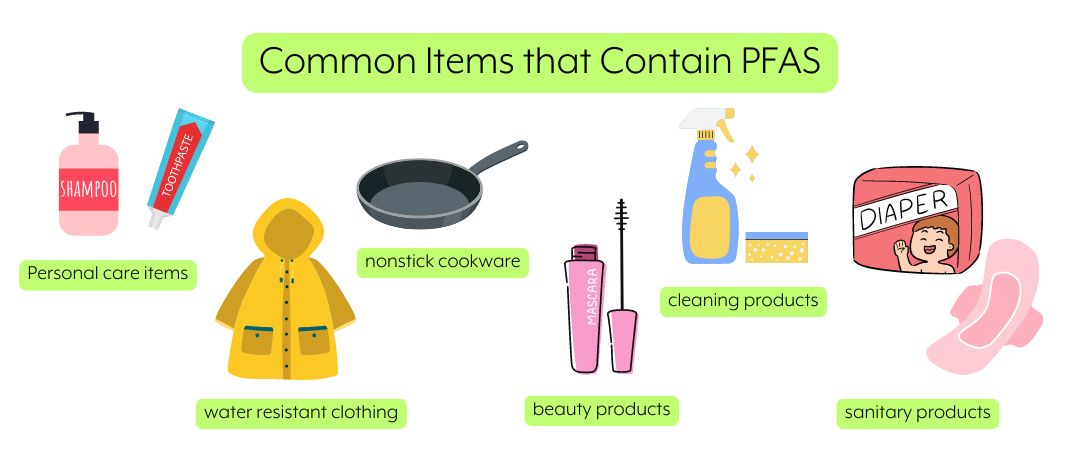
PFAS are incredibly stable because they contain carbon-fluorine bonds, which are some of the strongest bonds in organic chemistry. This stability makes them almost impossible to break down, earning them the nickname "forever chemicals." In fact, many PFAS can take over 1000 years to break down. Due to their widespread use, PFAS are now found almost everywhere—in soil, water, and even in the air. People can be exposed to PFAS by drinking contaminated water, eating tainted food, using PFAS-containing products, or even just breathing the air. These chemicals are especially problematic because of their ability to bioaccumulate, or build up, in the environment and organisms over time, and people are no exception to this rule. As of 2013, The National Health Institute has found PFAS in the blood of 98% of Americans.
The U.S. Environmental Protection Agency reports that there are nearly 15,000 PFAS chemicals that have been in use both in the past and the present. PFAS can be divided into two main types of structure of the chemical: short-chain PFAS, which have fewer than six carbon-fluorine bonds, and long-chain PFAS, which have six or more (see example chemical structure below). Long-chain PFAS were commonly used in the past before their harmful effects were fully recognized. Nowadays, many industries have shifted to short-chain PFAS, which initially believed to be less toxic and more easily broken down than long-chain PFAS. This, however, has not been the case.
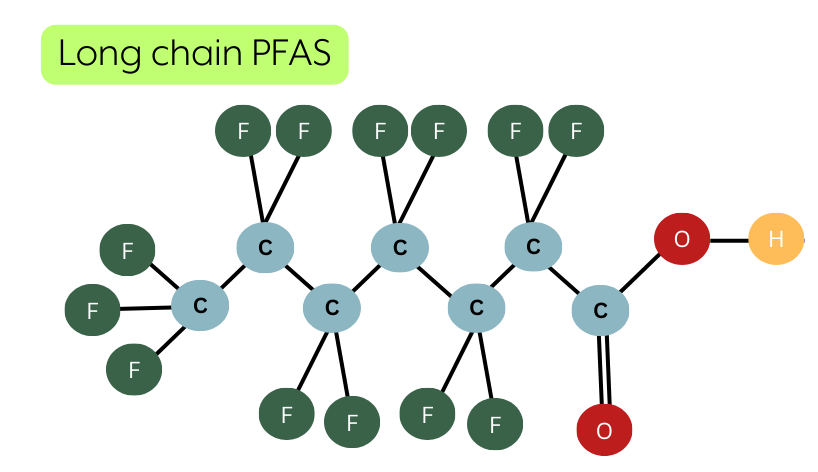
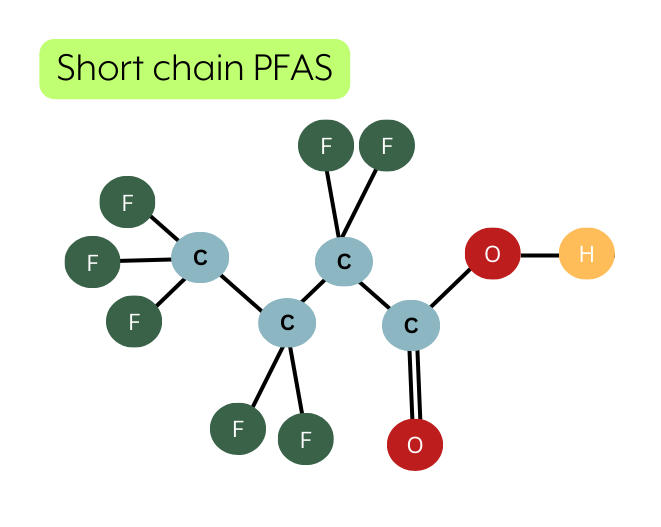
Today, both short- and long-chain PFAS are found in groundwater, soil, and in the tissues of animals and humans. Research is ongoing to understand how exposure to these chemicals impact human health. Current studies suggest that certain PFAS can lead to negative health effects, but more research is needed to clarify the risks associated with different levels of exposure and the long-term effects, especially in children. What we do know from peer-reviewed studies, however, is concerning. Exposure to PFAS can lead to reproductive issues in both men and women, such as reduced fertility, and can lead to high blood pressure in pregnant women. It may also affect child development, causing low birth weight, early puberty, bone density issues, and behavioral changes. There’s also evidence linking PFAS to increased risks of cancers like prostate, kidney, and testicular cancer, as well as a weakened immune system that might affect vaccine effectiveness. Additionally, PFAS exposure is associated with higher cholesterol levels and a greater risk of obesity.
Now that we are familiar with PFAS and the associated risks, lets get back to the study concerning northern Illinois. The researchers at the University of Illinois Urbana-Champaign focused on fish in northern Illinois rivers because of their close proximity to urban and industrial areas. This is an important factor because industrial emissions and urban rainwater runoff are known to contaminate our local waterways with PFAS. Because PFAS bioaccumulate in tissue, fish are a good indicator of how contaminated the environment may be. The researchers focused on fish in the Pecatonica River, Rock River, Sugar River and Yellow Creek from 2021-22. The team collected dozens of samples from nine species of fish, including bluegill, channel catfish, common carp, northern pike, smallmouth bass and walleye. The fish represented different trophic levels on the food chain, from those that feed only on plants, like bluegill, to those eating other fish, such as channel catfish and northern pike.
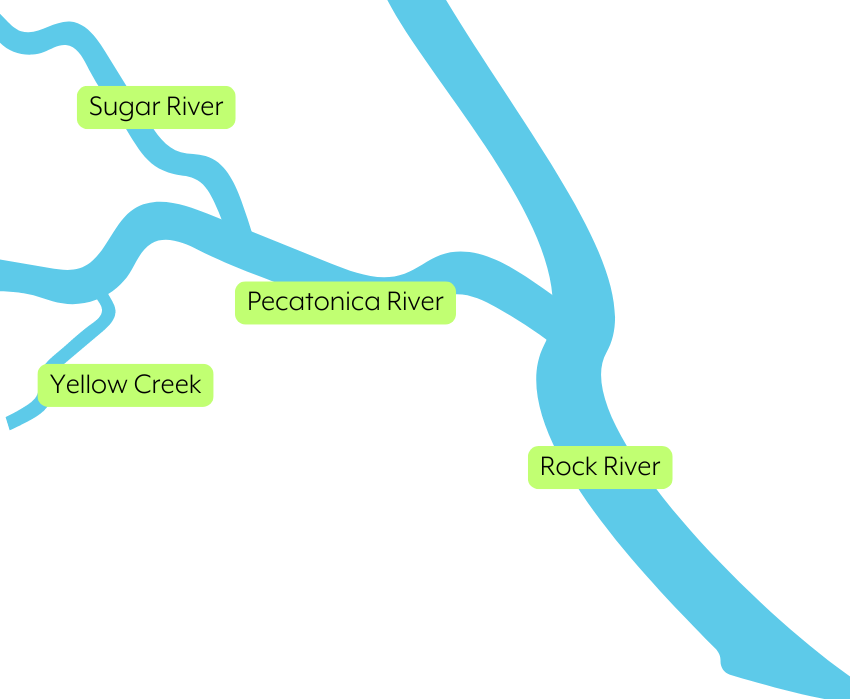
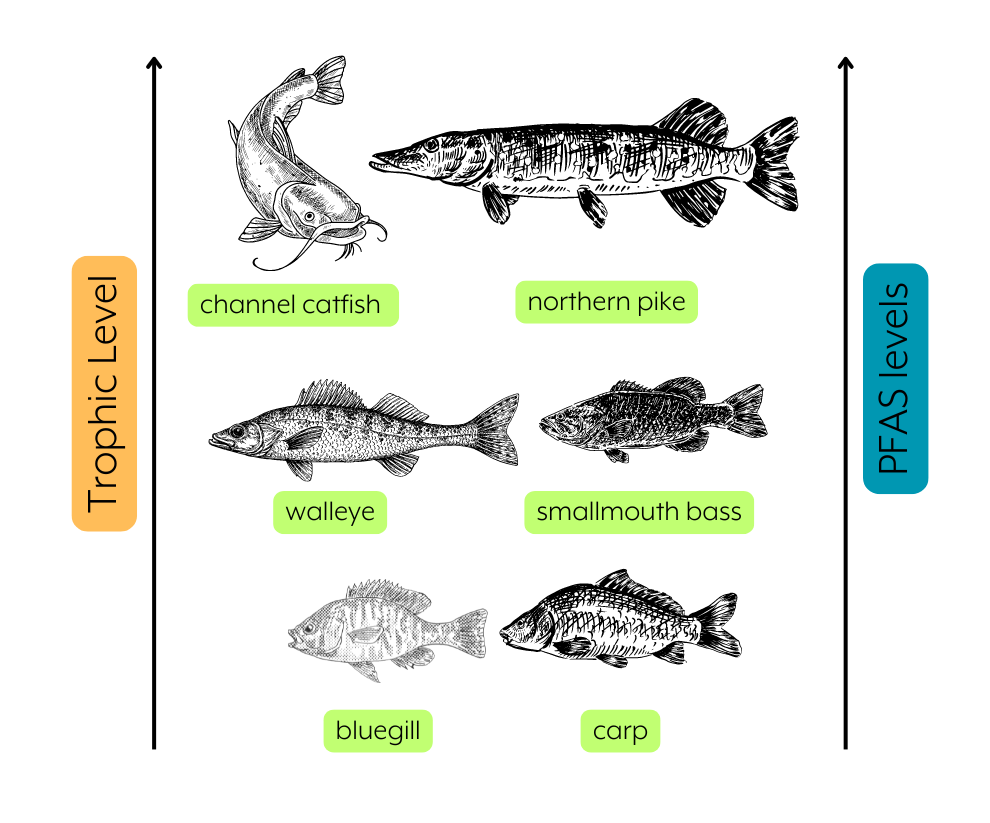
Four chemicals known as perfluorooctanesulfonic acids, or PFOS, were detected in fish from every site tested. PFOS are long-chain PFAS that have been in use over the past few decades, and they were found in all the sites, along with a few short-chain PFAS. Back in the lab, the scientists analyzed fish tissues for 17 PFAS chemicals. They found PFAS-contaminated fish in every river they tested and in every one of their 15 sampling sites. Fish from the Rock River had the highest concentrations of PFAS in their tissues, and contamination levels were highest in channel catfish, which are at the top of the food chain, and lowest in the plant eaters, which can be attributed to bioaccumulation. Researchers on the project stated that “further studies are warranted to comprehensively evaluate the occurrence and sources of PFAS throughout the state of Illinois,” and that “such information is crucial to better understand the distribution and potential risks of these compounds to the environment.”
So, what does this mean for those of us living in northern Illinois? Given the widespread nature of PFAS contamination, completely avoiding exposure is challenging. However, there are steps we can take to reduce our risk. The primary concern for human health is ingesting PFAS, so it’s crucial to be mindful of what we put in our bodies. Choosing less processed, less packaged, and more locally sourced foods can help minimize exposure, as grease-resistant wrappers and packaging used in prepackaged, processed, and fast food often contain PFAS. Additionally, eating lower on the food chain—meaning more plants and less meat—can reduce PFAS intake since these chemicals accumulate higher up the food chain. As highlighted in the study, it’s also important to avoid consuming fish from contaminated waters, especially fish of higher trophic levels. For drinking water, testing your sources before consumption is key. In April of this year, the first-ever national, legally enforceable drinking water standard was passed to protect communities from exposure to PFAS. Currently, the EPA does not require the City of Rockford to take any action to lower PFAS levels in drinking water, but it’s wise to stay informed about local water quality (for the most recent PFAS tests in Rockford, click here). Lastly, consider becoming a more conscious consumer by choosing PFAS-free products whenever possible. Here’s a list to help you get started.
Overall, we can't really "avoid" PFAS in the environment. It's in the water. It's in the soil. It's in the air. It's in you and me. It's still being manufactured and used in the United States. As we move forward, it is my hope that we can learn from our mistakes in using PFAS, and take stronger actions to protect our environment and health. The widespread contamination we've witnessed should serve as a stark reminder that our current practices are unsustainable and that stricter environmental regulations are not just necessary, but urgent. Even though we are continually learning about the harmful effects of PFAS, we are slow to regulate the use of it, and unfortunately this story echoes true for many harmful chemicals that we manufacture. We may not be able to undo what was done in the past, but going forward we must push for more rigorous research, better policies, and greater accountability from industries that produce and use these harmful chemicals. By doing so, we can work towards a future where our rivers, soil, and air are free from toxic substances, ensuring a safer and healthier world for generations to come.
References
"PFAS assessment in fish – Samples from Illinois waters"- Peer-reviewed study by M. Sands et. al published in Science of The Total Environment
"Perfluoroalkyl and Polyfluoroalkyl Substances (PFAS)" - Article from NIH: National Institute of Environmental Health Sciences
"About PFAs" - Article from PFASfree, a project run by Firdra, an environmental charity
"Legacy and alternative per- and polyfluoroalkyl substances in the U.S. general population: Paired serum-urine data from the 2013–2014 National Health and Nutrition Examination Survey" - Peer-reviewed study by Antonia M. Calafat et. al in Environment International
"Our Current Understanding of the Human Health and Environmental Risks of PFAS" Article from EPA: United States Environmental Protection Agency
"Biden-Harris Administration Finalizes First-Ever National Drinking Water Standard to Protect 100M People from PFAS Pollution" Article from EPA: United States Environmental Protection Agency
"What are PFA's?" Article and test results from the City of Rockford Public Works
"PFAS-Free Products" A list of PFAS- free products made by the Green Science Policy, an environmental non profit based in Berkeley, California

RECENT ARTICLES