FIELD NOTES BLOG
June Bird Blog
The Warmth is here and So are the Birds!
Summer is here! The leaves have grown, the spring flowers have left and the longest day of our summer is June 20th which gives many of our birds ample time to collect all the resources they need to thrive for another glorious year. This month's bird blog holds a variety of unique birds, some very rare and others are very common. With luck you will be able to see all of our feathered friends on this list but one of our birds only has 600 left of its species in the world. With a whole lot of conservation work, they are slowly growing in size and if you want to read more about it you can read the rest of the blog! Without further ado: our June birds.
Spotted Sandpiper
Actitis macularius
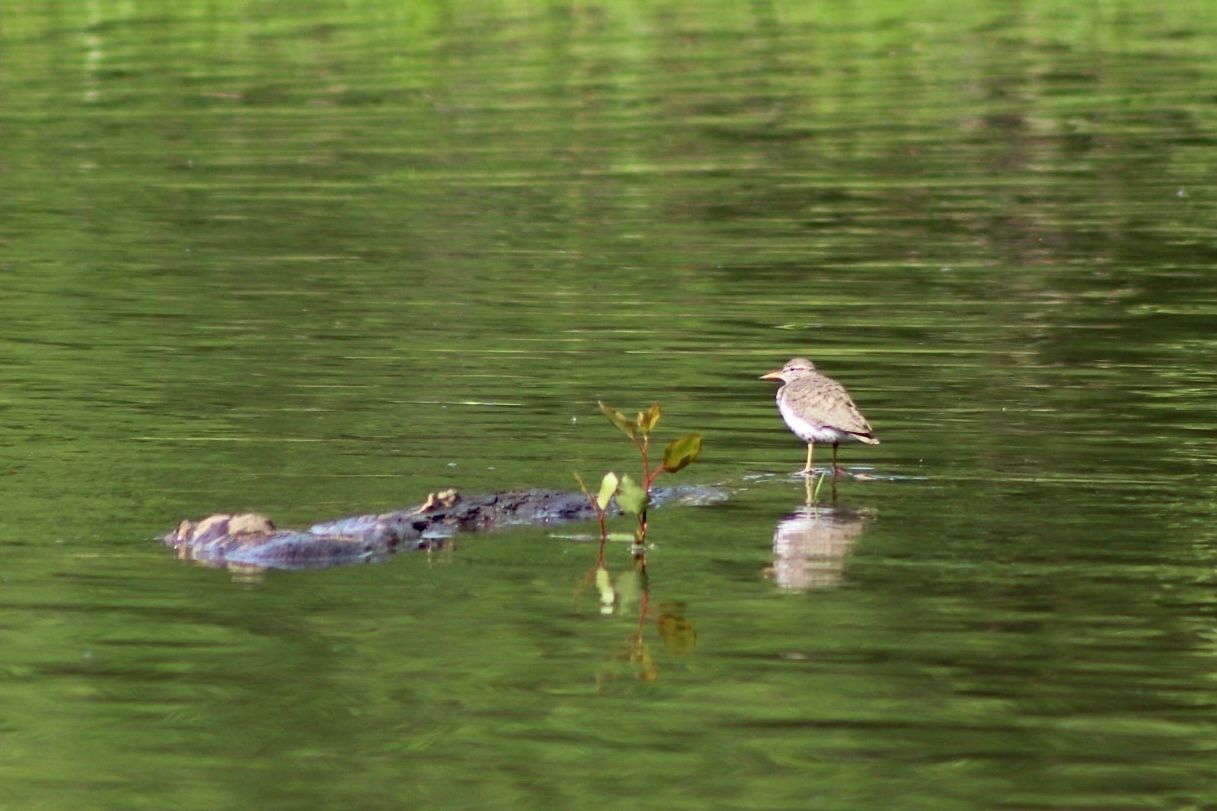
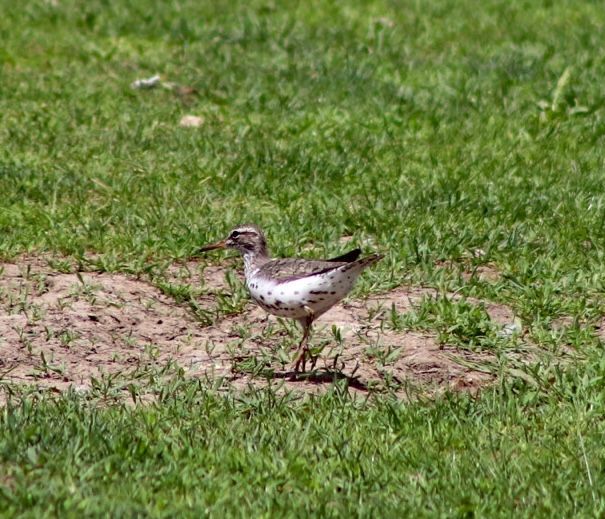
The Spotted Sandpiper is a shorebird found all across North America. It's a medium sized bird with a narrow bill. They have a grayish brown coat covering the top side of their body and wings with a thin white stripe along the wing that can’t be seen unless they are flying. During the breeding season, the spotted sandpiper has dark spots on their bright white underside and in the winter they are not spotted but pure white. These shorebirds have a few fairly unique traits in the bird family, starting off with their unique teetering motion where they seemed to bob and shake their bodies for some reason including very quickly after they hatch as babies (no one has been able to confirm fully why these sandpipers teeter the way they do). I’ve seen them along Olson Lake at Rock Cut State Park if you want to look around Rockford for them. Another unique aspect of how they survive is through their breeding habits. The female Spotted Sandpiper is the dominant one. She will actively claim territory and sometimes participate in polyandry where the female mates with multiple males leaving a clutch of eggs for each male for them to care for. The Spotted Sandpiper song is a rapid string of weet calls which can be used for communication and courtship and if you want to hear it click here!
Orchard Oriole
Icterus spurius
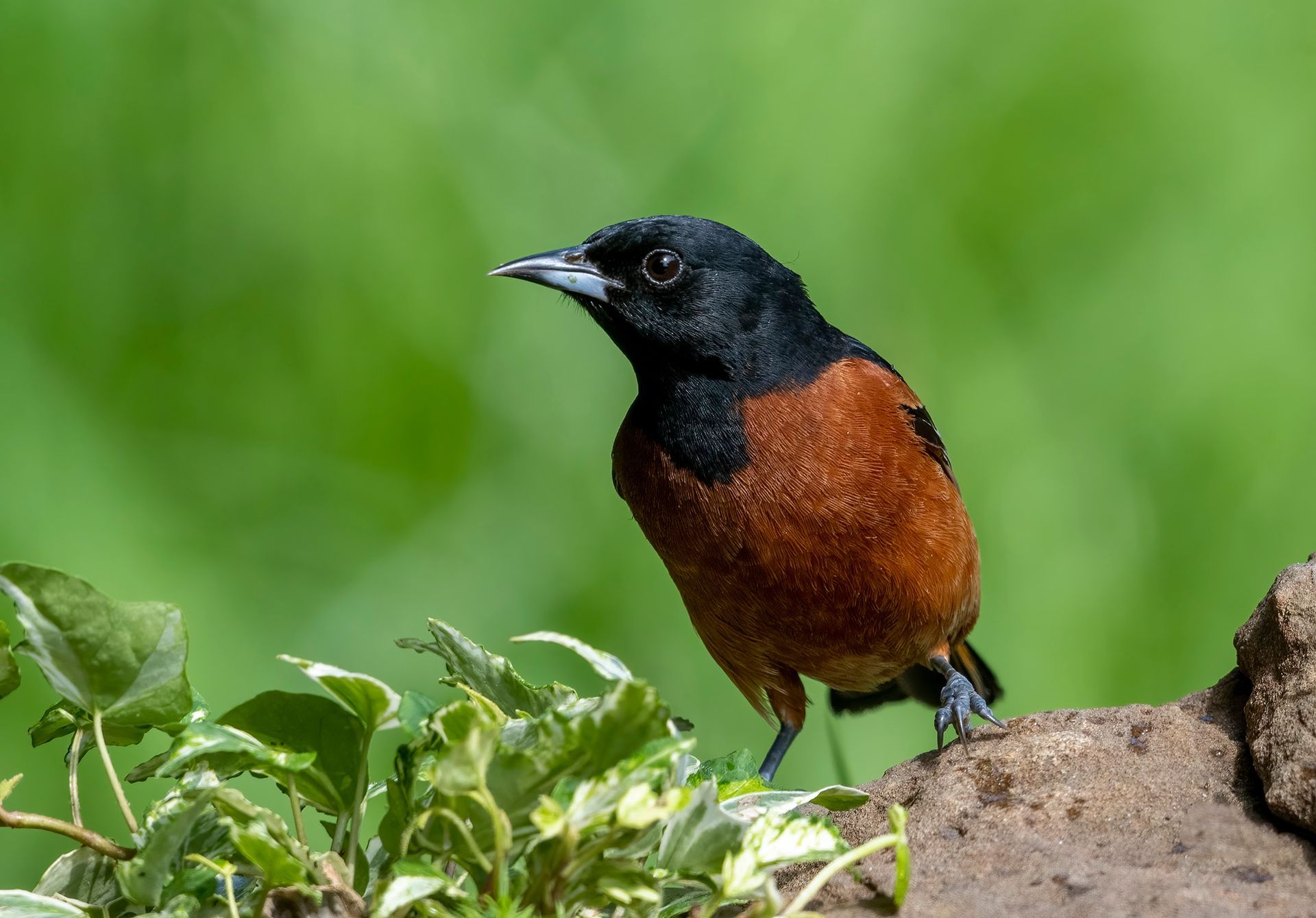
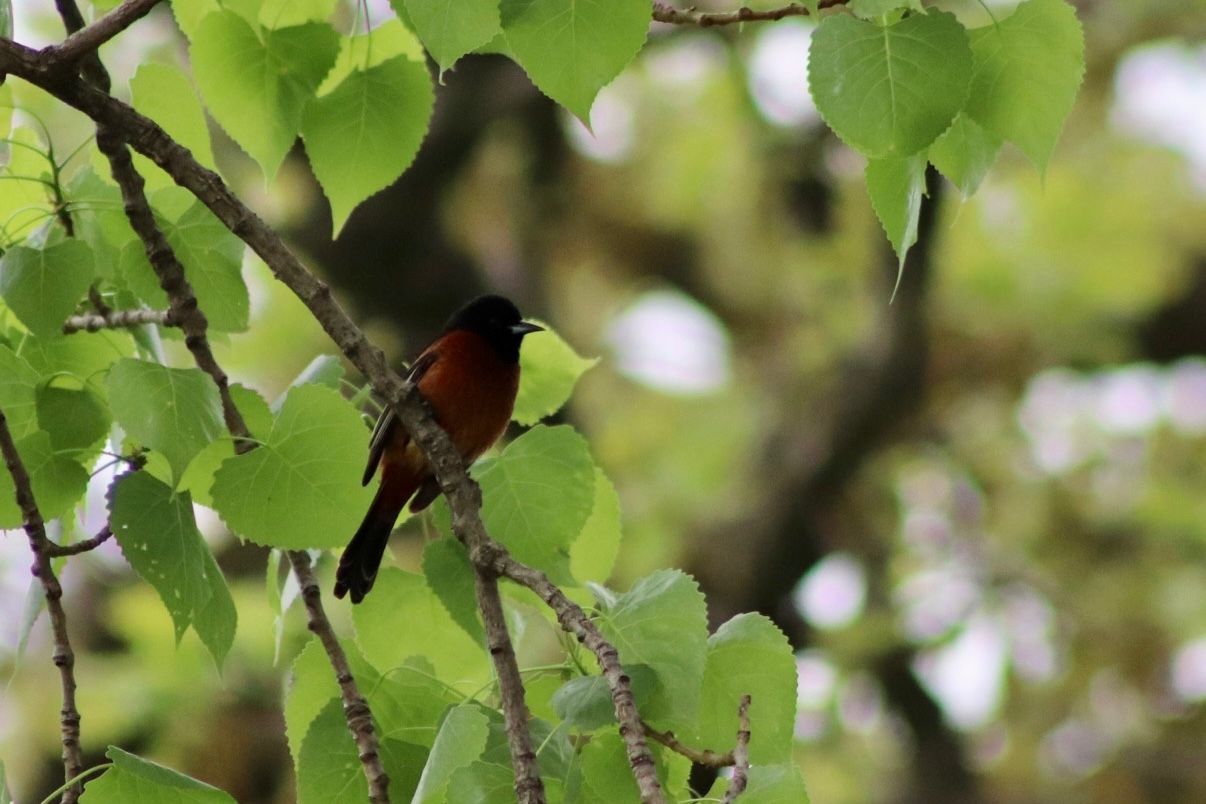
The deep burnt red coloration of the male Orchard Oriole makes it unique among its other oriole cousins. The top half of the male Orchard Oriole is a striking black coloration with the burnt orange covering its lower half. The females and juveniles are a greenish yellow color with bars of white. They are slimmer songbirds with a medium length tail, rounded heads, and a sharp bill. They prefer to live along river edges and tend to nest in groups around them but if they aren’t in a desirable habitat they will likely be more solitary. Orchard Orioles eat insects as well as fruit, nectar and pollen from trees and flowers. Sometimes they pierce the flower directly to access the nectar which means they avoid getting covered in pollen and don't spread it (which is not very nice to the flower). They are long distance migrants and have a fairly short breeding season (going north late into the season and then heading south early) in the north before they quickly return to Central America for the rest of the year. Their song includes a series of loud whistles with a tempo of different phrases and their calls are normally softer little chirps and if you want to hear either
click here!
Whooping Crane
Grus americana
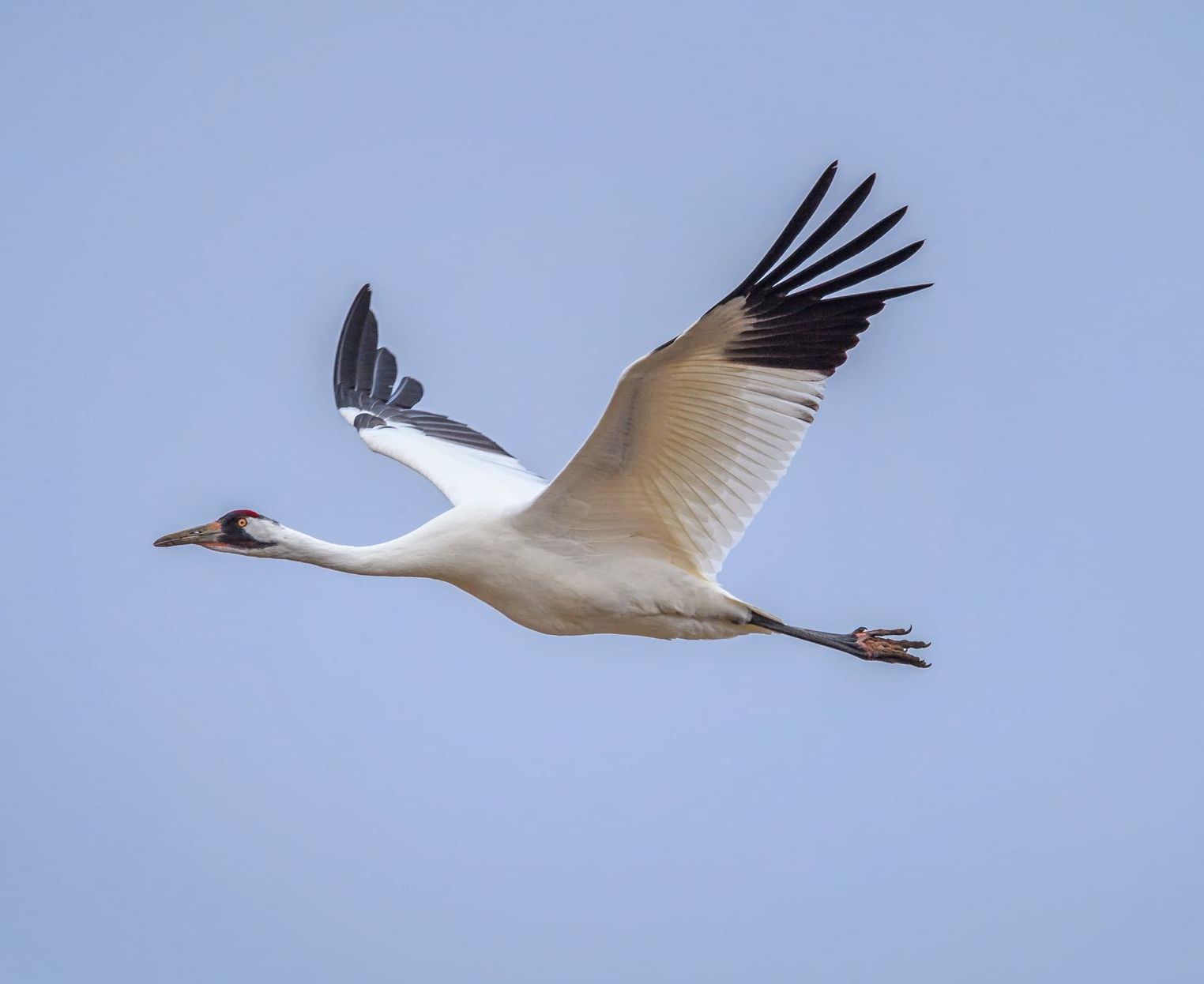
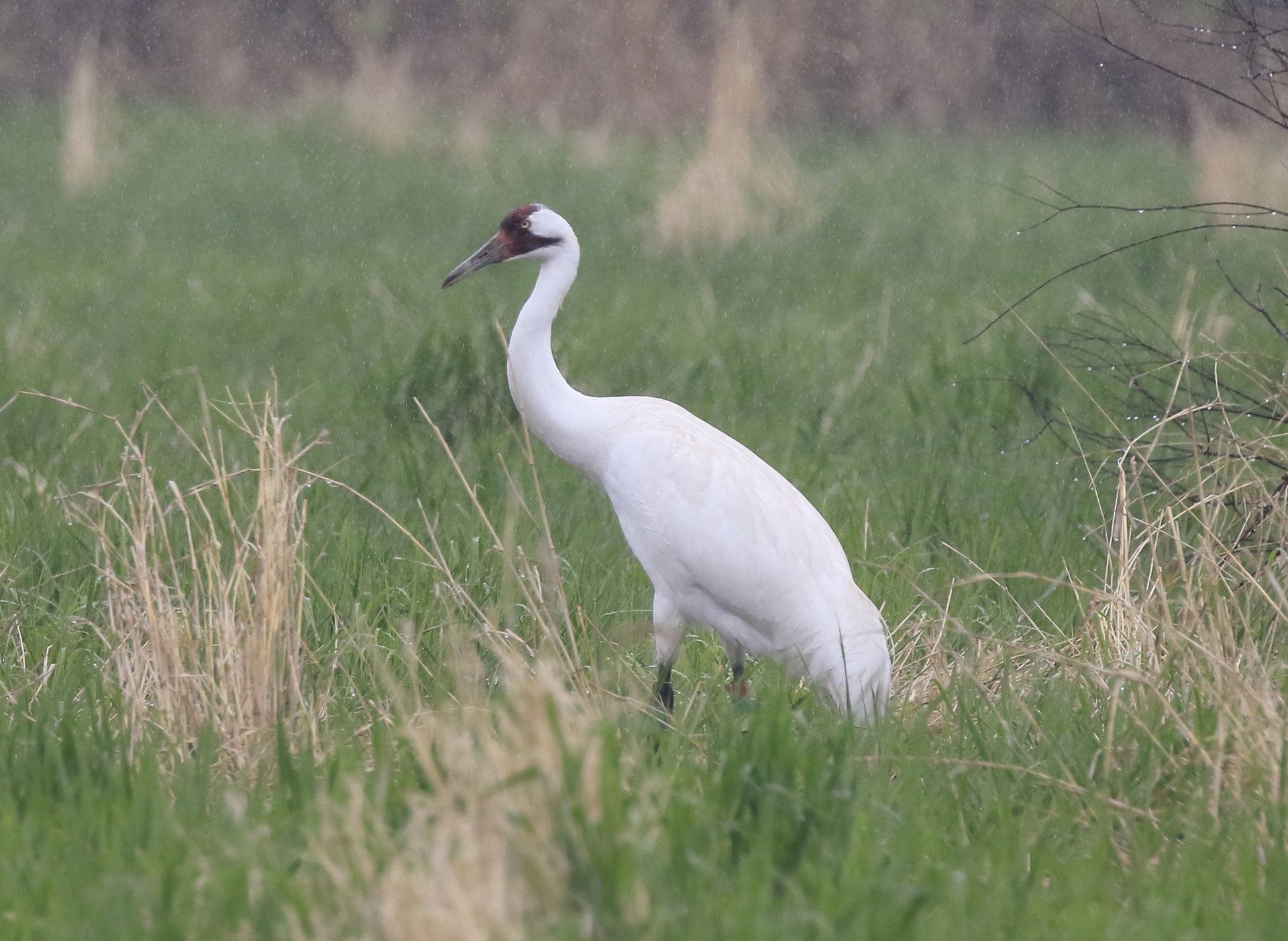
One of the rarest birds around, the Whooping Crane sports a pure white plumage covering its body except for its blacked tipped wings and its red accents along its head. This bird is a massive creature with over a 7 foot wide wingspan and almost matching many humans in height (reaching up to 5 feet tall). They prefer marshy wetlands for a habitat and have a tendency to browse by patrolling through the water looking for its food. Its food normally includes many small aquatic creatures (crawfish, minnows, aquatic insects, and frogs) as well as land critters (mice, voles, snakes). Their diverse diet also includes different types of vegetation like grains and berries too! When finding a partner these Cranes perform elaborate and energetic dances on the ground and through the air, once they decide on their partner they mate for life and will work together to build the nest and the male will more often than not be territorial to other birds not part of its flock. In 1941 the Whooping Crane faced near extinction with only 21 left alive in the entire world. Nowadays they are at a fragile 600ish where conservationists work tooth and nail to bring them to healthier numbers.
Their name likely comes from the loud bugle call that they release that you
can listen to here!
Eastern Phoebe
Sayornis phoebe
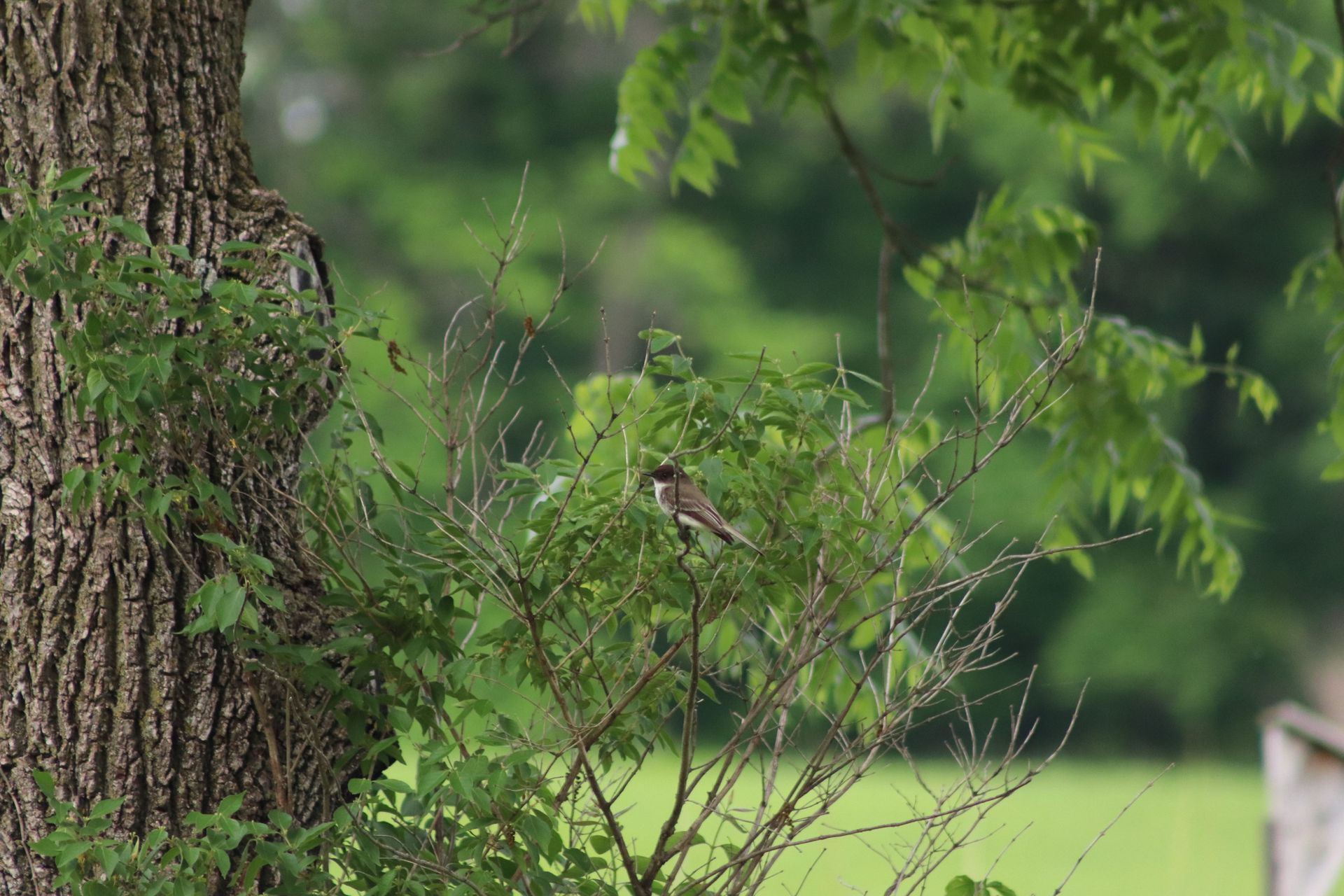
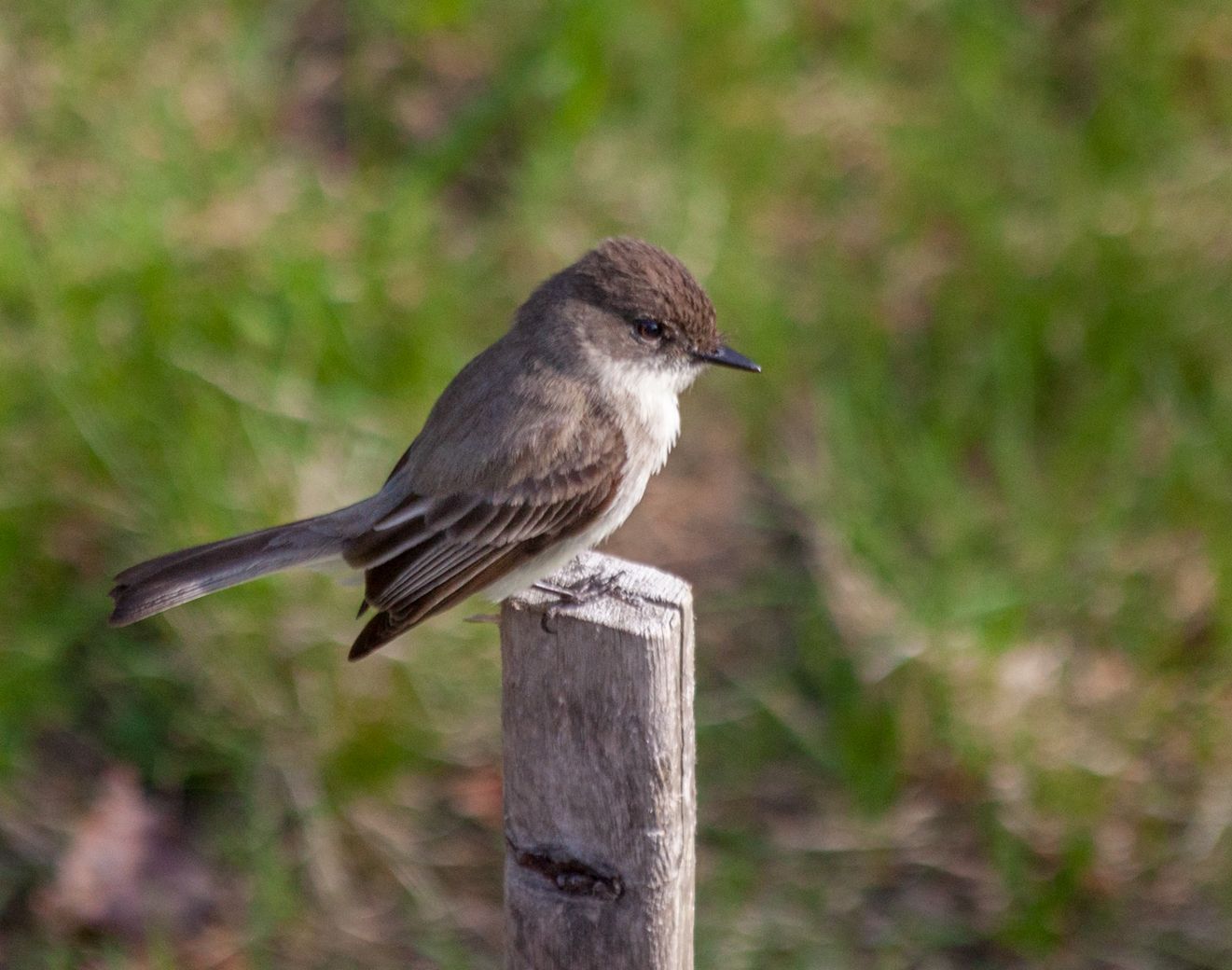
The Eastern Phoebe is a round little songbird with a medium-length tail which has a tendency to wag when it is perched. Their feathers on top are a brownish-gray coloration, the head hosts the darkest plumage of this shade. The lower half is more of a whitish coloration. This Phoebe has a short, thin bill used primarily for insect harvesting. While hunting they are very active, starting at one perch and watching for insects in the small area swooping down to capture it and then returning to the same perch. While doing this they tend to wag their tail up and down frequently… a bird wagging its tail, how strange?? There are many theories for why they might wag their tail but one of my favorite is it is a way for the phoebe to signal that it is aware of the potential predator sneaking up on it and wagging its tail because it's aware of your presence. If you are trying to spot an Eastern Phoebe, look for their nests in low hanging nooks and crannies like bridges, barns, and houses. They make a number of different calls and songs with their most notable being their raspy song. This song is a quick little burst that sounds like they are saying fee-bee.
Blue-winged Teal
Spatula discors
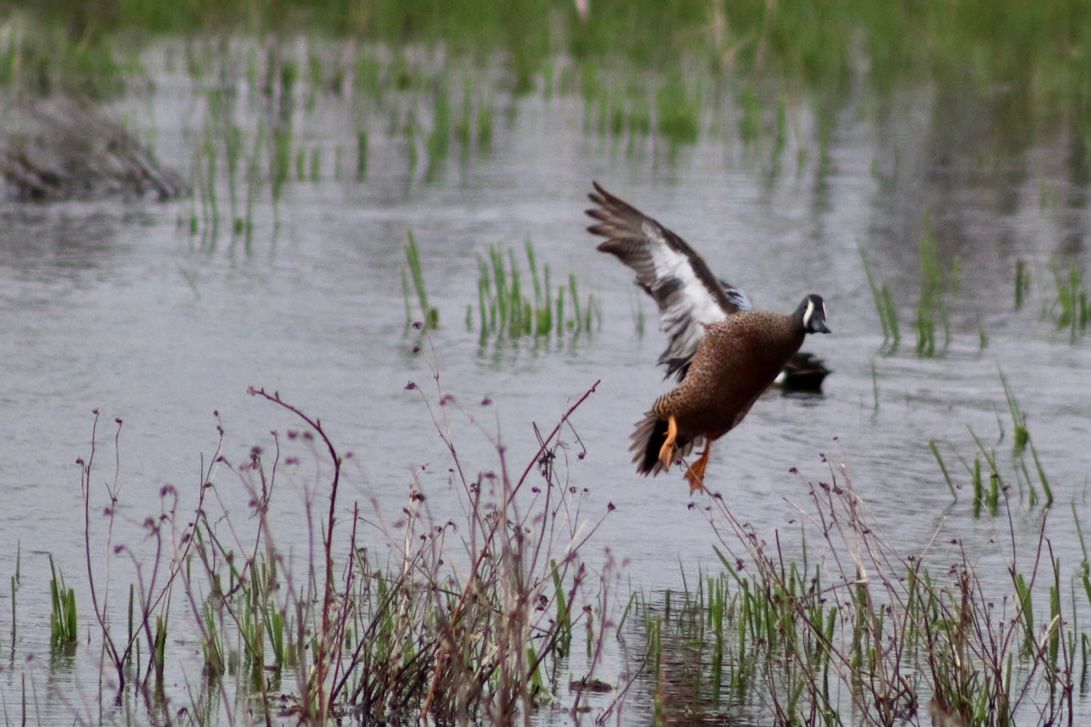
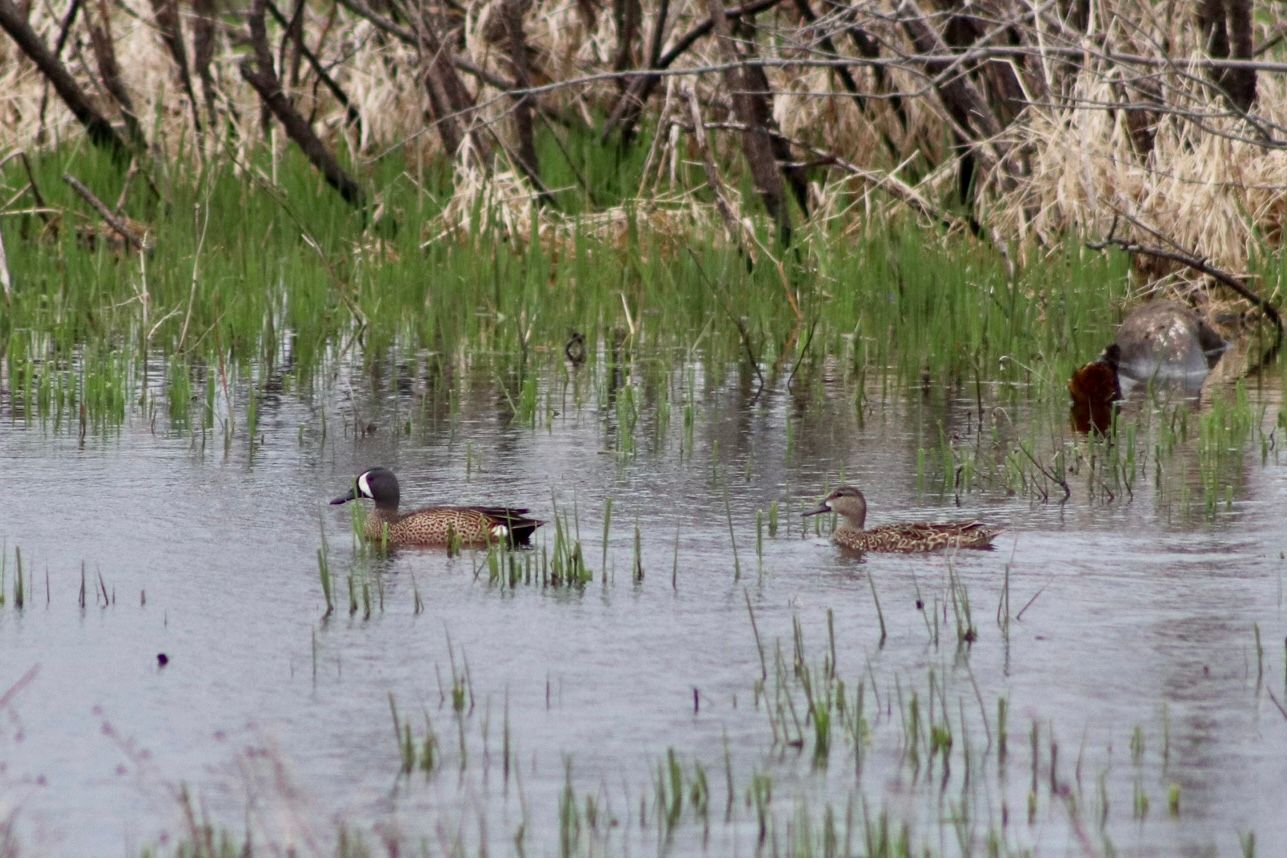

A splash of azure takes flight as the Eastern Bluebird sparkles in the sunlight as it spends its time hunting for food. This bird has a brilliant coloration of cobalt blue along its head and back with its chest and throat being rusty red. It has a big head and body with long blue wings. But it has a fairly short tail and legs. The Eastern Bluebird lives in the open country around trees with little understory, so agricultural fields and backyards are perfect places for them to set up and thrive in. They hunt for insects when it's available by scanning the ground from a low perch and dropping on them when spotted. The Male Bluebird will aggressively protect its cavity based nesting location against all kinds of birds. The Eastern Blue birds that live in Illinois tend to migrate but some who live farther south are permanent residents. The song of this blue bundle of feathers is fairly low-pitched with many phrases !
A lovely month of June. It gives us ample time to explore the warmer waters of Illinois where many birds call them home. I hope the best for you and your birding friends to see all of the rare birds around here. If there are any questions or stories you want to share with us feel free to leave a comment or tell any of us here at Severson Dells Nature Center! Take advantage of these warm months to really enjoy what the world has to offer!

RECENT ARTICLES