FIELD NOTES BLOG

Here Come the Cicadas

jillian.americorps
May 9, 2024
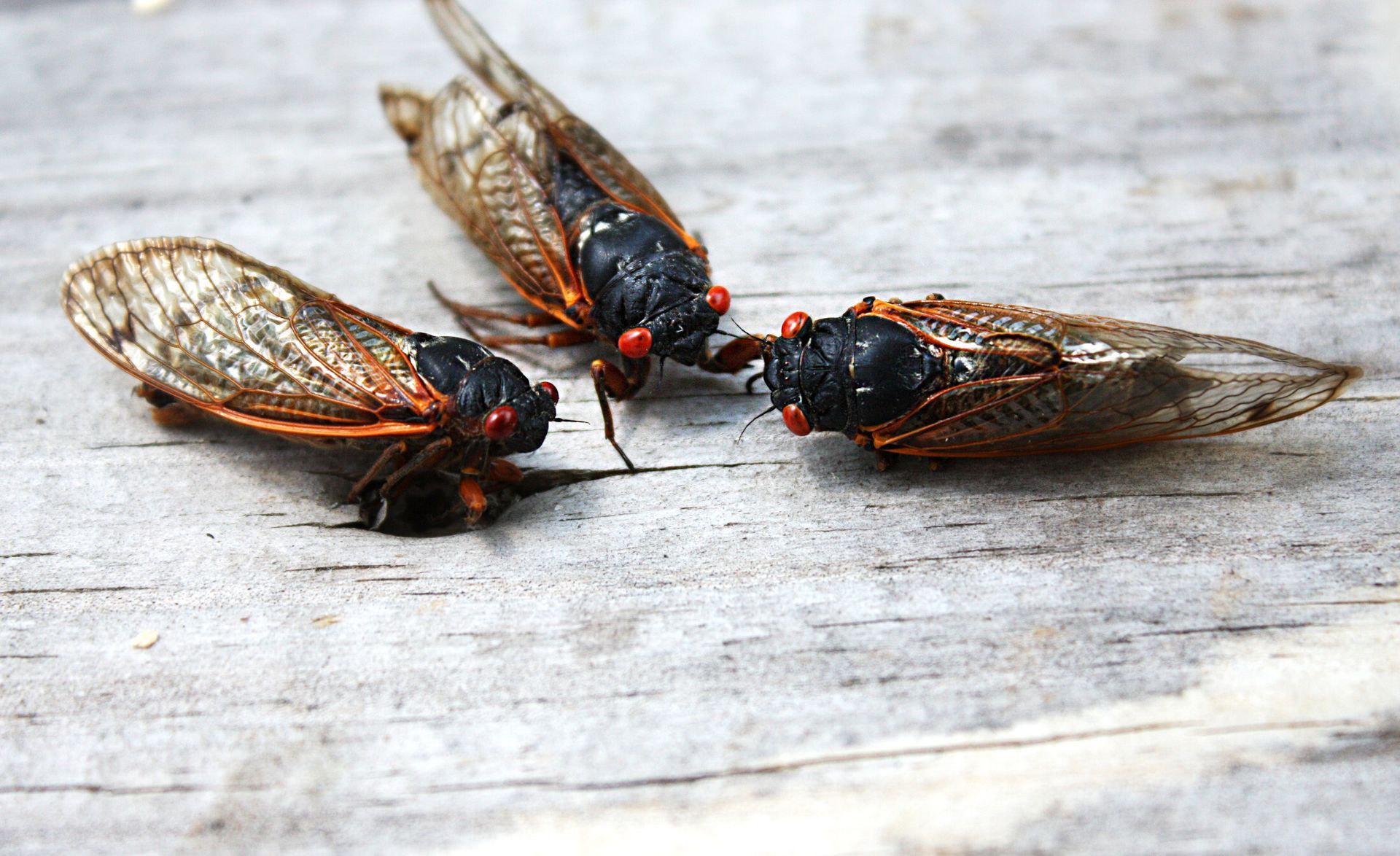
Three periodical cicadas. They have black bodies, orange wings, and red eyes.

The wait is finally over!


After seventeen years, cicadas of the Northern Illinois brood (Brood XIII) will be emerging from their time underground to reproduce and complete their life cycles. The last time these bugs emerged was in 2007, and after this summer, they won’t be back again until 2041. 


I saw cicadas last year. What makes this year so special?


Well, there are two different types of cicadas in our area: annual and periodical cicadas. Annual cicadas, also called “dog days” cicadas, emerge every year during the height of summer. These species have a life cycle that lasts between two and five years, but their development is staggered so that some individuals emerge from the ground each year to mate, while others continue maturing underground. 


The periodical cicadas that will emerge this spring have a much longer life cycle- one of the longest life cycles of any insect- with some species developing on a 13 year cycle and others on a 17 year cycle. Instead of staggering their development so that some bugs emerge each year, periodical cicada species all emerge together. This means that every time a periodical cicada brood emerges, we can expect hundreds of thousands of them to crawl out of their home in the soil and gather on trees and shrubs to look for a mate. We will still get the annual cicadas appearing in the late summer as they do every year, but this year we will also experience the emergence of the 17-year periodical cicadas. 


Why are the brood emergences so spread out?


Most researchers think their life cycles are so long in order to avoid predators. When the entire species emerges at once, there are simply too many cicadas for their predators to eat. One study suggested that up to
1.5 million cicadas can emerge in a single acre! Not only will their predators have “forgotten '' that they exist since multiple generations of predators will have occurred without any cicadas emerging, the sheer number of insects overwhelms the predators and decreases the odds of any individual bug being eaten. 
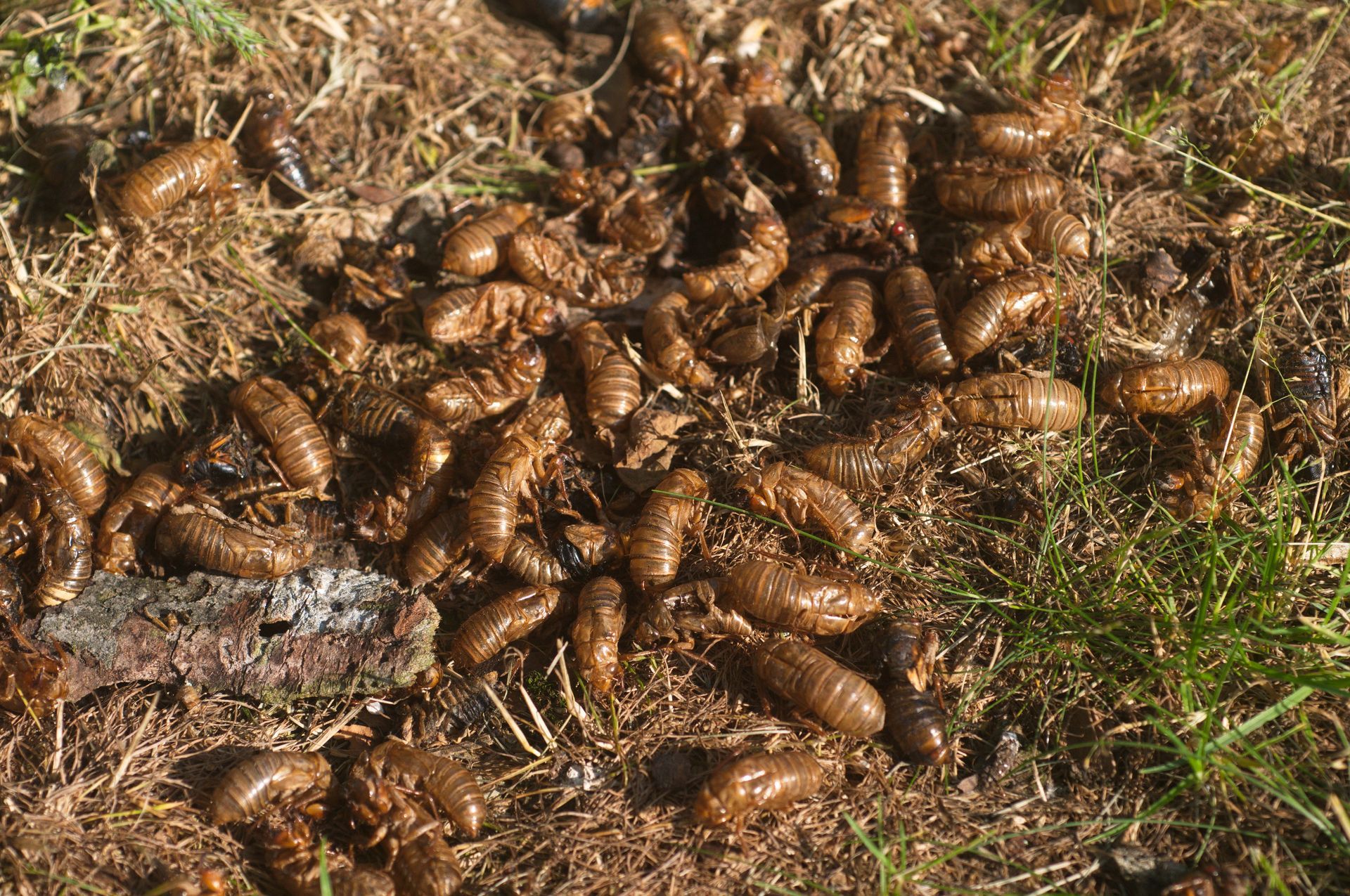
A pile of many light brown cicada exoskeletons laying on the grass.

What does that mean for us?

Most importantly, we should be prepared for it to get loud. Male cicadas produce a buzzing sound to attract mates, and when hundreds of thousands of them call at the same time, the noise is about as loud as a lawn mower or chainsaw! Luckily, the Centers for Disease Control and Prevention says that exposure to cicada calls (which are regularly recorded at 80-11 decibels) for short periods of time is not likely to cause long lasting hearing issues. That being said, it may still be better for your mental wellbeing to wear ear protection if you plan on being outside for multiple hours.


The cicada emergence may also impact those of us who have recently planted trees or shrubs. After the periodical cicadas breed, the females will lay their eggs in little cuts on tree branches. For most mature trees, this won’t cause any damage, but for young saplings, the damage could lead to a loss of branches. If you have any young trees or shrubs, experts recommend wrapping them in some kind of mesh fabric (with holes less than 0.25 inches across) to keep cicadas off of them. But again, this is only necessary for young or recently transplanted trees and shrubs, since mature plants should be healthy enough to withstand a little bit of damage. 


Other than these precautionary steps, there isn’t much we need to do to prepare for millions of bugs that will be descending (or ascending?) upon our cities. Once they emerge, they usually only live for a few weeks, so the noise and threats to young trees will be short-lived. Take time to appreciate the awe-inspiring nature of these fascinating creatures while you can, and maybe plan to sleep with a fan running!

RECENT ARTICLES

By Holly Hansen July 9, 2026
While many of you may already know me, allow me to introduce myself! I’m Holly and I’m the new community engagement manager here at Wild Roots Nature Center . While I am new to this role, I am not new to Wild Roots. I got my start at Wild Roots way back in 2019 as an environmental education AmeriCorps Volunteer. During my time, I was able to help connect people to nature and foster stewardship of our lands at all age levels. Even when COVID-19 hit, that didn’t stop us from planning for the future and coming up with ideas for how to engage people in our natural world. From there, I completed two more terms of service with AmeriCorps, one in Florida and one back here at Wild Roots with 815 Outside. (You’ll start to notice a pattern here.) As I finished my undergraduate degree in environmental studies and my master’s degree in higher education and student affairs, I remained a volunteer with Wild Roots, joining in on the fun of Science Saturdays, signature events like Luminaria, and canoe convoys. I simply never left this community. My most recent role as assistant director of campus sustainability at Northern Illinois University has prepared me for my return to Wild Roots. I’ve learned so much over the years about connecting with people of all different backgrounds, bridging the gap between nature and community. I look forward to continuing these conversations as the community engagement manager at Wild Roots Nature Center! Other fun facts: When I’m not in nature, you can find me among a circle of friends, crafting and laughing, making stained glass art, and immersing myself in a good book or tv show. I’m always happy to be a listening ear and I am fiercely loyal. Plus, I’ll never say no to a new adventure!
By Brandy Korth July 2, 2026
If there’s one thing you should know about me, it’s that I genuinely love people, organized chaos and finding joy in the little things. So, when the opportunity came to join the team at Wild Roots, it felt like everything came together in the best way. Professionally, I’ve spent more years than I’d like to admit in finance, bookkeeping and office management. I actually enjoy spreadsheets, balancing budgets, and making sure all of the behind-the-scenes pieces fit together (yes…I’m one of those people!). But my energetic and bubbly personality doesn’t always fit the type for an accounting aficionado. Before building my career in finance, I earned a degree in Elementary Education. Looking back, it makes perfect sense because teaching and finance have one thing in common – you need patience, flexibility, quick on your feet, and a good sense of humor! I absolutely love the fact that Wild Roots is so committed to outdoor education, and it is one of the biggest reasons I wanted to root myself here as well. Perfect blend of both of my worlds. Outside of work, I’m a proud mom to three wonderful (and very energetic!) boys. They keep me on my toes, whether we’re at a ball field, exploring a new park, or simply enjoying time together. Being their mom has taught me that the best adventures don’t have to be big – they’re usually found in the simple moments, especially when you’re outside exploring together! That’s one of the reasons Wild Roots already feels like the perfect place. I believe nature has an incredible way of bringing people together, slowing us down, and reminding us to appreciate the world around us. Knowing that I get to support an organization that helps families, students and our community experience that every day is something I am truly excited about.  I’m incredibly grateful to be here and can’t wait to be part of everything that makes this place so special. Here’s to new beginnings, new connections, and plenty of time spent enjoying the beauty of nature together!
By Becca Rankins June 25, 2026
This article has been adapted from it's original publication in "Notes From the Dells" Vol 47 No. 1