FIELD NOTES BLOG
Bird Migration
North America is home to over 650 species of breeding birds, and more than half of them are migratory! Each spring and fall, around 450 bird species, ranging from tiny warblers to majestic raptors, embark on one of nature’s most extraordinary journeys: migration.
What is migration?
Migration is the seasonal movement of animals from one region to another, and while many creatures migrate, including butterflies, whales, and even some fish, birds are among the most well-known travelers. Their migrations can cover thousands of miles, often crossing entire continents and oceans.
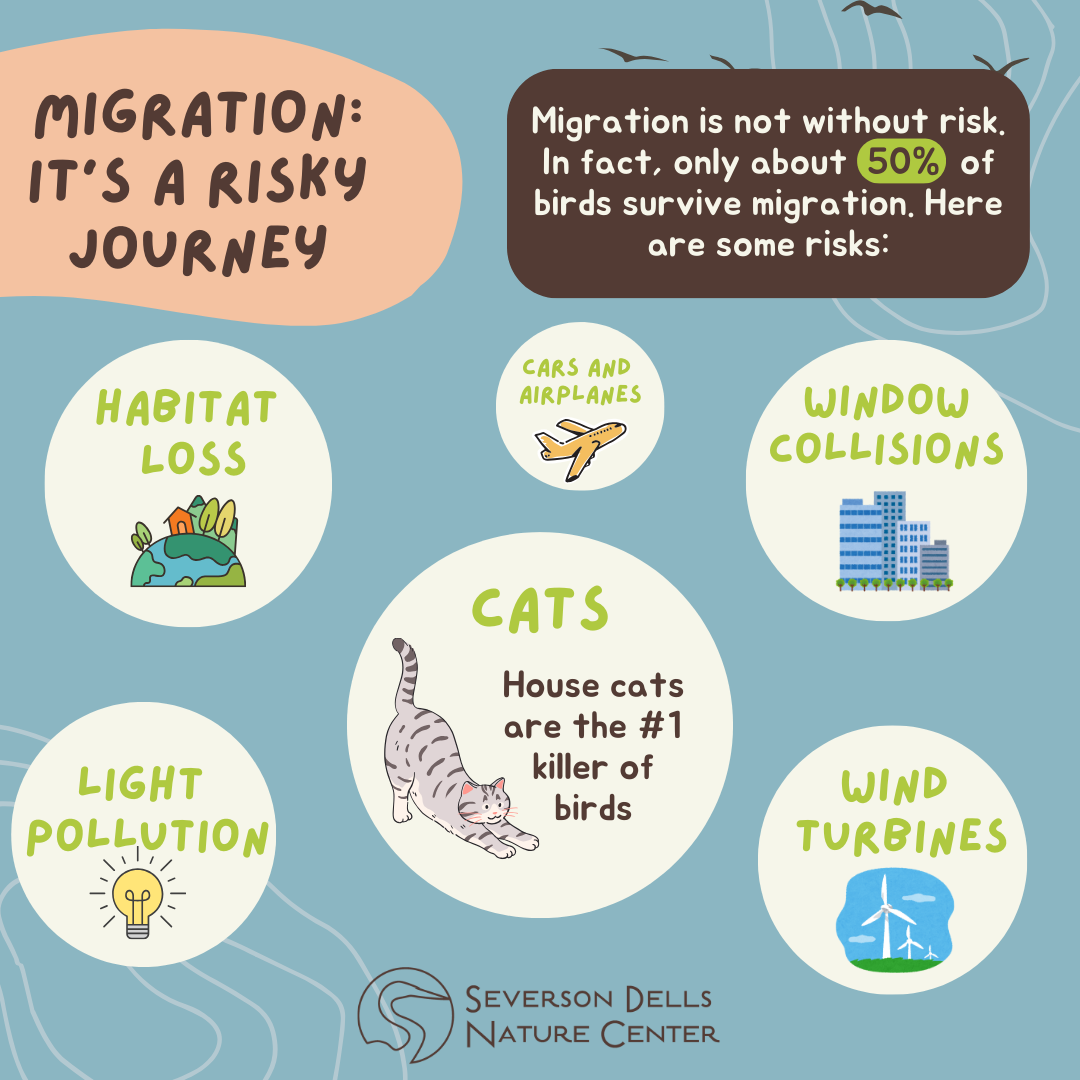
However, migration is not without risk. Around 3.5 billion birds migrate back into the United States from their southern wintering grounds in the spring, and it’s estimated that only about 50% of migrating birds survive the journey. So why do they undertake such a dangerous trip? The answer is simple: survival. Birds migrate to escape dwindling resources, like food and daylight, and to find better conditions for breeding and raising their young.
Bird Superhighways: the four major flyways
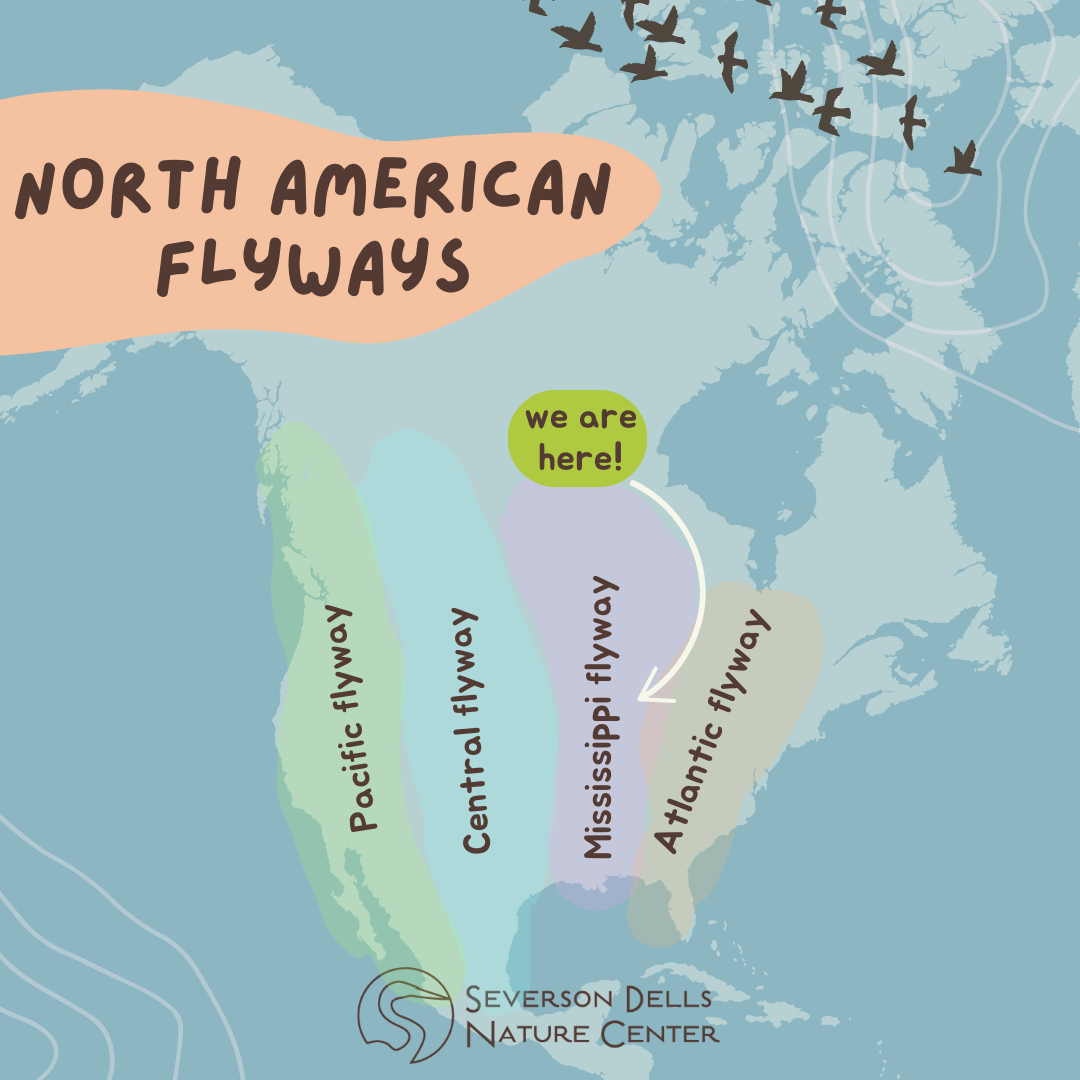
While birds migrate all over North America, most follow one of four key routes, known as "flyways":
- The Atlantic Flyway (along the East Coast)
- The Mississippi Flyway (along the Mississippi River)
- The Central Flyway (along the Continental Divide)
- The Pacific Flyway (along the West Coast)
These flyways act like natural highways, guiding birds between their breeding and wintering grounds. In Illinois, we are fortunate to be situated along the Mississippi Flyway, one of the busiest and most diverse migration corridors in North America.
Why is the Mississippi Flyway so important?
The Mississippi Flyway stretches over 2,000 miles from the Gulf of Mexico to the Great Lakes and serves as a critical pathway for millions of birds each year. It provides essential stopover sites where birds can rest and refuel before continuing their migration. Wetlands, forests, and river systems along the flyway offer rich food sources, like insects, seeds, and aquatic plants, helping birds restore their energy. An estimated 40% of North America’s waterfowl and shorebirds use this flyway, alongside many songbirds and raptors!
For birdwatchers and nature lovers, this makes the Mississippi Flyway a fascinating location to observe birds. Because of the abundance of food and resources, many species will arrive in the flyway early in the spring as they make their way north. Northern Illinois, in particular, is a hotspot during both the spring and fall migration seasons. It’s a wonderful time to catch sight of some incredible species as they pass through, often in large numbers, on their way to their summer breeding grounds. Some of the most anticipated birds to watch out for in our area are the American White Pelican and the Sandhill Crane!
Understanding Bird Migration: A Journey of Survival
Bird migration is a remarkable phenomenon that can take many forms. While some birds migrate only short distances traveling from one habitat to another within the same region, others embark on epic, long-distance migrations that can span thousands of miles. These migrations are more complex and are influenced by a combination of factors like weather, geography, food availability, and even genetics.
Interestingly, long-distance migration patterns have evolved over thousands of years and are partly determined by the birds' genetic makeup. Birds that migrate across continents have developed highly specialized navigational abilities to find their way year after year. But why would birds make such a long, strenuous journey northward when they could simply stay in the tropics? The answer is simple: survival.
It may seem puzzling at first, but researchers believe that the answer lies in the abundance of food and the longer days available in northern regions during spring and summer. In fact, many birds have evolved to take advantage of the seasonal abundance of insects and other food sources that are much more plentiful in the north compared to their tropical homes. By moving north, they are able to raise larger families, often producing 4-6 offspring, compared to only 2-3 in the tropics.
As the Earth’s climate shifted and glaciers retreated over time, these birds adapted by migrating north to breed in areas with rich, seasonal food supplies. Over many generations, birds have passed down this behavior, and it has become a critical part of their life cycle. Today, many of the North American species we see—such as warblers, orioles, tanagers, and swallows—are descendants of tropical ancestors that evolved this migratory pattern.
Tracking Migration: How do we know where birds go?
Bird migration is a fascinating and mysterious process, but how do we know exactly where these birds go? After all, many species travel across continents, and they’re not always easy to spot. Fortunately, scientists have developed a range of techniques to track and study bird migration, and these methods have provided incredible insights into the birds’ journeys.
One of the most common tools scientists use is satellite tracking. By attaching small, lightweight transmitters to birds, researchers can track their movements in real-time, learning how far they travel, what routes they take, and where they stop to rest. Another method used is bird banding, where a small, numbered band is placed around a bird's leg before it's released. If the bird is later found or recaptured, scientists can learn more about its migratory path and behavior.
Radar and geolocators are also used to track large-scale migrations. Radar systems can detect the presence of migrating birds high in the sky, while geolocators—small devices that record a bird’s location based on the amount of sunlight it experiences—help scientists understand exactly when and where the birds are traveling.
In addition, radio towers are sometimes used to detect radio signals from tagged birds. These systems allow scientists to track birds as they pass through certain regions, providing important data about their movement patterns. Thanks to these innovative tracking methods, we now have a much better understanding of where birds go during their migrations and how they navigate through the vast landscapes they travel.
Migration Risks:
If you were a bird, migration would be the most dangerous time of your life. You would be flying over vast landscapes, searching for food and safe places to rest, all while avoiding predators, bad weather, and human-made obstacles.
One of the greatest threats to migrating birds is habitat loss. Once, birds could depend on expansive forests, grasslands, and wetlands for food and shelter. Today, however, these landscapes are increasingly replaced by cities, farms, and roads, forcing birds to expend more energy searching for resources. This can lead to starvation, exhaustion, and higher mortality rates. Shifts in phenology further compounds the challenge by altering migration routes, shifting food availability, and disrupting seasonal cues. As plants budding and flowering timing shifts, birds may arrive at breeding or wintering grounds too early or too late, finding their food sources depleted. This mismatch between the timing of events in different species can disrupt food webs, leading to a trickle down effect on other ecological interactions.
Human-altered landscapes introduce additional risks. Domestic and feral cats are the leading human-related cause of bird deaths in North America, responsible for an estimated 1.3 to 4 billion bird fatalities annually in the U.S. alone. By comparison, window collisions kill 599 million birds each year, and vehicles claim another 200 million. Birds also face dangers from wind turbines, air traffic, and pollution. Light pollution is another major hazard. Many birds migrate at night, using celestial cues for navigation. Artificial city lights can disorient them, leading to energy-draining confusion or fatal collisions with buildings.
Birds are in Trouble.
A study published in Science found that North America has lost 3 billion birds since 1970. In just 50 years, we have lost 30% of the bird population in North America. This alarming decline highlights the need for conservation efforts to protect bird habitats and make human environments safer for migrating species.
How Can We Help?
Fortunately, there are simple ways to help migratory birds:
Keep cats indoors to prevent predation.- Turn off unnecessary lights at night to reduce light pollution.
- Make windows bird-safe with decals or external screens.
- Support habitat conservation by protecting wetlands and planting native vegetation.
- Consider becoming a citizen scientist by reporting species you see using free tools like eBird and iNaturalist, or get involved with bird banding!
Small actions, when multiplied across communities, can make a significant impact! By understanding bird migration and taking small steps to protect these travelers, we can ensure that future generations will continue to witness the wonder of birds on the move.
To check out what is migrating when, check out this cool migration tool powered by the Cornell Lab:
https://dashboard.birdcast.info/region/US-IL
Sources:

RECENT ARTICLES