FIELD NOTES BLOG
November Bird Blog (2023)
Birds of November
Welcome to this month's November Bird Blog. I have a collection of birds for you that are well known inside of and outside of the birding world. Many people who aren’t familiar with birding will easily recognize most of these birds given their commonality in Illinois and around the United States. Most of these birds have adapted extremely well to many urban environments in the US and some are even considered as pests by some people. Keep an eye out for these birds and don't forget to tell us about them! Now that I am done with my rambling on, here’s the birds for this month's bird blog.
American Crow
Corvus brachyrhynchos
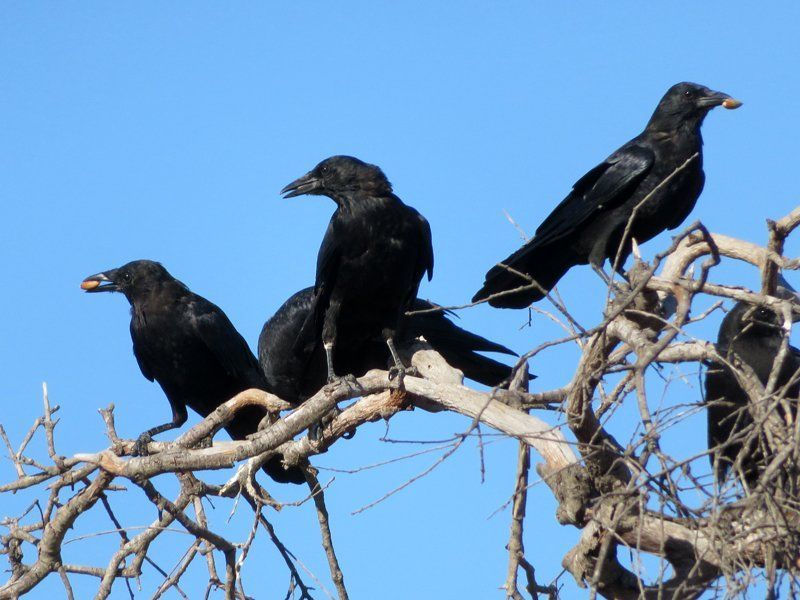
A blot of black along the sky, the American Crow is a large thick-necked bird with a pure glossy black plumage. These highly intelligent creatures are common sights in the wide variety of areas from treetops to roadsides. This talent of variety also invades their appetite with them willing to eat almost anything like earthworms, insects, animals, seeds, fruit, garbage, and carrion. They are extremely social birds gathering in large numbers during winter times to create communal roosts which can range from a few hundred to two MILLION crows. They use their intelligence in many ways but one area where they show their craftiness is in the extreme versatility of their foraging. They have been seen tracking adult birds to find their hidden nests. Crows can act in groups to distract an animal like an otter or a duck and then while that animal is distracted a different crow can swoop in and take its prey. They have also been known to catch fish, eat from an outdoor dog dish, and pluck fruit from trees. They can use tools like cups for moving water, pointy sticks for reaching into areas their beaks can’t fit to get grubs, and my personal favorite: dropping pine cones on humans climbing up a tree they are in to defend their nest. They also will work together to drive off predators which is known as mobbing. The American Crow is known for its loud crackling caws and if you want to hear them for yourself click on this link.
Canada Goose
Branta canadensis
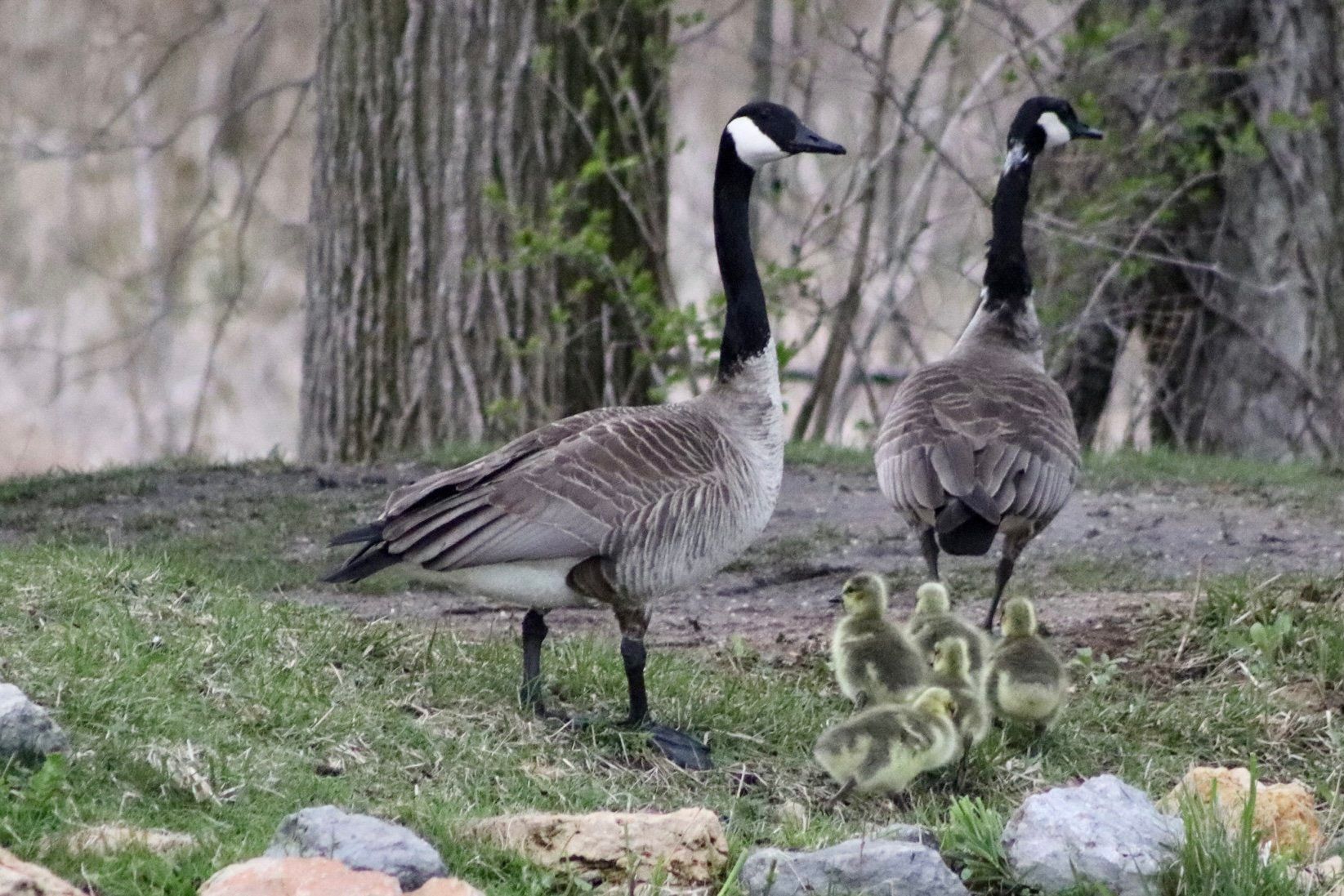
The Canada Goose, a well known bird common to urban and suburban areas. They are large water birds with webbed feet, tan and white underside, a long black neck, white chinstrap mark going up to their chin, and a black head. The reason why Geese are commonly found near and around people is their preference for large grassy fields with unobstructed views near water. Which includes many human maintained land with large lawns (like parks or golf courses). Geese commonly eat grasses and sedges and some subspecies can even eat domesticated grasses that many humans use. Unfortunately due to their commonness in suburban areas geese are seen as a pest to many people and thus their big flock numbers are even more detrimental to their image. The Canada Goose also has a couple of other extremely notable traits. These include their way to fly more efficiently in a V formation. Flying in a V formation has the chance to increase their range by up to 71% by reducing drag and inducing an aerodynamic term called upwash. The other notable quirk of the Canadian geese is their very noisy honk that can be heard here.
Mourning Dove
Zenaida macroura
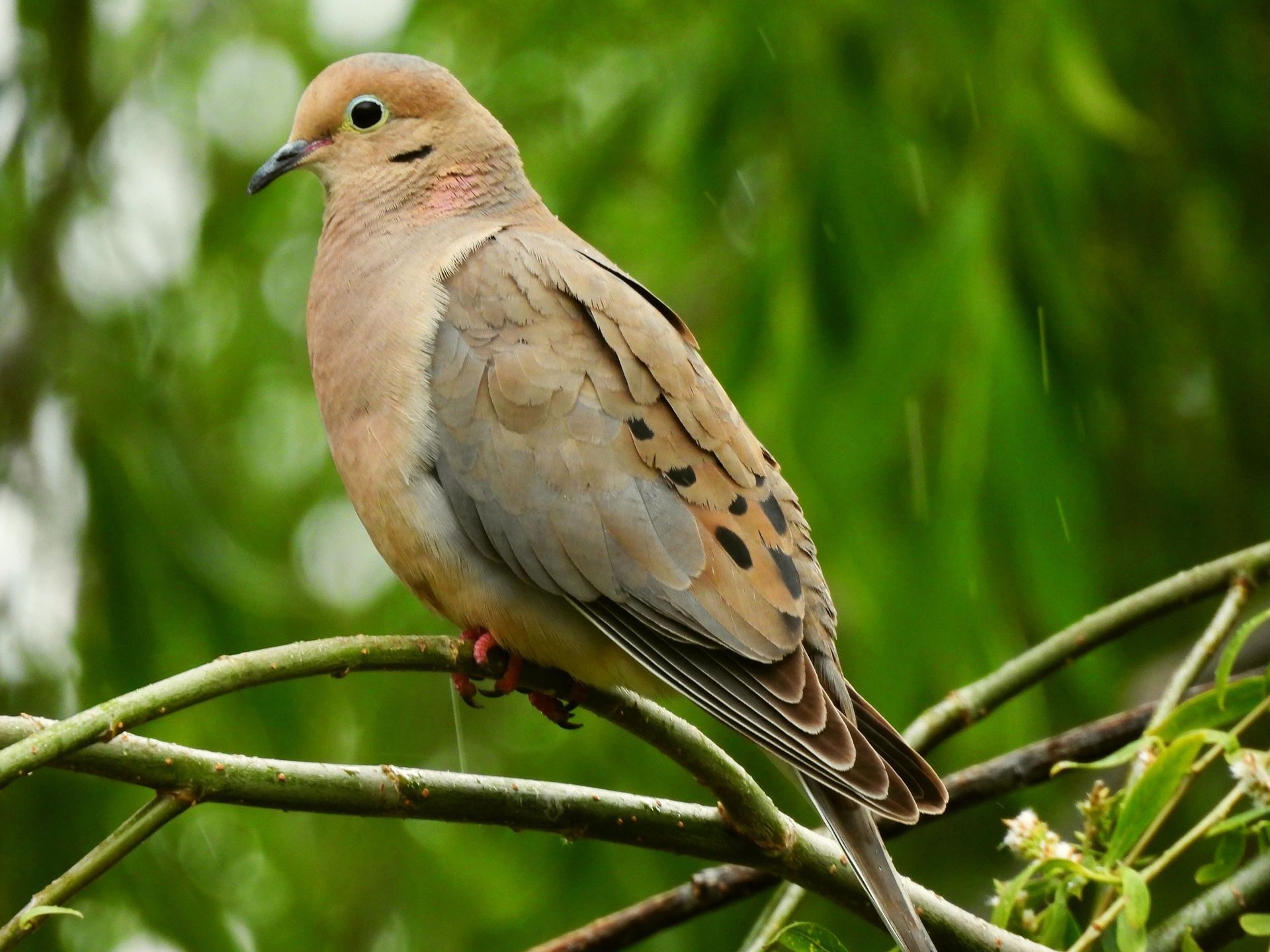
Mourning Dove, a graceful little bird who is very common in Illinois. This dove has a large plump body with an extra long tail and a very small head compared to its body. Their feathers include a variety of colors with brown, tan, gray and white with black spots on their wings and black and white wing/tail tips. Seeds make up practically their entire diet and they tend to graze on the ground so many feeders are particularly effective at enticing mourning doves to your yard. These little doves are particularly vulnerable to cats as well which is something to keep an eye on to make sure we are kind to our friendly neighborhood fliers. They are more vulnerable to cats because they like to gorge themselves on seeds and store a lot of seeds within their crop (a storage device within their throat) before finding a perch to digest it all. They eat 12-20 percent of their body weight per day! When singing they release a mournful call (which is where they got their name) and if you want to hear the coos they release click here!
Barred Owl
Strix varia
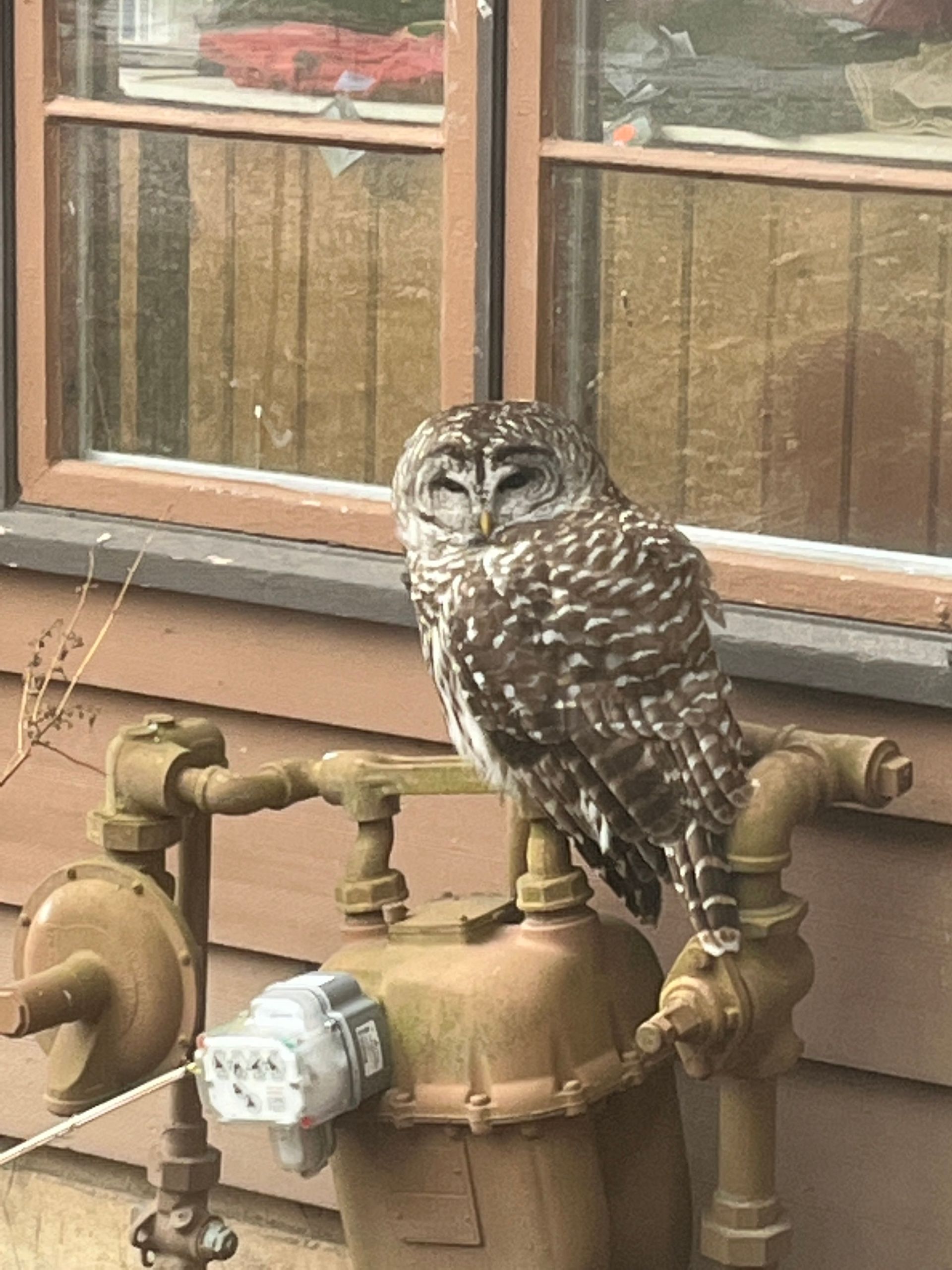
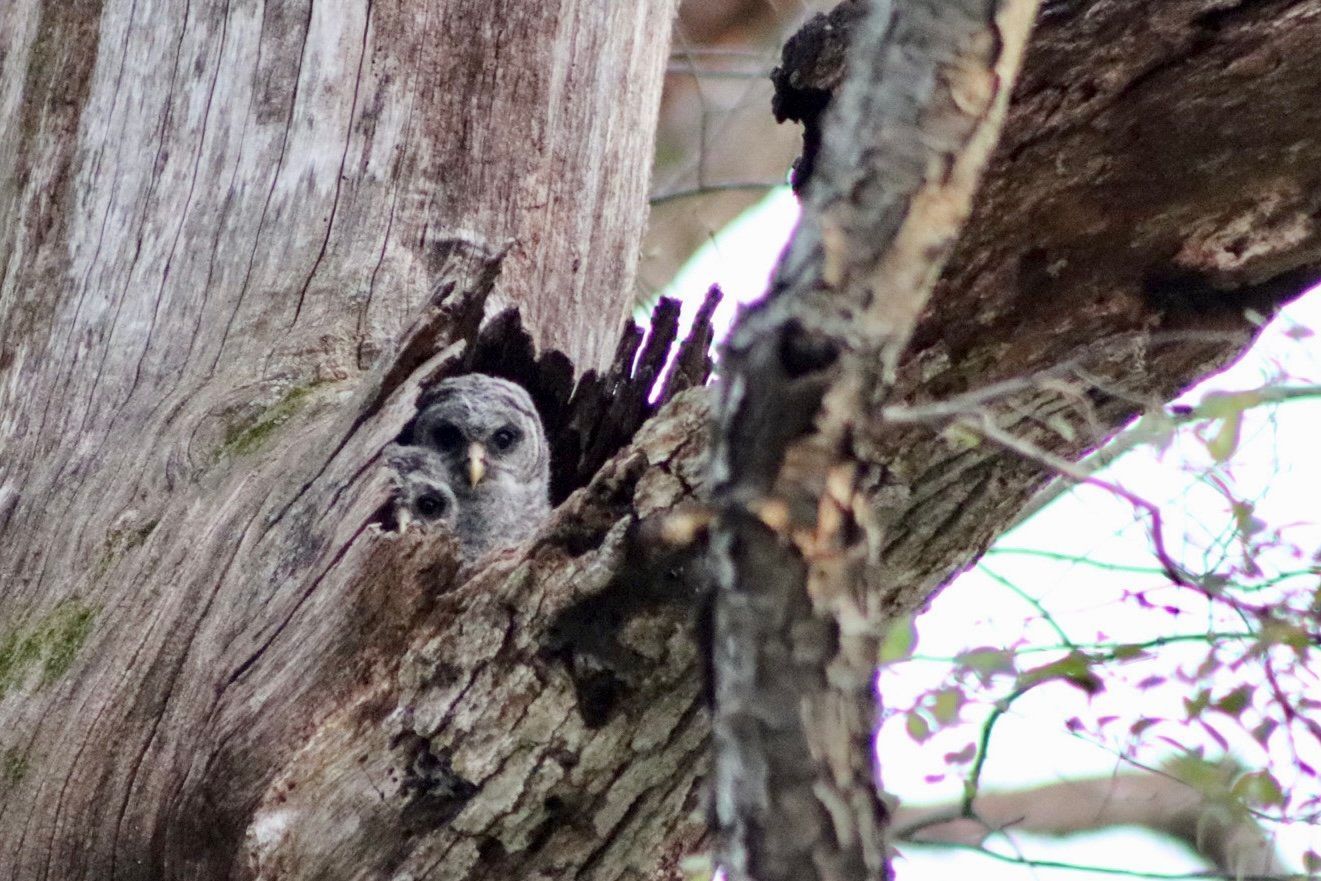
A strange bird call is ringing in the distance, almost sounding like someone yelling who cooks for you. In reality this is the Barred Owls call. They are a larger owl with a mottled brown and white coloration of feathers. These mottled colors are in vertical brown bars with a white undercurrent. They have a rounded head and a medium length tail with the same coloration and patterns. Here at Severson Dells you could be fortunate enough to hear or even spot a Barred Owl (I know I have). They enjoy their large mature forests year round and prefer staying near water. They like a diversity of prey animals ranging from small rodents, other birds, amphibians, reptiles, and even invertebrates. These powerful hunters use their sharp sense of sight and hearing to search for prey on a high up point and once they catch them they swallow their smaller prey whole. This owl tends not to make their own nests, they prefer to use a natural cavity or a nest made by another animal like squirrels or other birds. If you want to listen to their strange calls click the highlighted words.
Cooper's Hawk
Accipiter cooperii
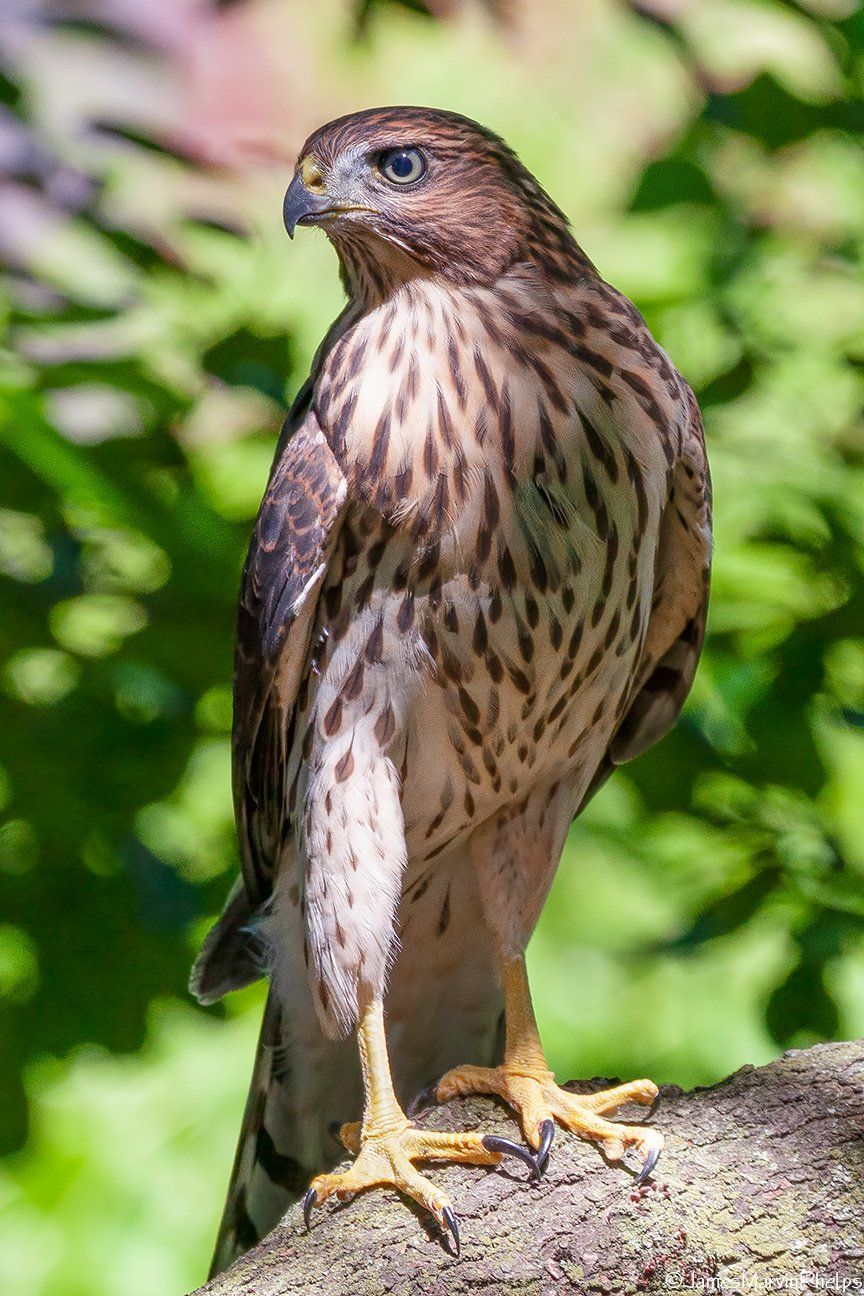
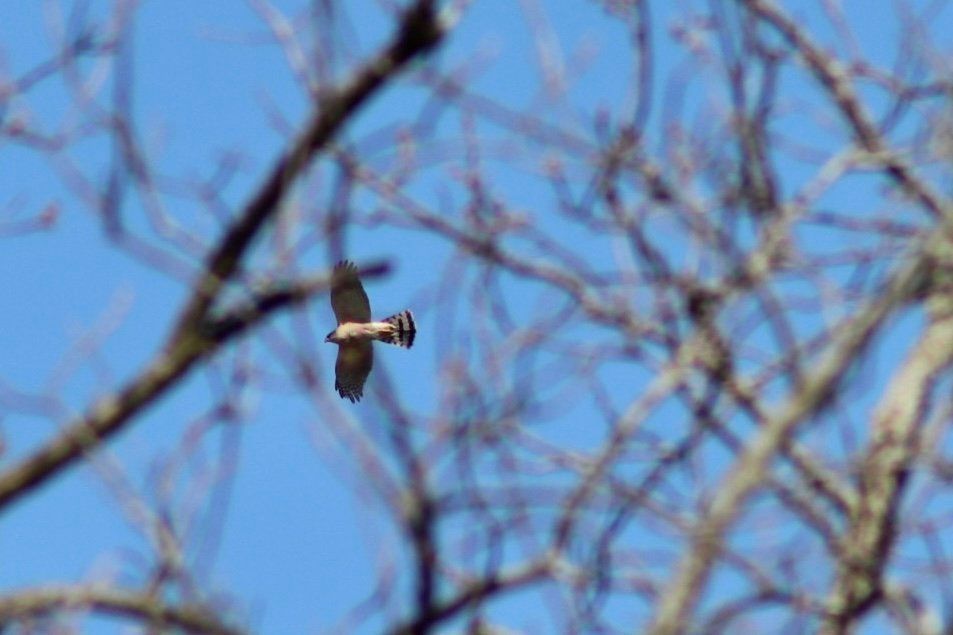
The Cooper’s Hawk, a medium-sized hawk with blueish gray feathers along its back and brownish red on its torso. They are natives to many forests and woodlands but are now much more comfortable in more suburban based areas with higher numbers in towns than their old preference of forests. These hawks primarily feed on other smaller birds with very skillful hunting through the air. They use intense speed to pursue other birds through canopies and because of this they regularly fracture the bones in their chest. A study of 300 skeletons showed 23% of Cooper’s Hawks had healed over fractures showing us it's hunting method posed its own dangers. Other interesting traits with the Cooper’s Hawk is how much smaller the males are compared to the females. This is an obvious problem when female Cooper’s Hawks are known for hunting birds similarly sized to that of the male counterpart. The Male also is the primary builder of the nest and when the young are born the male provides food to the whole family for over the next 90 days. Outside of the breeding season these hawks tend to be silent but if you are looking for them you might be able to hear their loud and grating Cak-Cak-Cak and if you want to hear it click this link!
Look out for many birds to see this winter and also listen to many of their most recognizable languages. November is here and the weather is getting colder. Many birds get puffier in the winter to stay warm and we should follow suit and make sure to stay bundled from the cold. Take care and stay warm out there!

RECENT ARTICLES