FIELD NOTES BLOG
March Bird Blog
The Big Thaw
As winter comes to a close you will begin to see the world around us come back to life as the snow and ice gives way to all of the colors of nature. Coupled with thawing of the winter ice you will begin to see a wide variety of faces return to the area, namely the various water birds who are following the resurgence of liquid water and the ever-northward forging warm air currents. These include most of our ducks, geese, loons, rails, cranes, gulls, and shorebirds. This is especially important as Illinois sits on the Mississippi Flyway which acts as a superhighway for a plethora of species moving from their overwintering grounds in the Southern States and the Caribbean to their breeding grounds in Canada. For the avid or aspiring birder, the best place to start looking for the ephemeral beauties would be any of your bodies of water such as the Illinois and rock rivers or any large standing bodies, especially those near agricultural fields.
Greater White-fronted Goose
Anser albifrons
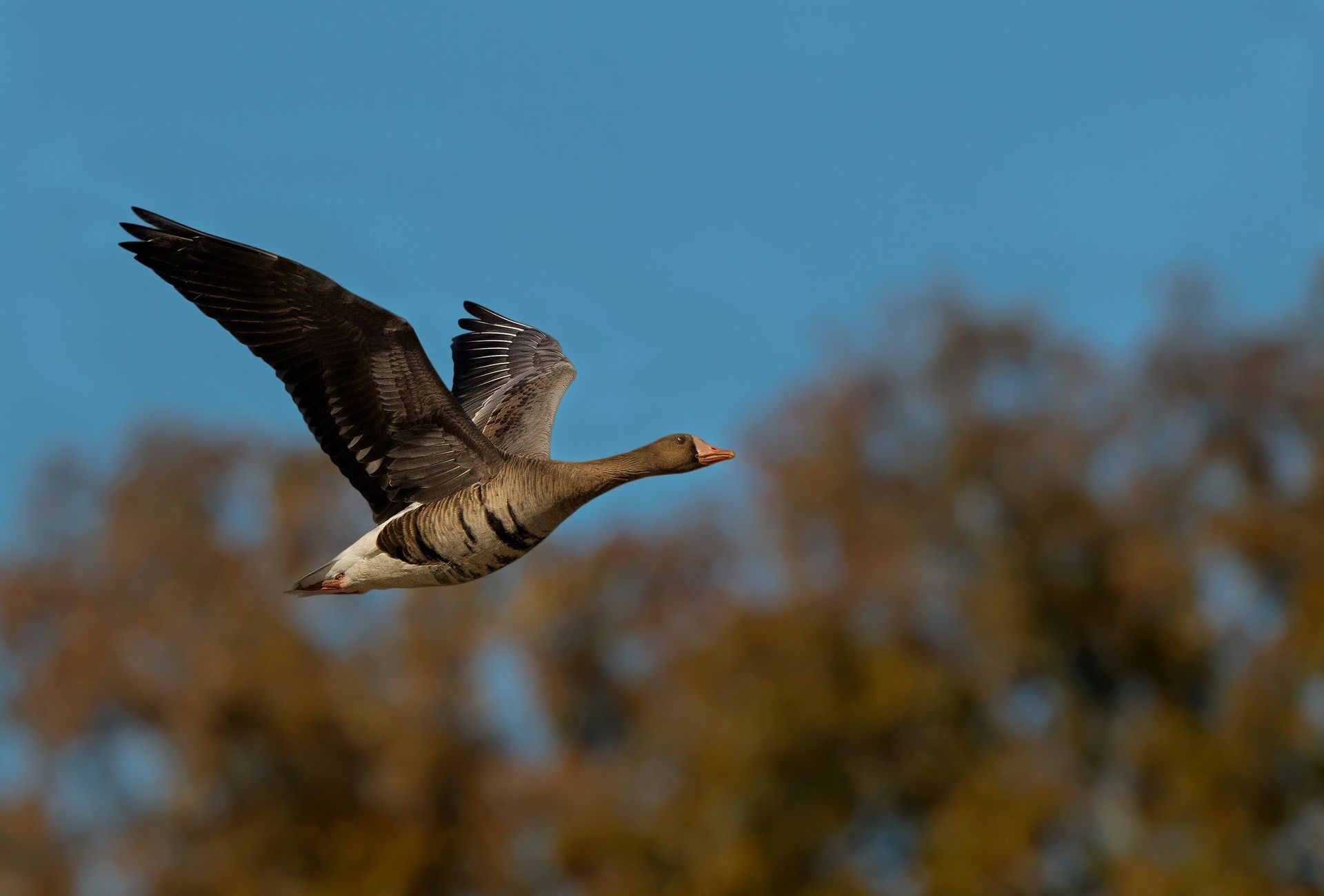
The greater white-fronted goose is a medium-sized waterfowl species, larger than any of our duck species but smaller yet stockier than the more common Canada goose. Adults are overall grey in coloration with black barring on the breast and bright orange legs. They possess a pinkish-orange bill with a white ‘mask’ at its base, giving its name. Juveniles are similar in appearance but have much duller legs and more of a grey-brown. Winnebago County is on the far easterly range of the goose’s migration route meaning that you will have to work a little harder to catch a glimpse at one of these beauties. The best place to find these birds would be in large agricultural fields where they can be found in flocks feeding or floating on ponds and lakes across the county as they rest during their migration. Their call is often thought of as laughter with high-pitched yelps and whistles consisting of 2-3 notes. Click here to hear their call.
Snow Goose
Anser caerulescens
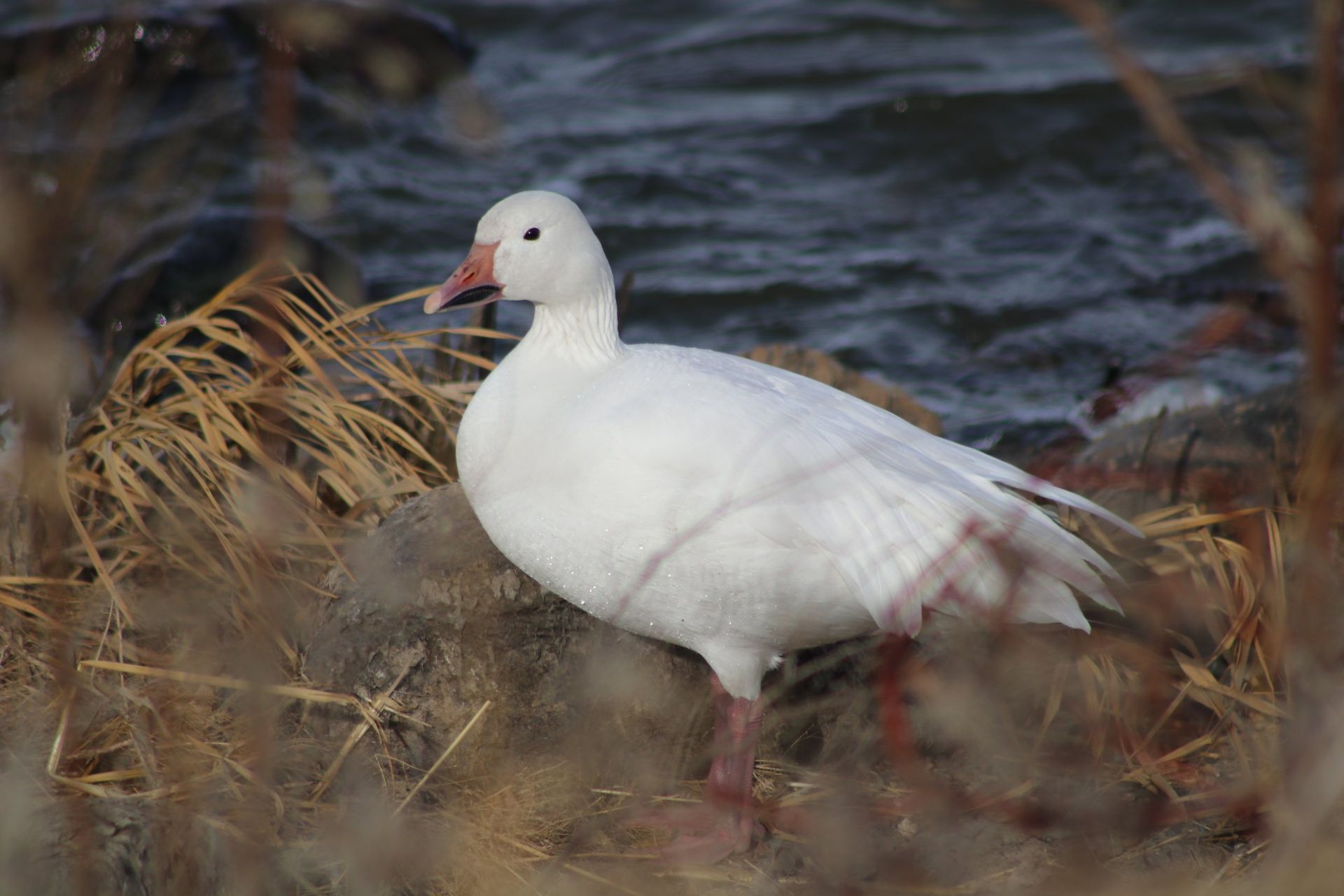
A medium size goose that has relatively short legs and a shorter neck than other North American goose species. They come in two color morphs across the USA, namely the traditional all-white coloration that gives them their name and the slightly more uncommon ‘blue’ coloration. Blue geese maintain a white head but the rest of the body is a blue-gray. Though both colorations still possess bright pink-orange bills and feet along with a black tail. They overwinter in the southern and western edges of Illinois but more often on the edges of the Gulf of Mexico. During their migrations, they often take to the skies very early in the morning as dawn breaks and don’t land again until dusk. The best place to catch them is in large cornfields where they gather to feed before taking off again. Even though they are rare to see in your neighborhood ponds they number some 5 million across the continent. Their call is a simple nasally honk, however, when heard in huge flocks it becomes a boisterous chorus. Click here to hear it.
Northern Pintail
Anas acuta
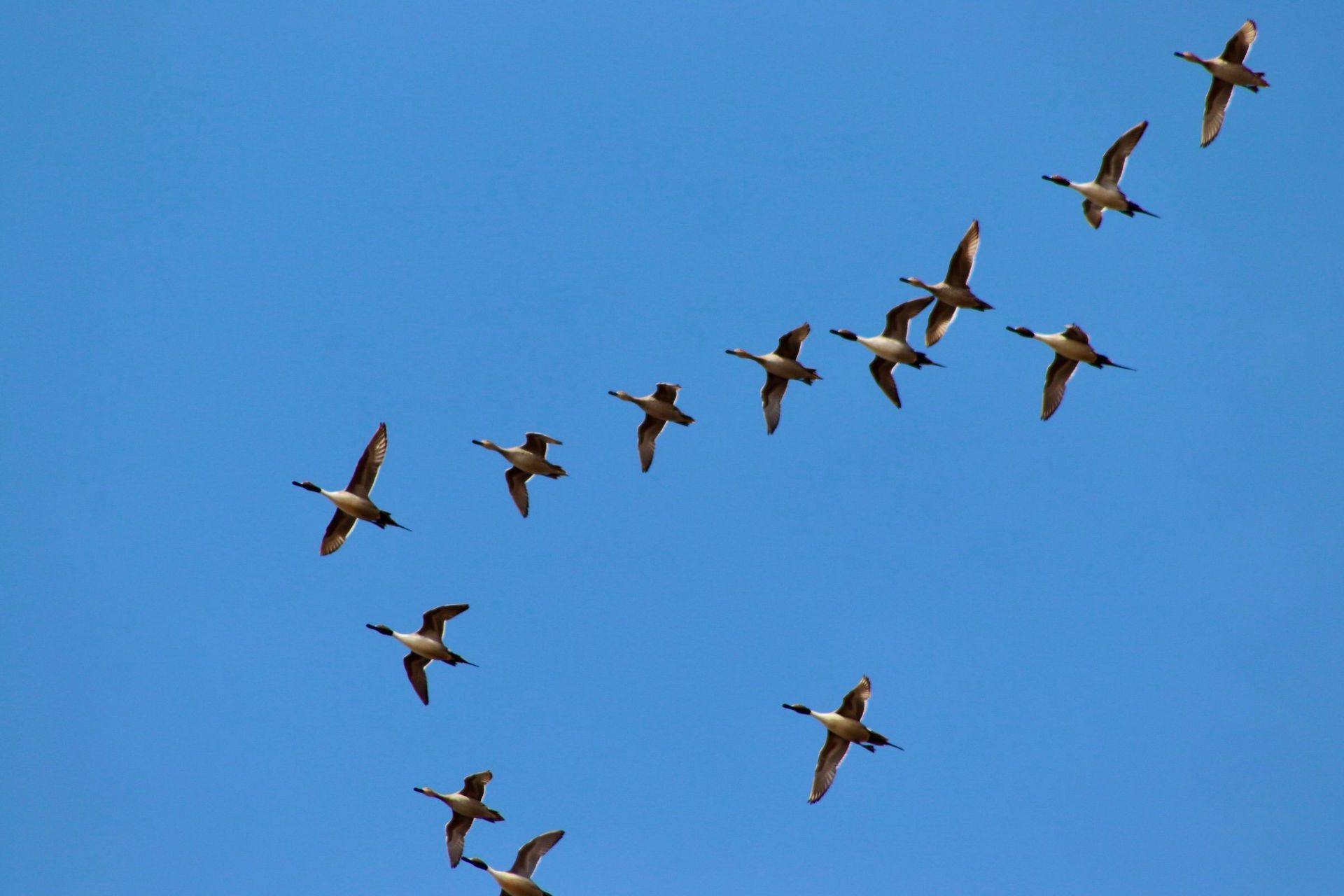
These are fairly large dabbling ducks, around the size of the typical mallard but have a far more slender, gracile build. The males of the species are unmistakable thanks to their elegant appearance; possessing a chocolate brown head, white breast, mottled grey & black feathers on the wing. As they are currently passing through Illinois on their way to the subarctic to breed you can catch their namesake elongated black tail feathers. Females are far more drab with a light brown-grey head and a mottled light brown body. However, both sexes can be identified by their unique speculum coloration of caramel brown followed by black with a white edge. Even though these ducks possess a large population with global distribution their populations have begun to decline in the US in part due to outbreaks of Avian Influenza. The best place to spot them would be near the shores of lakes and ponds while they are feeding on aquatic plants and macroinvertebrates. Their call sounds much like a wheezy train whistle for males and females make a loud quack similar to a mallard. Examples of the calls can be heard here.
American White Pelican
Pelecanus erythrorhynchos
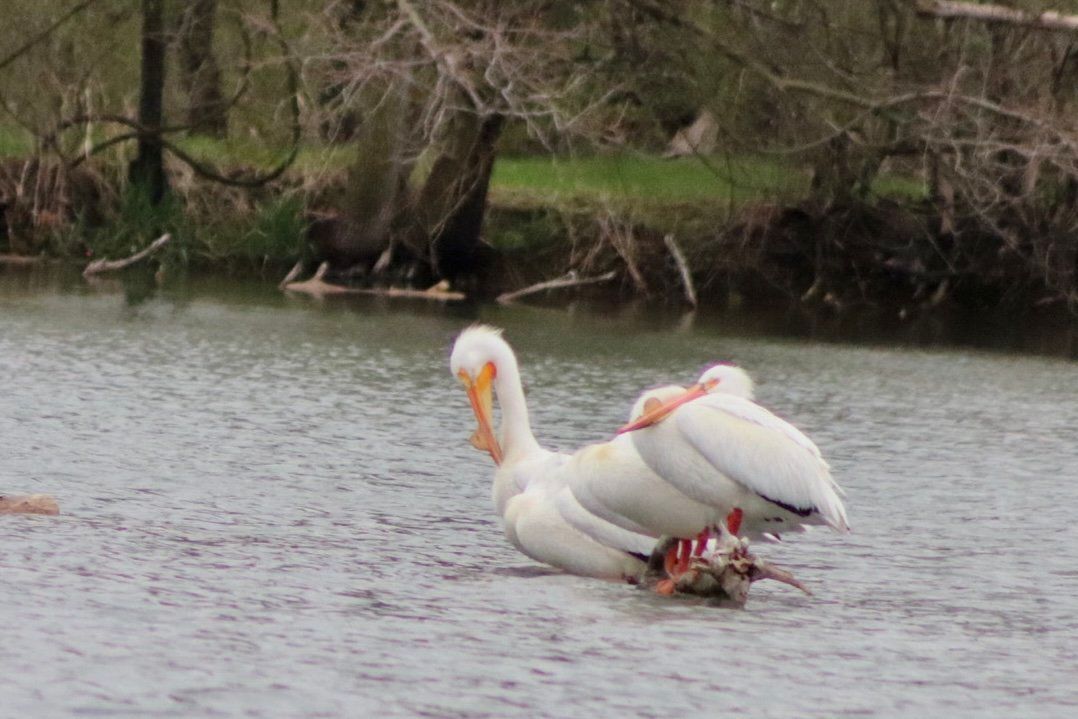
These are extremely large birds, rivaling the trumpeter swan as one of North America’s longest birds, and are second only to the California condor regarding wingspan. Almost all of their plumage is white save for their primary flight feathers, opposing them as a stark black, which are only visible during flight. Their most striking feature would have to be their large yellow-orange bill which becomes brighter and develops a crest towards the tip during the breeding season. The webbed feet of the species share the yellow-orange coloration. They used to be uncommon migrants in the region until two breeding pairs began nesting in Lake Michigan in the 1990s and since have continued to spread eastward with 4,677 breeding pairs being present in the late 2010s. Your search for them should begin near large bodies of water such as the Rock and Illinois rivers. Also, keep an eye out for double-crested cormorants as they are normally seen nesting and foraging alongside them. Adults are well known for being silent with only brief grunts occurring during spats in breeding colonies, however, chicks make bagging calls while attempting to solicit food from their parents. Examples of the calls.
Sandhill Crane
Grus canadensis
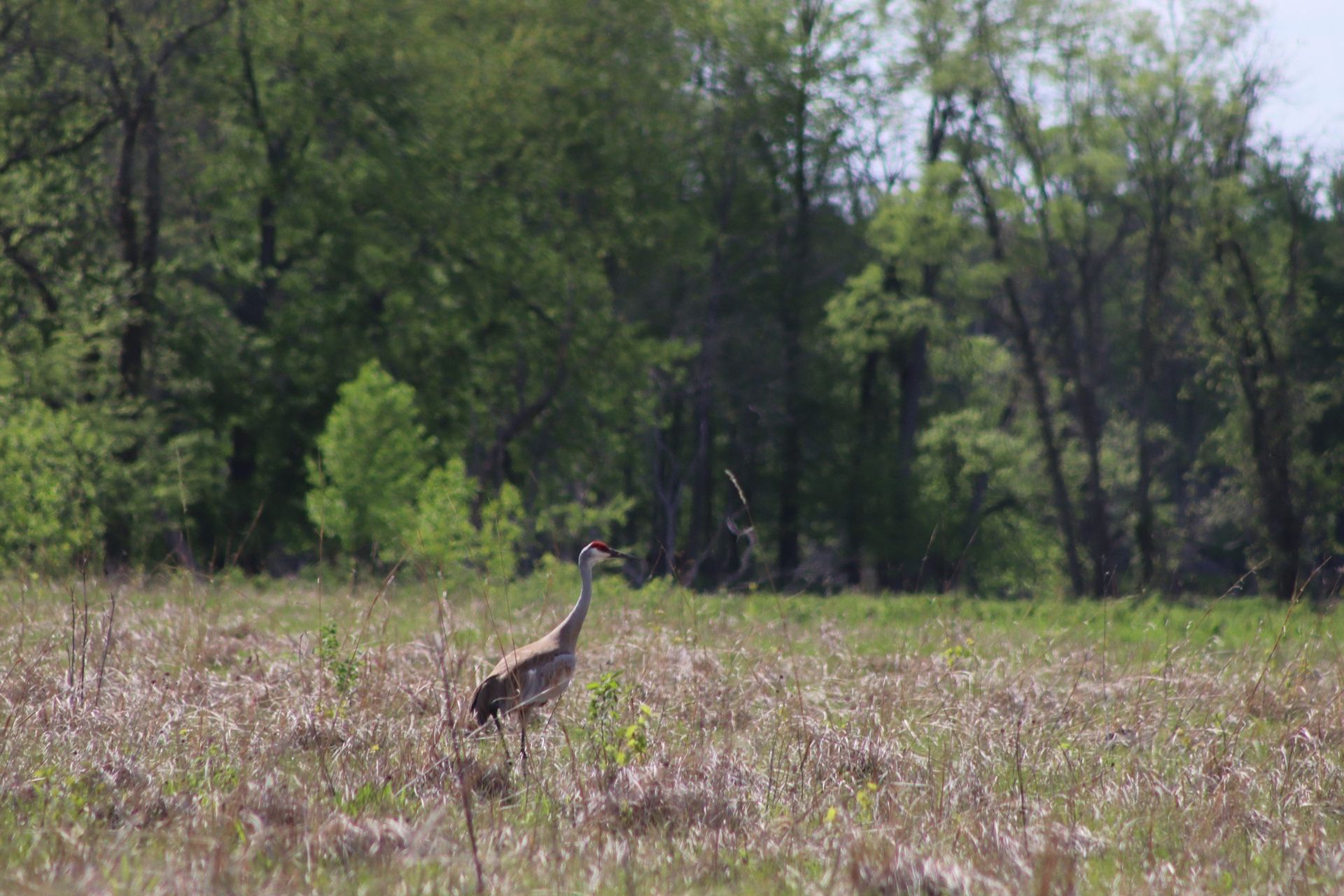
These are tall, slender birds about 4 ft in height with overall grey bodies save for their white chins and bright head caps. The species show no sexual dimorphism with males and females being identical though there are size differences depending on which subspecies of crane present at your locality. They can be distinguished from herons in flight as they fly with the necks fully extended as opposed to the tucked s-shaped form of heron species. Northern Illinois sits in a very important staging ground for the birds as they gather in large, boisterous crowds as they begin refueling before continuing onwards to Canada and Alaska to breed. The best places to look for them are large open areas especially prairies and cornfields, which the region has in spades. Their preferred migration habitat coupled with their flocking behavior makes them quite easy to locate. Sandhill cranes are extremely loud with their rattling bugle calls being heard up to 2 ½ miles away from them, this is exacerbated by the fact that cranes are extremely social and love to ‘talk’ to each other. Click here to hear for yourself.

RECENT ARTICLES